Euripides
Euripides was the last of the three great tragedians of classical Athens (the other two being Aeschylus and Sophocles). Ancient scholars thought that Euripides had written ninety-five plays, although four of those were probably written by Critias. Eighteen or nineteen of Euripides' plays have survived complete. There has been debate about his authorship of Rhesus, largely on stylistic grounds and ignoring classical evidence that the play was his.[1] Fragments, some substantial, of most of the other plays also survive. More of his plays have survived than those of Aeschylus and Sophocles together, because of the unique nature of the Euripidean manuscript tradition. ([Source][1].) [1]:http://en.wikipedia.org/wiki/Euripides
Works (50)
Medea
Bacchae
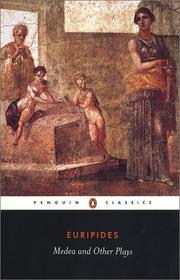
Medea and other plays

Grief Lessons
Τρῳάδες
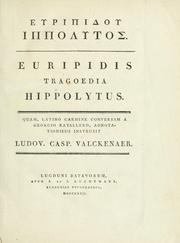
Hippolytus
1876
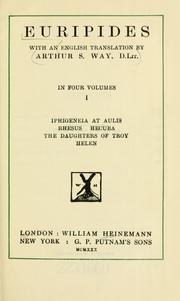
Euripides

Alcestis

Electra

The Bacchae, and other plays

Iphigenia in Tauris
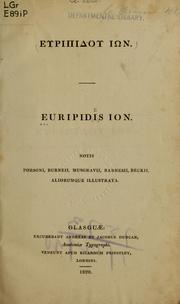
Ion
Heracles

Orestes
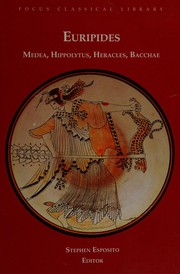
Four plays

Hecuba
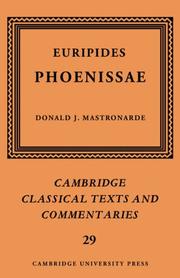
Phoenician women
Ten plays / by Euripides ; translated by Moses Hadas and John McLean ; with an introd. by Moses Hadas

Andromache

Cyclops

Iphigenia in Aulis
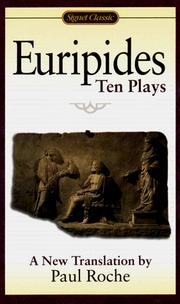
10 plays
Three plays

Helen
Children of Heracles

Alcestis, Medea, Hippolytus
The plays of Euripides

The women of Troy
The Trojan women of Euripides

Herakles

The Complete Greek Tragedies
Euripide

Rhesus

The Complete Greek Tragedies: Euripides III

Women on the edge

Three plays of Euripides: Alcestis, Medea, The Bacchae

Le Baccanti

Electra, Phoenician women, Bacchae, Iphigenia at Aulis
Plays
Alcestis and other plays

Supplices
Specimens of Greek tragedy
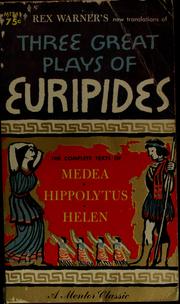
Three great plays of Euripides
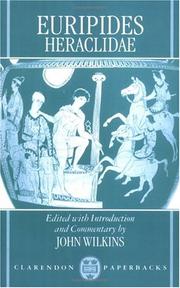
Heraclidae
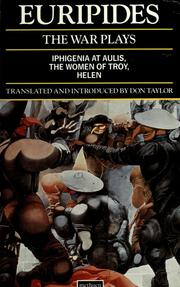
The war plays
The Hecuba of Euripides

Ten Plays by Euripides
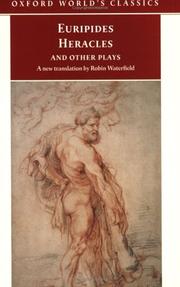
Alcestis, Heracles, children of Heracles, Cyclops
Alcestis; Hippolytus; Iphigenia in Taurus

The Heracles of Euripides