Milton H. Erickson
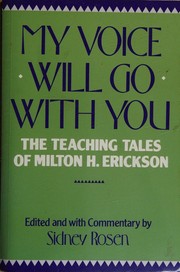
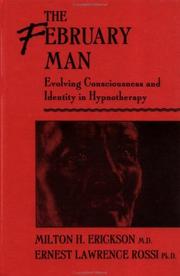
**Source: Wikipedia:** Milton Hyland Erickson (5 December 1901 – 25 March 1980) was an American psychiatrist and psychologist specializing in medical hypnosis and family therapy. He was founding president of the American Society for Clinical Hypnosis and a fellow of the American Psychiatric Association, the American Psychological Association, and the American Psychopathological Association. He is noted for his approach to the unconscious mind as creative and solution-generating. He is also noted for influencing brief therapy, strategic family therapy, family systems therapy, solution focused brief therapy, and neuro-linguistic programming.[1] **Hypnosis** Erickson is noted for his often unconventional approach to psychotherapy, as described in the book ***Uncommon Therapy*** by Jay Haley and the book ***Hypnotherapy: An Exploratory Casebook***, by Milton H. Erickson and Ernest L. Rossi (1979, New York: Irvington Publishers, Inc.). He developed an extensive use of therapeutic metaphor and story as well as hypnosis and coined the term brief therapy for his method of addressing therapeutic change in relatively few sessions. Beginning in the 1950s, Erickson's use of interventions influenced strategic therapy and family systems therapy of practitioners including Virginia Satir and Jay Haley. He was noted for his ability to "utilize" anything about a patient to help them change, including their beliefs, favorite words, cultural background, personal history, or even their neurotic habits. Through conceptualizing the **unconscious** as highly separate from the conscious mind, with its own awareness, interests, responses, and learnings, he taught that the unconscious mind was creative, solution-generating, and often positive. He was an important influence on ***neuro-linguistic programming (NLP)***, which was in part based upon his working methods.[1] **Trance and the unconscious mind** Erickson believed that the **unconscious** mind was always listening and that, whether or not the patient was in trance, suggestions could be made which would have a hypnotic influence, as long as those suggestions found resonance at the unconscious level. The patient could be aware of this or could be completely oblivious that something was happening. Erickson would see if the patient would respond to one or another kind of indirect suggestion and allow the unconscious mind to participate actively in the therapeutic process. In this way, what seemed like a normal conversation might induce a hypnotic trance, or a therapeutic change in the subject. According to Weitzenhoffer, "[Erickson's] conception of the unconscious is *definitely **not** the one held by Freud.*"[3] Erickson was an irrepressible practical joker,[4] and it was not uncommon for him to slip indirect suggestions into all kinds of situations, including in his own books, papers, lectures and seminars.[5] For example, a student arrived at one of the five-day intensive seminars he held in his home office near the end of his life. When Erickson asked why she had come, she replied frankly: "My teacher told me that I should come to see you before you died." Erickson smiled and said: "You tell him that dying is the last thing I intend to do."[citation needed] The group laughed at the pun. Then Erickson said, with a twinkle in his eye[citation needed], "Do you want to know how to avoid dying? Always wake up every morning. And do you want to know how to ensure that you will wake up every morning?", he continued, "Drink lots of liquids before you go to sleep!"[citation needed] Erickson also believed that it was even appropriate for the therapist to go into trance. "I go into trances so that I will be more sensitive to the intonations and inflections of my patients' speech. And to enable me to hear better, see better." Erickson maintained that trance is a common, everyday occurrence. For example, when waiting for buses and trains, reading or listening, or even being invo
Works (26)