Category
page 11220s births

Innocent V
185th Pope of the Catholic Church

Charles I of Naples
King of Sicily (1226-1285)

Baibars
Al-Malik al-Zahir Rukn al-Din Baybars al-Bunduqdari (; 1223/1228 – 30 June 1277), commonly known as Baibars or Baybars () and nicknamed Abu al-Futuh (, ), was the fourth Mamluk sultan of Egypt and Syria, of Turkic Kipchak origin, in the Bahri dynasty, succeeding Qutuz. He was one of the commanders of the Muslim forces that inflicted a defeat on the Seventh Crusade of King Louis IX of France. He also led the vanguard of the Mamluk army at the Battle of Ain Jalut in 1260, which marked the first substantial defeat of the Mongol army that is considered a turning point in history.

William of Rubruck
Flemish Franciscan missionary and explorer

Theodore II Laskaris
Emperor of Nicaea from 1254 to 1258
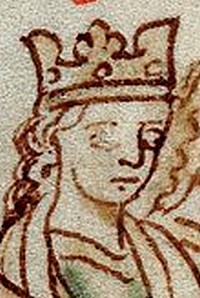
Eleanor of Provence
Queen of England (1223-1291)

Nicola Pisano
Italian sculptor and architect (1225–1284)
.jpg)
Qalawun
' (, – November 10, 1290) was the seventh Turkic Bahri Mamluk sultan of Egypt; he ruled from 1279 to 1290. He was called ' (, "Qalāwūn the Victorious"). After having risen in power in the Mamluk court and elite circles, Qalawun eventually held the title of "the victorious king" and gained de facto authority over the sultanate. He is the founder of the Qalawunid dynasty that ruled Egypt for over a century.
Guido Guinizelli
Italian poet
Brunetto Latini
Italian scholar and statesman, c. 1220–1294
Llywelyn ap Gruffudd
Prince of Gwynedd

Guy
Count of Flanders (1251-1305)
Stephen Uroš I of Serbia
Serbian king (1220-1277)
Beatrice of Provence
Countess of Provence and Forcalquier (c.1229–1267)
Elisabeth of Bavaria, Queen of Germany
Queen consort of Conrad IV of Germany
Al-Adil II
Ayyubid Sultan of Egypt 1238–1240

Traidenis
Traidenis (died 1282) was Grand Duke of Lithuania from 1269 or 1270 until 1282. He is the second most prominent grand duke of Lithuania in the 13th century after Mindaugas. His reign ended a seven-year unrest period after King Mindaugas was assassinated in 1263 and firmly established Lithuania as a pagan state for another hundred years.
Herman VI, Margrave of Baden
Austrian duke
Andrey II of Vladimir
Grand Prince of Vladimir
Muhammad I al-Mustansir
Hafsid ruler of Ifriqiya from 1249 to 1277
Coppo di Marcovaldo
Florentine painter (1225-1276)
Bolesław the Pious
Duke of Greater Poland
Gertrude of Hohenberg
German queen
Lev I of Galicia
king of Ruthenia (1269–1301)
Matilda of Holstein
Queen consort of Denmark
Joan, Countess of Ponthieu
Spanish queen consort (1220-1279)
Ulrich I, Count of Württemberg
(1226-1265)
John XI of Constantinople
Patriarch of Constantinople
Campanus of Novara
Italian mathematician and astronomer (*~1210 – †1296)
Bolesław II Rogatka
Duke of Silesia
Sanchia of Provence
German queen
Alphonso of Brienne
Count of Eu
Marie of Brienne
Latin empress of Constantinople (1224-1275)
Elena Asenina of Bulgaria
Byzantine empress
Zdislava from Lemberk
Czech saint
Jutta of Saxony
Queen consort of Denmark
Ulrich III
Duke of Carinthia
Bai Renfu
playwright
Vladislaus I of Opole
Silesian nobleman
George Mouzalon
Byzantine official

Przemysł I of Greater Poland
Duke of Greater Poland
Walram II of Nassau
Count of Nassau (1251-1276)

Theodora of Arta
13th-century consort of Epirus and Orthodox saint
John Palaiologos
Byzantine general
Dimitrios Angelos Doukas
Byzantine despot
Hugh XI of Lusignan
French noble
Mieszko II the Fat
13th-century duke of Opole-Racibórz, Kalisz and Wieluń
Anna of Hungary
Princess of Hungary, daughter of Béla IV of Hungary (13th century)
Adolf VII of Berg
Count of Berg
Frederick III, Burgrave of Nuremberg
Burgrave of Nuremberg
Theoderic VI, Count of Cleves
(1226-1275)
Mestwin II
Duke of Pomerania
William de Valence, 1st Earl of Pembroke
English Earl
Vladislaus, Margrave of Moravia
duke of Austria and margrave of Moravia
Skomantas of Sudovia
Sudovian duke
Frederick of Antioch
Italian noble
Gerardo Bianchi
Catholic cardinal
Jean I de Montfort
French nobleman

John I, Count of Holstein-Kiel
Count of Holstein-Kiel
Mieszko, Duke of Lubusz
Polish duke