Category
page 116th-century Indian books

Baburnama
thumb|350px|An awards ceremony in Ibrahim Khan Lodi|Sultan Ibrahim's court before being sent on an expedition to [[Sambhal]]
The Bāburnāma (; ) is the memoirs of Ẓahīr-ud-Dīn Muhammad Bābur (1483–1530), founder of the Mughal Empire and a great-great-great-grandson of Timur. It is written in the Chagatai language, known to Babur as Türki "Turkic", the spoken language of the Timurids.

Akbarnama
The Akbarnama () is the official chronicle of the reign of Akbar, the third Mughal Emperor (), commissioned by Akbar himself and written by his court historian and biographer, Abul Fazl. It was written in Persian, which was the literary language of the Mughals, and includes vivid and detailed descriptions of his life and times. It followed the Baburnama, the more personal memoir by his grandfather, Babur, founder of the dynasty. It was produced in the form of lavishly illustrated manuscripts.

Ramcharitmanas
Ramcharitmanas (), is an epic poem in the Awadhi language, composed by the 16th-century Indian bhakti poet Tulsidas (c. 1511–1623). It has many inspirations, the primary being the Ramayana of Valmiki.

Tutinama
Tutinama (), literal meaning "Tales of a Parrot", is a 14th-century series of 52 stories in Persian. The work remains well-known largely because of a number of lavishly illustrated manuscripts, especially a version containing 250 miniature paintings commissioned by the Mughal Emperor Akbar in the 1550s. The Persian text used was edited in the 14th century from an earlier anthology 'Seventy Tales of the Parrot' in Sanskrit compiled under the title Śukasaptati (a part of katha literature) dated to the 12th century. In India, parrots (in light of their purported conversational abilities) are popu

Ain-i-Akbari
thumb|200px|The Court of Akbar, an illustration from a manuscript of the Akbarnama
The Ain-i-Akbari (), or the "Administration of Akbar", is a detailed document regarding the administration of the Mughal Empire under Emperor Akbar, written by his court historian, Abu'l Fazl, in the Persian language between 1589 and 1596. It forms Volume III and the final part of the much larger document, the Akbarnama (Account of Akbar), also by Abu'l-Fazl, and is itself in three volumes.
%20Metmuseum%20N-Y.jpg)
Hamzanama
thumb|"The Spy Zanbur Bringing Mahiyya to the City of Tawariq", from the Akbar Hamzanama

Aranyakanda
Araṇya-Kāṇḍa, or The Forest Episode, is the third book of the epic poem of Ramayana. It is also found in the Rāmcharitmānas. It follows the legend of Rama through his fourteen-year exile in the forest, joined by his wife and his brother. Rama overcomes challenges and demons by upholding standards of behavior. Nearing the end of his exile, Rama's wife Sita is kidnapped by the king Ravana, and Rama learns what happened. The story continues in the next book, Kiśkindhā Kāṇḍa.
Chaitanya Charitamrita
Biography of Chaitanya Mahaprabhu
Kanz al-Ummal
Sunni literature
Mangal-Kāvya
right|thumb|250px|Depiction of Manasa|Manasā, the snake-goddess in 20th century Bengali popular art.
Muntakhab-ut-Tawarikh
thumb|Muntakhab-ut-Tawarikh, Persian text, published in Calcutta, 1865
Muntakhab-ut-Tawarikh (منتخب التواریخ) or '''''Tarikh-i-Bada'uni (تاریخ بداؤنی), Selection of Chronicles''''' by `Abd al-Qadir Bada'uni (1540–1605) is a book describing the early Mughal history of India, covering the period from the days of Ghaznavid reign until the fortieth regnal year of Mughal Emperor Akbar.
Allopanishad
Allah Upanishad, or Allopanishad, is a book of uncertain origin written during Muslim rule in India during 15th to 16th century in the time of Mughal Emperor Akbar's reign.
Chaitanya Bhagavata
hagiography of Chaitanya Mahaprabhu
Tarikh-i-Sher Shahi
book by Abbas Sarwani
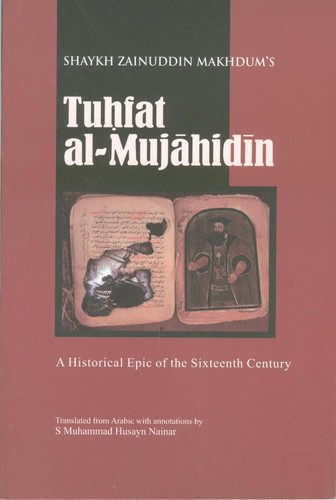
Tuhfat al-Mujahidin
Literally work by Zayn al-Dīn al-Malībarī

Madhumalati
thumb|Lovers shoot at a tiger in the jungle. Illustration to the mystical Sufi text Madhumalati.
"Madhumalati" or 'night flowering jasmine' is an Indian Sufi love poem, written in 1545 by Mir Sayyid Manjhan Shattari Rajgiri. The poem is written in Awadhi dialect.
Tarikh-i-Dawudi
The Tārīkh-i-Dāwūdī () is a 16th-century Persian language document recording the administration of various Pashtun dynasties in South Asia. It was written by a historian named Abdullah. It starts with the Sultan Bahlul Khan Lodi of the Lodi dynasty of Delhi and ends with Sultan Daud Khan Karrani of the Karrani dynasty of Bengal. Information relating to the Afghan Sur dynasty can also be found in the book. Other than these Afghan dynasties, the book also contains poetry as well as a history of the Jaunpur Sultanate. The book is named after, dedicated to and was written at the court of Daud Khan
Taz̲kirah al-wāqiʻāt
Tazkirat-ul-Waqiat or Humayun Nama is a book written by Emperor Humayun's servant, Jawhar Aftabchi, in 995 AH / 1586 CE or 1587 CE, under the orders of Emperor Akbar. Jawhar Aftabchi served Humayun for many years, making this book a credible historical source about Humayun's life.
Nimmatnama-i-Nasiruddin-Shahi
medieval Indian cookbook