Category
page 116th-century Persian books

Akbarnama
The Akbarnama () is the official chronicle of the reign of Akbar, the third Mughal Emperor (), commissioned by Akbar himself and written by his court historian and biographer, Abul Fazl. It was written in Persian, which was the literary language of the Mughals, and includes vivid and detailed descriptions of his life and times. It followed the Baburnama, the more personal memoir by his grandfather, Babur, founder of the dynasty. It was produced in the form of lavishly illustrated manuscripts.

Ain-i-Akbari
thumb|200px|The Court of Akbar, an illustration from a manuscript of the Akbarnama
The Ain-i-Akbari (), or the "Administration of Akbar", is a detailed document regarding the administration of the Mughal Empire under Emperor Akbar, written by his court historian, Abu'l Fazl, in the Persian language between 1589 and 1596. It forms Volume III and the final part of the much larger document, the Akbarnama (Account of Akbar), also by Abu'l-Fazl, and is itself in three volumes.

Razmnama
The Razmnāma (Book of War) (رزم نامہ) is a Persian translation of the Sanskrit epic Mahabharata, commissioned by the Mughal Emperor Akbar. In 1574, Akbar started a Maktab Khana or "House of Translation" in his new capital at Fatehpur Sikri. He assigned a group to translate the Sanskrit books Rajatarangini, Ramayana, and Mahabharata into the Persian language, the literary language of the Mughal court.
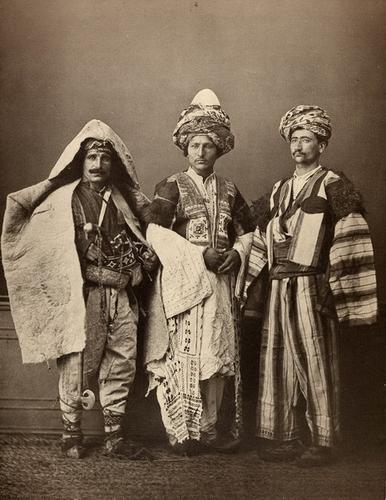
Sharafnama
The Sharafnama (Kurdish: شەرەفنامە Şerefname; Persian: شرفنامه Sharafnâmeh; ) is a book written in 1597 by the medieval Kurdish historian, poet and prince Sharaf al-Din Bitlisi (1543–1599) in Persian. Sharafnama is regarded as an important, and the oldest, source on Kurdish history. It deals with the different Kurdish dynasties, such as the Ayyubid Dynasty of Saladin, ancient and Medieval Kurdish principalities in the Middle East and the Caucasus, as well as mentioning the pre-Islamic ancestors of the Kurds.
Ahsan al-Tawarikh
book by Safavid historian Hasan Beg Rumlu
Tarikh-i Jahanara
16th-century Persian universal history
Süleymanname
thumb|Suleiman marching with his army in Nakhchivan Autonomous Republic|Nakhichevan, summer 1554, during the Ottoman-Safavid War of 1532–1555. One of the scenes of the Süleymannâme.
Chronicle of the Descendants of Timur
16th-century Mughal manuscript
Takmelat al-akhbar
16th-century Persian universal history
Tarikh-i-Dawudi
The Tārīkh-i-Dāwūdī () is a 16th-century Persian language document recording the administration of various Pashtun dynasties in South Asia. It was written by a historian named Abdullah. It starts with the Sultan Bahlul Khan Lodi of the Lodi dynasty of Delhi and ends with Sultan Daud Khan Karrani of the Karrani dynasty of Bengal. Information relating to the Afghan Sur dynasty can also be found in the book. Other than these Afghan dynasties, the book also contains poetry as well as a history of the Jaunpur Sultanate. The book is named after, dedicated to and was written at the court of Daud Khan
Javaher al-akhbar
Persian universal history composed by during the Safavid era
Taz̲kirah al-wāqiʻāt
Tazkirat-ul-Waqiat or Humayun Nama is a book written by Emperor Humayun's servant, Jawhar Aftabchi, in 995 AH / 1586 CE or 1587 CE, under the orders of Emperor Akbar. Jawhar Aftabchi served Humayun for many years, making this book a credible historical source about Humayun's life.
Fotuhat-e shahi
safavid chronicle (1531)
Nimmatnama-i-Nasiruddin-Shahi
medieval Indian cookbook
Golestan-e Honar
book by Ahmad Monshi Ghomi