Category
page 11780s introductions

guillotine
thumb|The guillotine used in Luxembourg between 1798 and 1821
A guillotine ( ) is an apparatus designed for effectively carrying out executions by beheading. The device consists of a tall, upright frame with a weighted and angled blade suspended at the top. The condemned person is secured with a pillory at the bottom of the frame, holding the position of the neck directly below the blade. The blade is then released, swiftly and forcefully decapitating the victim with a single, clean pass; the head falls into a basket or other receptacle below.

flag of Spain
national flag of the Kingdom of Spain

Charles's law
Charles's law is an experimental gas law which describes how gases tend to expand when heated.

threshing machine
agricultural machine
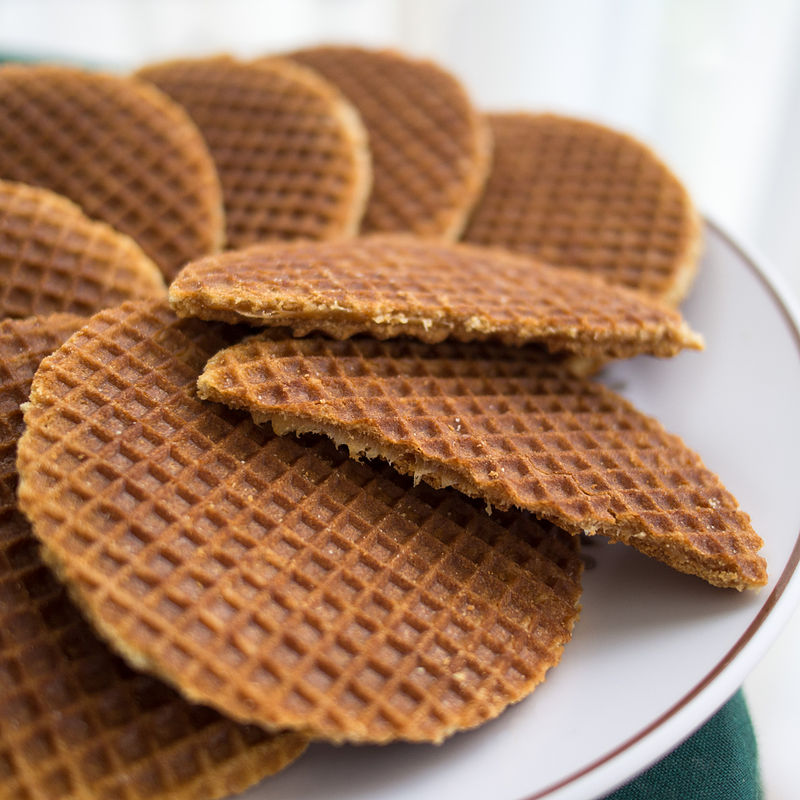
stroopwafel
A stroopwafel (; ) is a thin, round biscuit made from two layers of sweet baked dough held together by a syrup filling, often caramel. First made in the city of Gouda in South Holland, stroopwafels are a well-known Dutch treat popular throughout the Netherlands.
Roman salute
gesture used as salute attributed to the Roman Empire
flag of Asturiass
flag of the Spanish autonomous community of Asturias
%3B%20Claude%20Gell%C3%A9e%2C%20called%20Le%20Lorrain.jpg)
picturesque
thumb|A view of the Roman Campagna from Tivoli, evening by Claude Lorrain, 1644–1645
rabbits in Australia
overview of the introduction of oryctolagus cuniculus to Australia
gas balloon
balloon filled with gas less dense than air

cyanometer
thumb|right|A cyanometer by Horace-Bénédict de Saussure (from the collection of ''Musée d'histoire des sciences de la Ville de Genève)
thumb|right|An artwork in Ljubljana, Slovenia, inspired by a cyanometer
A cyanometer (from cyan and -meter'') is an instrument for measuring "blueness", specifically the colour intensity of blue sky. It is attributed to Horace-Bénédict de Saussure and Alexander von Humboldt. It consists of squares of paper dyed in graduated shades of blue and arranged in a color circle or square that can be held up and compared to the color of the sky.
Great Seal of the State of Connecticut
official government emblem of the U.S. state of Connecticut
fine dining restaurant
type of restaurant
Fugio Cent
first official circulation coin of the United States of America

Altoids
Altoids are a brand of mints, sold primarily in distinctive metal tins. The brand was created by the London-based Smith & Company in the 1780s, and became part of the Callard & Bowser company in the 19th century. Their advertising slogan is "The Original Celebrated Curiously Strong Mints", referring to the high concentration of peppermint oil used in the original flavour lozenge. The mints were originally conceived as a lozenge intended to relieve intestinal discomfort.
pay it forward
asking that a good turn be repaid by having it done to others