Category
page 11850s neologisms

secularism
Secularism is the principle of seeking to conduct human affairs based on naturalistic considerations, uninvolved with religion. It is most commonly thought of as the separation of religion from civil affairs and the state and may be broadened to a similar position seeking to remove or to minimize the role of religion in any public sphere. Secularism may encapsulate anti-clericalism, atheism, naturalism, non-sectarianism, neutrality on topics of religion, or antireligion. Although often conflated with opposition to religion, secularism is concerned with minimizing its role rather than disprovin

Sea Peoples
purported historical ethnic group
statism
In political science, statism or etatism (from French, état 'state') is the doctrine that the political authority of the state is legitimate to some degree. This may include economic and social policy, especially in regard to taxation and the means of production.

police state
state controlled by the police force

Jingle Bells
song written and composed by James Lord Pierpont, originally published in 1857
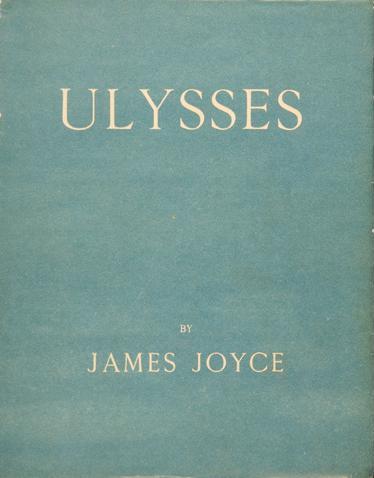
stream of consciousness
narrative device used in literature

warlord
right|thumb|Marshal Zhang Zuolin, one of many warlords in early 20th-century China
Warlords are individuals who exercise military, economic, and political control over a region, often one without a strong central or national government, typically through informal control over local armed forces. Warlords have existed throughout much of history, albeit in a variety of different capacities within the political, economic, and social structure of states or ungoverned territories. The term is often applied in the context of China around the end of the Qing dynasty, especially during the Warlord Era
Delmarva Peninsula
peninsula
permanent revolution
in Marxist theory, the strategy of a revolutionary class pursuing its own interests independently and without compromise or alliance with opposing sections of society
La donna è mobile
aria from the opera Rigoletto by Giuseppe Verdi
Cherchez la femme
French phrase
Tarot of Marseilles
most known version of the tarot deck from which all subsequent versions originate

Ansei
was a after Kaei and before ''Man'en''. This period spanned the years from November 1854 through March 1860. The reigning emperor was .
Verstehen
Verstehen (, ), in the context of German philosophy and social sciences in general, has been used since the late 19th century – in English as in German – with the particular sense of the "interpretive or participatory" examination of social phenomena. The term is closely associated with the work of the German sociologist Max Weber, whose antipositivism established an alternative to prior sociological positivism and economic determinism, rooted in the analysis of social action. In anthropology, Verstehen has come to mean a systematic interpretive process in which an outside observer of a cultur
pathetic fallacy
attribution of human emotion and conduct to non-human things
Muscular Christianity
Religious and social movement
demi-mondaine
'''''', French for "half-world" is a 19th-century term to describe women on the fringes of respectable society, particularly courtesans supported by wealthy lovers. The term originally derives from an 1855 play called by Alexandre Dumas , which depicted how prostitution challenged the institution of marriage.
Uncle Tom
fictional character