Category
page 11950s neologisms
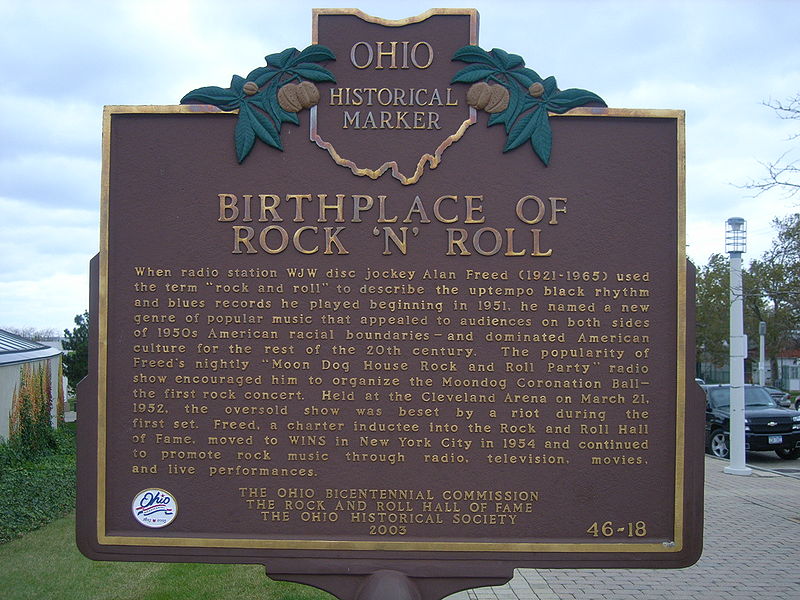
rock and roll
genre of popular music, early subgenre of rock music

genetic engineering
direct manipulation of an organism's genome using biotechnology

byte
The byte is a unit of digital information that most commonly consists of eight bits. Historically, the byte was the number of bits used to encode a single character of text in a computer and for this reason it is the smallest addressable unit of memory in many computer architectures. To disambiguate arbitrarily sized bytes from the common 8-bit definition, network protocol documents such as the Internet Protocol () refer to an 8-bit byte as an octet.

Waiting for Godot
play by Samuel Beckett

disco
Disco is a genre of dance music and a subculture that emerged in the late 1960s from the United States' urban nightlife scene, particularly in African-American, Italian-American, Latino and queer communities. Its sound is typified by four-on-the-floor beats, syncopated basslines, string sections, brass and horns, electric pianos, synthesizers, and electric rhythm guitars.

semi-presidential system
system of government in which a president exists alongside a prime minister and a cabinet

meritocracy
Meritocracy (merit, from Latin , and -cracy, from Ancient Greek 'strength, power') is the notion of a political system in which economic goods or political power are vested in individual people based on ability and talent, rather than wealth or social class. Advancement in such a system is based on performance, as measured through examination or demonstrated achievement.

clade
thumb|400px| Cladogram (a branching tree diagram) illustrating the relationships of organisms within groups of taxa known as clades. The vertical line (stem) at the base (bottom) represents the [[last common ancestor. The blue and red subgroups are clades, each defined by a common ancestor stem at the base of its respective subgroup (branch). The green subgroup alone, however, is not a clade; it is a paraphyletic group relative to the blue subgroup because it excludes the blue branch, which shares the same common ancestor. Together, the green and blue subgroups form a clade.]]

Great Leap Forward
1958–1962 Chinese socioeconomic campaign

gender role
social role encompassing a range of behaviors and attitudes that are generally considered acceptable, appropriate, or desirable for people based on their actual or perceived sex or sexuality

Generation X
cohort succeeding the Baby Boomers, born from 1965 to 1980

bionics
Bionics or biologically inspired engineering is the application of biological methods and systems found in nature to the study and design of engineering systems and modern technology.

junk food
denatured, processed food

nerd
thumb|Example of a stereotypical 'nerd' appearance - note the round glasses, braces, trousers pulled too high, and off-putting enthusiasm
A nerd is a person seen as over-intellectual, obsessive, introverted, lacking social skills and socio-cultural intuition. Such a person may spend inordinate amounts of time on unpopular, little-known, or non-mainstream activities, which are generally either highly technical, abstract, or relating to niche topics such as science fiction or fantasy, to the exclusion of more mainstream activities. Additionally, many so-called nerds are described as being shy, q

brainwashing
Brainwashing is the systematic effort to get someone to adopt a particular deception, loyalty, instruction, or doctrine, usually without being noticed. It is also a term that refers in general to psychological techniques that manipulate action or thought against a person's will, desire, or knowledge. It attempts to damage individual or group attitudes, frames of reference, beliefs, values or loyalties by demonstrating that current thinking patterns and attitudes are wrong and need change. It is said to reduce its subject's ability to think critically or independently, to allow the introduction

market failure
situation in which the allocation of goods and services by a free market is not efficient and can be improved upon from the societal point of view, often leading to a net loss of economic value
underground culture
various alternative cultures

reductio ad Hitlerum
refutation of a view by comparing it to the Nazi Party

happening
A happening is a performance, event, or situation art, usually as performance art. The term was first used by Allan Kaprow in 1959 to describe a range of art-related events.
<!--
==Background==
Hawthorne effect
type of reactivity in which individuals modify an aspect of their behavior in response to their awareness of being observed
Wilhelm scream
stock sound effect of a man screaming
flag of convenience
the business practice registering a ship under a different sovereign state than that of its owners, to reduce costs or avoid regulations
Silent Generation
cohort succeeding the Greatest Generation, born from 1928 to 1945
hard science fiction
science fiction with emphasis on scientific or technical detail, or on scientific accuracy
game over
message which signals that the game has ended
space weather
branch of space physics concerned with conditions in the Solar System
Greatest Generation
cohort succeeding the Lost Generation, born from 1901 to 1927
Black Power
political and social movement and ideology
Golden Horseshoe
region of Ontario centered on Toronto and extending around western Lake Ontario
mesotherapy
Mesotherapy (from Greek mesos, "middle", and therapy from Greek therapeia) is a form of alternative medicine which involves intradermal or subcutaneous injections of pharmaceutical preparations, enzymes, hormones, plant extracts, vitamins, and/or other ingredients such as hyaluronic acid. It has no proven clinical efficacy and poor scientific backing. Mesotherapy injections allegedly target adipose fat cells, apparently by inducing lipolysis, rupture and cell death among adipocytes. The stated aim of mesotherapy is to provide the skin with essential nutrients, hydration, and other beneficial c
teenager
young person (between 10 and 19 years old)

anti-establishment
thumb|250px|right|An anti-establishment sign at Lincoln's Inn Fields, [[London, in 2012]]

televangelism
thumb|right|Evangelist Billy Graham speaks at the NRB convention, 1977
Televangelism (from televangelist, a blend of television and evangelist; occasionally termed radio evangelism or teleministry) is the utilization of media platforms such as radio and television for the marketing of religious messages, particularly Christianity and especially Evangelical Christianity.
Death to America
anti-American political slogan

gekiga
is a style of Japanese comics aimed at adult audiences and marked by a more cinematic art style and more mature themes. Gekiga was the predominant style of adult comics in Japan in the 1960s and 1970s. It is aesthetically defined by sharp angles, hatching, and gritty lines, and thematically by realism, social engagement, maturity, and masculinity.

Beatnik
thumb|Beat, Beat, Beat (1959) by William F. Brown (writer)|William F. Brown
.jpg)
Acadiana
Teddy Boy
member of a British subculture
Parkinson's law of triviality
focusing on what is irrelevant but easy to understand
balance of terror
Cold War policy of tenuous peace
hadal zone
composed of trench zones, is the delineation for the deepest trenches in the ocean. The hadal zone is found from a depth to the bottom of the ocean of around 6,000 to 11,000 metres and exists in long but narrow topographic V-shaped depressions
mondegreen
A mondegreen () is a mishearing or misinterpretation of a phrase in a way that gives it a new meaning. Mondegreens are most often created by a person listening to a poem or a song; the listener, being unable to hear a lyric clearly, substitutes words that sound similar and make some kind of sense. The American writer Sylvia Wright coined the term in 1954, recalling a childhood memory of her mother reading the Scottish ballad "The Bonnie Earl o' Moray", and mishearing the words "laid him on the green" as "Lady Mondegreen".
tokenism
In sociology, tokenism is the social practice of making a perfunctory and symbolic effort towards the equitable inclusion of members of a minority group, especially by recruiting people from under-represented social-minority groups in order for the organization to give the public appearance of racial and gender equality, usually within a workplace, government, or a school. The sociological purpose of tokenism is to give the appearance of inclusivity to a workplace or a school that is not as culturally diverse (racial, religious, sexual, etc.) as the rest of society.
Sputnik
small Soviet carrier rocket
Sturgeon's law
adage cited as "ninety percent of everything is crap"
extraterrestrials in fiction
kind of fictional creature that does not originate on Earth
Colorless green ideas sleep furiously
sentence coined by Noam Chomsky to describe proper syntax with improper semantics
elephant in the room
obvious major problem that no-one mentions
affluenza
Affluenza describes the psychological and social effects of affluence. It is a portmanteau of affluence and influenza, and is used most commonly by critics of consumerism. Some psychologists consider it to be a pseudo-scientific term; however, the word continues to be used in scientific literature.
lawfare
Lawfare is the use of legal systems and institutions to affect foreign or domestic affairs, as a more peaceful and rational alternative, or as a less benign adjunct, to warfare.
Tal der Ahnungslosen
regions in East Germany that couldn’t receive West German radio and television programming
Marinoan glaciation
glaciation
Xenocentrism
Xenocentrism is the preference for the cultural practices of other cultures and societies, such as how they live and what they eat, rather than of one's own social way of life. One example is the romanticization of the noble savage in the 18th-century primitivism movement in European art, philosophy and ethnography. Xenocentrism can be a type of ethnocentrism. Because ethnocentrism is often negative and characterized by perceived superiority of one's own society to others, it often contrasts with xenocentrism.
fakelore
redirect invented tradition#Fakelore
.jpg)
Disneyfication
In the field of sociology, the term Disneyfication describes the commercial transformation of things (e.g. entertainment) or environments into something simplified, controlled, and 'safe'—reminiscent of the Walt Disney brand (such as its media, theme parks, etc.).

vexilloid
thumb|An illustration of eleven Imperial Roman vexilloids.
A vexilloid is any flag-like (vexillary) object used by countries, organisations, or individuals as a form of representation other than flags. American vexillologist Whitney Smith coined the term vexilloid in 1958, defining it as
Archaic period in North America
second period of human occupation in the Americas
Nacirema
Nacirema ("American" spelled backwards) is a term used in anthropology and sociology in relation to aspects of the behavior and society of citizens of the United States. The neologism attempts to create a deliberate sense of self-distancing in order that American anthropologists might look at their own culture more objectively, thus comparing emic and etic views of it.

skort
A skort, skorts, or pair of skorts (a blend of skirt and shorts) is a pair of shorts with an overlapping fabric panel made to resemble a skirt covering the front, or a skirt with a pair of integral shorts hidden underneath.
Shuntō
is a Japanese term, usually translated as "spring wage offensive." It refers to the annual wage negotiations between enterprise unions and the employers in Japan. Beginning in February or March each spring, thousands of unions conduct wage negotiations with employers simultaneously.