Category
page 11990s in economic history
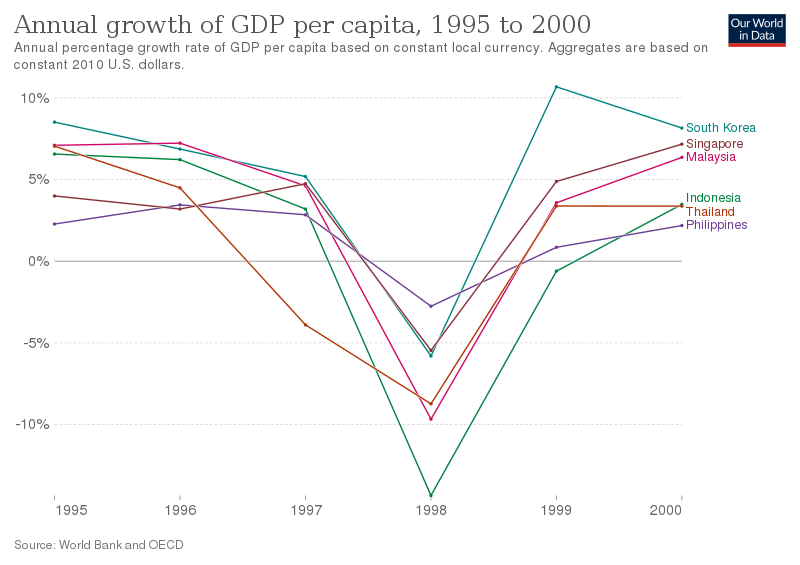
1997 Asian financial crisis
financial crisis in many East/Southeast Asian countries starting in 1997
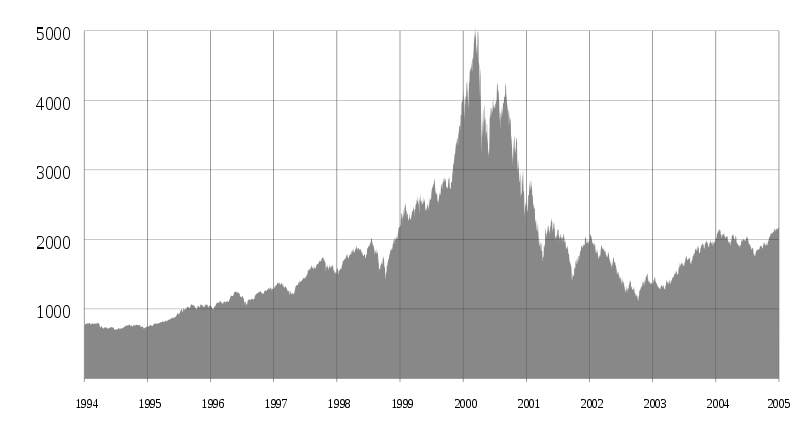
dot-com bubble
historic speculative bubble covering roughly 1997–2000

Thatcherism
Thatcherism is a form of British conservative ideology named after Conservative Party leader Margaret Thatcher that relates to not just her political platform and particular policies, but also her personal character and style of management while in office. Proponents of Thatcherism are referred to as Thatcherites. The term has been used to describe the principles of the British government under Thatcher from the 1979 general election to her resignation in 1990. In international terms, Thatcherites have been described as a part of the general socio-economic movement known as neoliberalism, with
Japanese economic miracle
period of Japan's rapid economic growth
Celtic Tiger
Irish economy (1994 to 2007)
Croatian dinar
former currency
Lost Decade
period of economic stagnation in Japan
Marrakech Agreement
April 1994 international free trade agreement signed in Marrakech, Morocco
Uruguay Round
1986-1994 series of free trade negotiations
Lithuanian talonas
former currency of Lithuania
Latvian rublis
former currency of Latvia
Republika Srpska dinar
currency of the Republika Srpska between 1992 and 1994
Tajikistani ruble
currency of Tajikistan between May 10, 1995 and October 29, 2000
Sanctions against Serbia
International sanctions crush Milosevic
savings and loan crisis
financial crisis of Savings and Loan Association failures
Krajina dinar
Currency of the Serbian Republic of Krajina between 1992 & 1994
Lewis Thompson Preston
American banker (1926-1995)

Pinochetism
Pinochetism () is an authoritarian political ideology rooted in the 17-year military dictatorship of Augusto Pinochet. Characterized by its staunch anti-communism, conservatism, militarism, and nationalism, Pinochetism represents a distinct strand of right-wing politics in Chile that combines authoritarian rule with free-market economics. The ideology's economic dimension was shaped by the Chicago Boys, Chilean economists who implemented neoliberal reforms that dramatically restructured Chile's economy.
Special Period
economic crisis in Cuba after the collapse of the Soviet Union
Multilateral Agreement on Investment
draft agreement negotiated between members of the Organisation for Economic Co-operation and Development (OECD) between 1995 and 1998
Great Moderation
phenomenon in economies of developed nations since the mid-1980s