Category
page 11st-century Christianity

Acts of the Apostles
book of the New Testament

Pentecost
Pentecost (also called Whit Sunday, Whitsunday or Whitsun) is a Christian holiday that takes place on the 49th day (50th day when inclusive counting is used) after Easter. It commemorates the descent of the Holy Spirit upon the Apostles of Jesus, Mary, and other followers of the Christ, while they were in Jerusalem celebrating the Feast of Weeks, as described in the Acts of the Apostles (Acts 2:1–31). Pentecost marks the "Birthday of the Church".

Epistle to Philemon
book of the New Testament attributed to Paul

Pontius Pilatus
fifth Prefect of the Roman province of Judaea, from AD 26–36
apostle
primary disciples of Jesus in the New Testament

Resurrection of Jesus
event in the Christian faith, Gospel episode represented in the cycle of the Passion of Christ Central teaching of Christianity; Luke 24:1-11

Baptism of Jesus
event in the life of Jesus

Early Christianity
period of church history beginning with the ministry of Jesus (c. 27-30) and ending with the First Council of Nicaea (325)

Great Fire of Rome
urban fire in Ancient Rome of July AD 64
Jewish Christian
members of the Jewish movement that later became Christianity
Seven churches of Asia
seven major churches of Early Christianity
Great Commission
words of Jesus in Matthew 28:19–20: “Go ye therefore, and teach all nations, baptizing them in the name of the Father, and of the Son, and of the Holy Ghost: Teaching them to observe all things whatsoever I have commanded you”

Cenacle
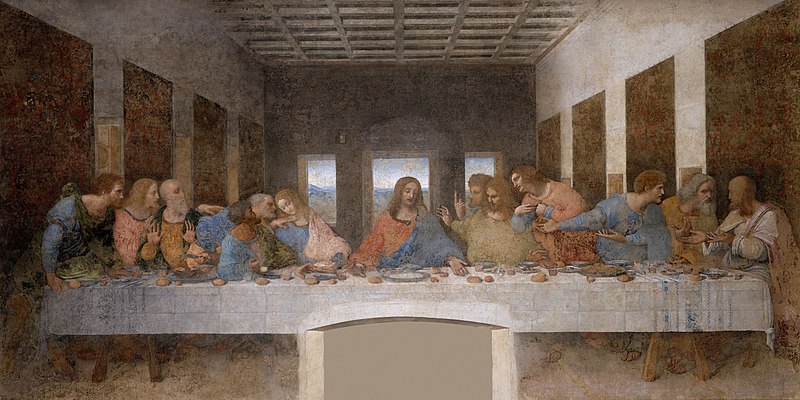
The Cenacle (from the Latin , "dining room"), also known as the Upper Room (from the Koine Greek anagaion and hyperōion, both meaning "upper room"), is a room in Mount Zion in Jerusalem, just outside the Old City walls, traditionally held to be the site of the Last Supper, the final meal that, in the Gospel accounts, Jesus held with the apostles.
Apostolic Age
period of early Christian history dated from 33 AD to 100 AD
siblings of Jesus
four men (James, Joseph/Joses, Judas, Simon) described in the New Testament as brothers of Jesus, along with unnamed sisters; in Christian denominations teaching the perpetual virginity of Mary, rationalized as half-siblings or other relatives
Nazarene
sect of 4th-century Christianity described by Epiphanius of Salamis
Johannine Comma
Interpolated phrase in verses 5:7–8 of 1 John
Conversion of Paul the Apostle
event that led Paul to cease persecuting early Christians and to become an apostle of Jesus

Cerinthus
Cerinthus (; fl. c. 50-100 CE) was an early Gnostic, who was prominent as a heresiarch in the view of the early Church Fathers. Contrary to the Church Fathers, he used the Gospel of Cerinthus, and denied that the Supreme God made the real world. In Cerinthus' interpretation, the Christ descended upon Jesus at baptism and guided him in ministry and the performing of miracles, but left him at the crucifixion. Similarly to the Ebionites, he maintained that Jesus was not born of a virgin, but was a mere man, the biological son of Mary and Joseph.
New Covenant
biblical interpretation
Nicolaism
Nicolaism (also called Nicholairufus, Nicolaitism, Nicolationism or Nicolaitanism) was an early Christian sect mentioned twice in the Book of Revelation of the New Testament. The adherents were called Nicolaitans, Nicolaitanes, or Nicolaites. They were considered heretical by the mainstream early Christian Church. According to Revelation 2:6 and 15, they were known in the cities of Ephesus and Pergamum. In this chapter, the church at Ephesus is endorsed for "[hating] the works of the Nicolaites, which I also hate"; and the church in Pergamos is rebuked: "So thou hast also some [worshiping in t
Gospel harmony
compilation of the canonical gospels of the Christian New Testament into a single account
Pauline Christianity
beliefs espoused by Paul the Apostle
census of Quirinius
enrollment of the Roman provinces of Syria and Judaea for tax purposes taken in 6/7 CE
Saint Peter's tomb
site under St. Peter's Basilica to memorialize the location of St. Peter's grave
chronology of Jesus
timeline of the life of Jesus
language of Jesus
language(s) spoken by Jesus
Primacy of Simon Peter
position of preeminence that is attributed to Peter among the Twelve Apostles

Judaizers
The Judaizers were a faction of the Jewish Christians, both of Jewish and non-Jewish origins, who regarded the Levitical laws of the Old Testament as still binding on all Christians. They tried to enforce Jewish circumcision upon the Gentile converts to early Christianity and were strenuously opposed and criticized for their behavior by the Apostle Paul, who employed many of his epistles to refute their doctrinal positions.
Johannine literature
the collection of New Testament works traditionally attributed to John the Apostle or to a Johannine Christian community: the Gospel of John, the 1st–3rd Epistles of John, and the Book of Revelation
.jpg)
God-fearer
thumb|right|250px|Sardis Synagogue (3rd century, [[Turkey) had a large community of God-fearers and Jews integrated into the Roman civic life.]]

Joseph and Aseneth
ancient narrative about the Hebrew patriarch Joseph’s marriage to Asenath
Herodians
The Herodians (; ) were a sect of Hellenistic Jews mentioned in the New Testament on two occasions – first in Galilee and later in Jerusalem – being hostile to Jesus (, ; ; cf. also , ). In each of these cases their name is coupled with that of the Pharisees.
Ante-Nicene Period
period following the Apostolic Age to the First Council of Nicaea in 325

Confession of Peter
an episode in the New Testament in which the Apostle Peter proclaims Jesus to be the Christ
Johannine community
ancient Christian community that supposedly authored the Johannine literature
authorship of the Johannine works
overview about the authorship of the Johannine works
circumcision controversy in early Christianity
Incident at Antioch
dispute between Paul and Peter said to haven taken place during the Apostolic Age
Religio licita
Permitted religion in ancient Roman law
Jesus' interactions with women
aspect of the theological debate about Christianity and women
Jerusalem in Christianity
Jerusalem's role in first century Christianity
Authorship of the Pauline epistles
books of the Bible written by Paul the Apostle
Oral gospel traditions
Oral stage in the formation of the gospels
Paul the Apostle and Judaism
Paul the Apostle and Jewish Christianity
Persecution of Christians in the New Testament
Persecuted of Christians for their heterodox beliefs by a Jewish establishment in what was then the Roman province of Judea
Paul the Apostle and women
aspect of history
Flight to Pella
Story of mass fleeing to northwest Jordan
Gamaliel's principle
Biblical theory to leave matters to God
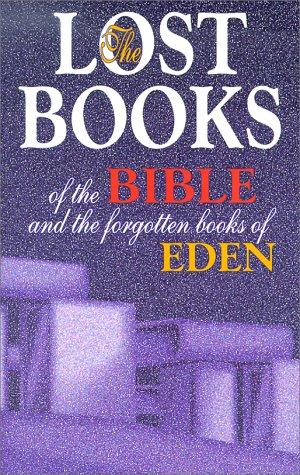
The Lost Books of the Bible and the Forgotten Books of Eden
English translations of pseudepigrapha and apocryphon