Category
page 13D human-computer interaction
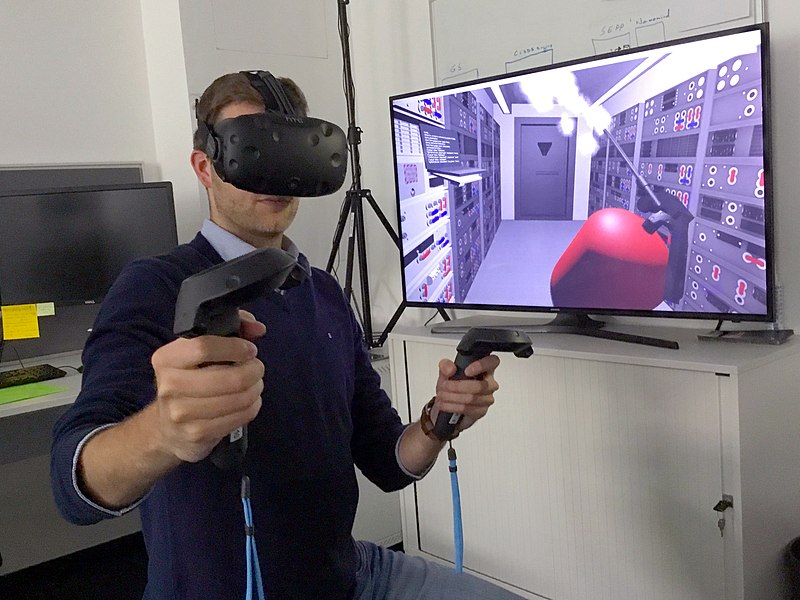
virtual reality
computer-simulated environment simulating physical presence in real or imagined worlds

augmented reality
interactive experience of a real-world environment enhanced by computer-generated perceptual information spatially registered to the user's environment
.jpg)
Kinect
Kinect is a discontinued line of motion sensing input devices produced by Microsoft and first released in 2010. The devices generally contain RGB cameras, and infrared projectors and detectors that map depth through either structured light or time of flight calculations, which can in turn be used to perform real-time gesture recognition and body skeletal detection, among other capabilities. They also contain microphones that can be used for speech recognition and voice control.
virtual reality headset
head-mounted device that provides virtual reality for the wearer
Stereo display
display device
Leap Motion
American manufacturer of computer hardware sensor devices
Cave automatic virtual environment
immersive virtual reality environment
BumpTop
BumpTop is a 3D desktop environment that simulates the normal behavior and physical properties of a real-world desk and enhances it with automatic tools to organize its contents. It is aimed at stylus interaction, making it more suitable for tablet computers and handheld PCs. It was created at the University of Toronto as Anand Agarawala's master's thesis. Agarawala also gave a presentation at the TED conference about his idea. The 1.0 version was released on April 8, 2009, along with a fully featured pro version as a paid upgrade. On April 30, 2010 the author announced that BumpTop was being
ARToolKit
ARToolKit is an open-source computer tracking library for creation of augmented reality applications that overlay virtual imagery on the real world. Currently, it is maintained as an open-source project hosted on GitHub.