Category
page 13rd-century Arab people

Philip the Arab
Roman Emperor (204-249)
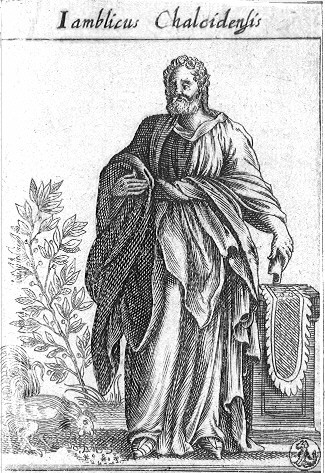
Iamblichus
Iamblichus ( ; ; ; ) was a Syrian Arab Neoplatonist philosopher who determined a direction later taken by Neoplatonism. Iamblichus was also the biographer of the Greek mystic, philosopher, and mathematician Pythagoras. In addition to his philosophical contributions, his is important for the study of the sophists because it preserved about ten pages of an otherwise unknown sophist known as the Anonymus Iamblichi.

Julia Domna
ancient Roman empress
Saints Cosmas and Damian
twins and early Christian martyrs born in Arabia

Odaenathus
Septimius Odaenathus (; ; – 267) was the founding king (malik) of the Palmyrene Kingdom who ruled from Palmyra, Syria. He elevated the status of his kingdom from a regional center subordinate to Rome into a formidable state in South-West Asia. Odaenathus was born into an aristocratic Palmyrene family that had received Roman citizenship in the 190s under the Severan Dynasty. He was the son of Hairan, the descendant of Nasor. The circumstances surrounding his rise are ambiguous; he became the lord (ras) of the city, a position created for him, as early as the 240s and by 258, he was styled a con
Julia Maesa
grandmother of Roman emperors Elagabalus and Severus Alexander

Philippus II
consul of the Roman Empire (237-249)

Vaballathus
Septimius Vaballathus (; ; – ) was emperor of the Palmyrene Empire centred at Palmyra in the region of Syria.

Gaius Julius Priscus
brother of Roman emperor Philip the Arab

Uranius
thumb|300px|Uranius Antoninus coin, with Greek inscriptions and dated according to the Seleucid Empire. On the reverse, the Emesa temple to the sun god El Gabal, with the holy stone.
Fihr ibn Malik
Pre-Islamic Arab chief
'Amr ibn Luhayy
Pre-islamic tribal chief

Maeonius
200px|thumb|Maeonius from the Promptuarii Iconum Insigniorum
thumb|Zenobia sentences to death Maeonius, the murderer of her husband Odaenathus, end of 16th century, Bruxelles manufacture
Hairan I
co-king of Palmyra from 263 to 267
'Amr ibn Adi
Late 3rd-century first Lakhmid king
Imru' al-Qays ibn 'Amr
Second Lakhmid king
Abgar IX
ruler of Osroene from 212 to 213
Callinicus
3rd-century Greek historian, orator, rhetorician and sophist
Lu'ayy ibn Ghalib
ancestor of Islamic prophet Muhammad of Arabia
Julius Bassianus
Syrian high priest of Elagabalus (died 217)
Ghalib bin Fihr
direct ancestor of Muhammad
Sanatruq II
ruler of Mesopotamian kingdom of Hatra from c. 205 to 241
Malik bin An-Nadhar
217
Abgar VIII
King of Osroene
Hairan II
3rd century prince of Palmyra
Abdsamiya
Abdsamiya () was a king of Hatra, an ancient city and kingdom in ancient Mesopotamia. He reigned from about AD 180 to 205. Abdsamiya was the son of king Sanatruq I and the father of Sanatruq II. Abdsamiya is known from eight inscriptions found at Hatra. One of them reports the building of a porticus for the king and is dated to year 504 of the Seleucid era (AD 192/93). Another inscription appears on a statue and is dated to AD 201/202. Abdsamiya is most likely also mentioned by Herodian (3.1.3), where he is named as Barsemias, there he is reported to have supported Pescennius Niger against Sep
Timolaus of Palmyra
probably fictional Roman usurper
Afira bint Abbad
Arabic poet
Monoimus
Monoimus (lived somewhere between 150 - 210 CE) was an Arab gnostic (Arabic name ), who was known only from one account in Theodoret (Haereticarum Fabularum Compendium i. 18) until a lost work of anti-heretical writings (Refutation of All Heresies, book 8, chapter V) by Hippolytus was found. He is known for coining the usage of the word Monad in a Gnostic context. Hippolytus claims that Monoimus was a follower of Tatian, and that his cosmological system was derived from that of the Pythagoreans, which indeed seems probable. But it was also clearly inspired by Christianity, monism and Gnosticis