Category
page 13rd-century writers

Origen
Origen of Alexandria (), also known as Origen Adamantius, was an early Christian scholar, ascetic, and theologian who was born and spent the first half of his career in Alexandria. He was a prolific writer who wrote roughly 2,000 treatises in multiple branches of theology, including textual criticism, biblical exegesis and hermeneutics, homiletics, and spirituality. He was one of the most influential and controversial figures in early Christian theology, apologetics, and asceticism. He has been described by John Anthony McGuckin as "the greatest genius the early church ever produced".

Diophantus of Alexandria
Diophantus of Alexandria () (; ) was a Greek mathematician who was the author of the Arithmetica in thirteen books, ten of which are still extant, made up of arithmetical problems that are solved through algebraic equations.
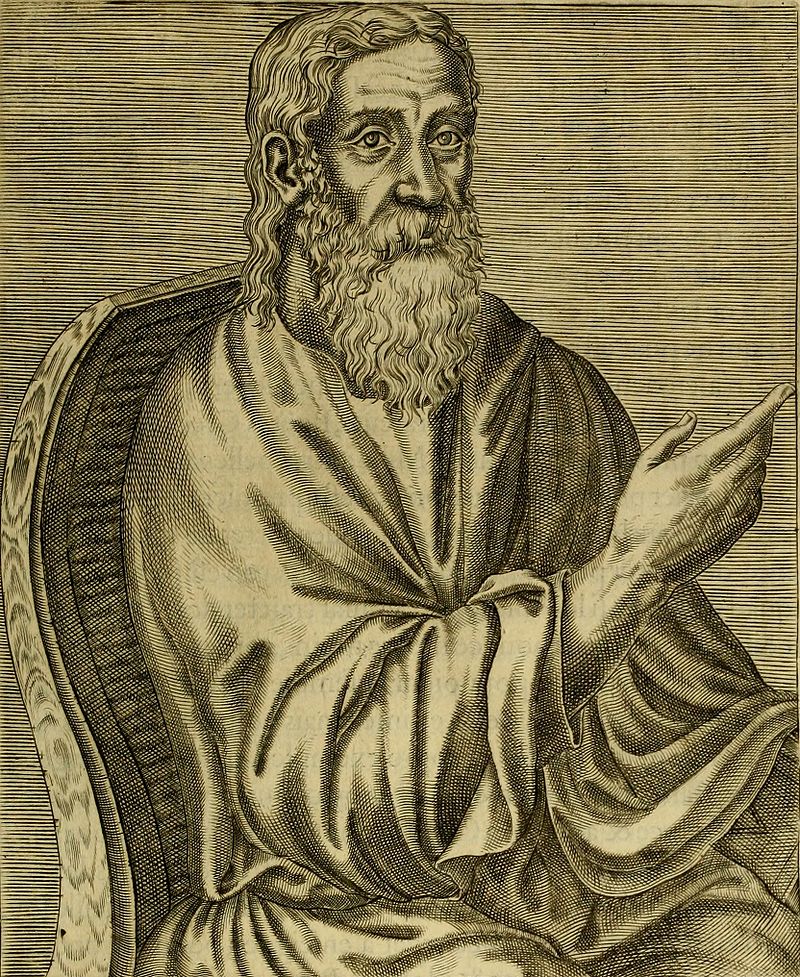
Clement of Alexandria
Christian theologian (c.150 – c.215)

Mani
3rd century prophet and founder of Manichaeism
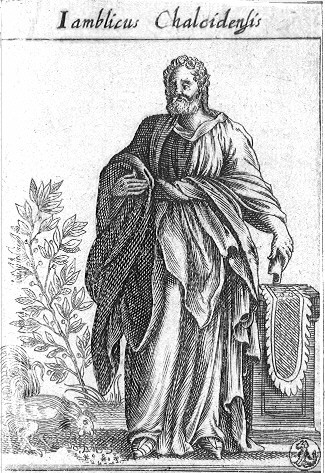
Iamblichus
Iamblichus ( ; ; ; ) was a Syrian Arab Neoplatonist philosopher who determined a direction later taken by Neoplatonism. Iamblichus was also the biographer of the Greek mystic, philosopher, and mathematician Pythagoras. In addition to his philosophical contributions, his is important for the study of the sophists because it preserved about ten pages of an otherwise unknown sophist known as the Anonymus Iamblichi.

Ulpian
Ulpian (; ; 223 or 228) was a Roman jurist born in Tyre in Roman Syria (modern Lebanon). He moved to Rome and rose to become considered one of the great legal authorities of his time. He was one of the five jurists upon whom decisions were to be based according to the Law of Citations of Valentinian III, and supplied the Justinian Digest about a third of its contents.

Aelian
Roman author and teacher (c.175–c.235)

Papinian
Aemilius Papinianus (; ; 142 CE–212 CE), simply rendered as Papinian () in English, was a celebrated Roman jurist, magister libellorum, attorney general (advocatus fisci) and, after the death of Gaius Fulvius Plautianus in 205 CE, praetorian prefect.

Heliodorus of Emesa
3rd/4th century Greco-Roman writer

Sextus Julius Africanus
Greco-Roman Christian traveller and historian (c.160–c.240)

Julius Paulus
late 2nd/early 3rd century Roman jurist and possibly father of empress Julia Cornelia Paula
Cassius Longinus
Syrian/Egyptian Neoplatonist philosopher (c.213–273)
Bardaisan
Bardaisan (11 July 154 – 222 AD; , Bar Dayṣān; also Bardaiṣan), known in Arabic as ibn Dayṣān () and in Latin as Bardesanes, was a Syriac-speaking Christian writer and teacher with a Gnostic background, and founder of the Bardaisanites.
Xenophon of Ephesus
Greek writer
Anatolius of Laodicea
Bishop of Laodicea
Amelius
Amelius Gentilianus (; ), was a Neoplatonist philosopher and writer of the second half of the 3rd century.
Hermias
Christian apologist
Apsines
Apsines of Gadara (; fl. 3rd century AD) was a Greek rhetorician. He was a native of the Hellenised city of Gadara, whose ruins stand today at the border of Jordan with Syria and Israel. Apsines went on to study at Smyrna and taught at Athens, gaining such a reputation that he was raised to the consulship by the emperor Maximinus. He was a rival of Fronto of Emesa, and a friend of Philostratus, the author of the Lives of the Sophists, who praises his wonderful memory and accuracy.
Zhi Qian
3rd century Buddhist monk and translator active in the Kingdom of Wu
Caius
ealry 3rd-century Christian author
Zuo Fen
Chinese poet (c. 255–300)
Perpetua
REDIRECT Perpetua and Felicity
Philagrius of Epirus
ancient Greek physician
Fronto of Emesa
3rd-century Greek rhetorician