Category
page 14th-century births

Kalidasa
Kālidāsa (, "Servant of Kali"; 4th–5th century CE) was a Classical Sanskrit author who is often considered ancient India's greatest poet and playwright. His plays and poetry are primarily based on Hindu Puranas and philosophy. His surviving works consist of three plays, two epic poems and two shorter poems.

Hypatia
Hypatia (born 350–370 – March 415 AD) was a Neoplatonist philosopher, astronomer, and mathematician who lived in Alexandria, at that time in the province of Egypt and a major city of the Roman Empire. In Alexandria, Hypatia was a prominent thinker who taught subjects including philosophy and astronomy, and in her lifetime was renowned as a great teacher and a wise counselor. Not the only fourth century Alexandrian female mathematician, Hypatia was preceded by Pandrosion. However, Hypatia is the first female mathematician whose life is reasonably well recorded. She wrote a commentary on Di
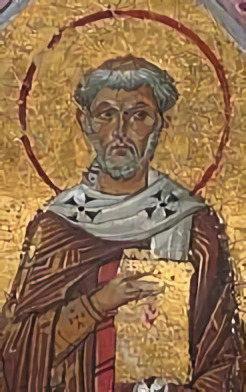
Leo I
Pope from 440 to 461 (390–461)
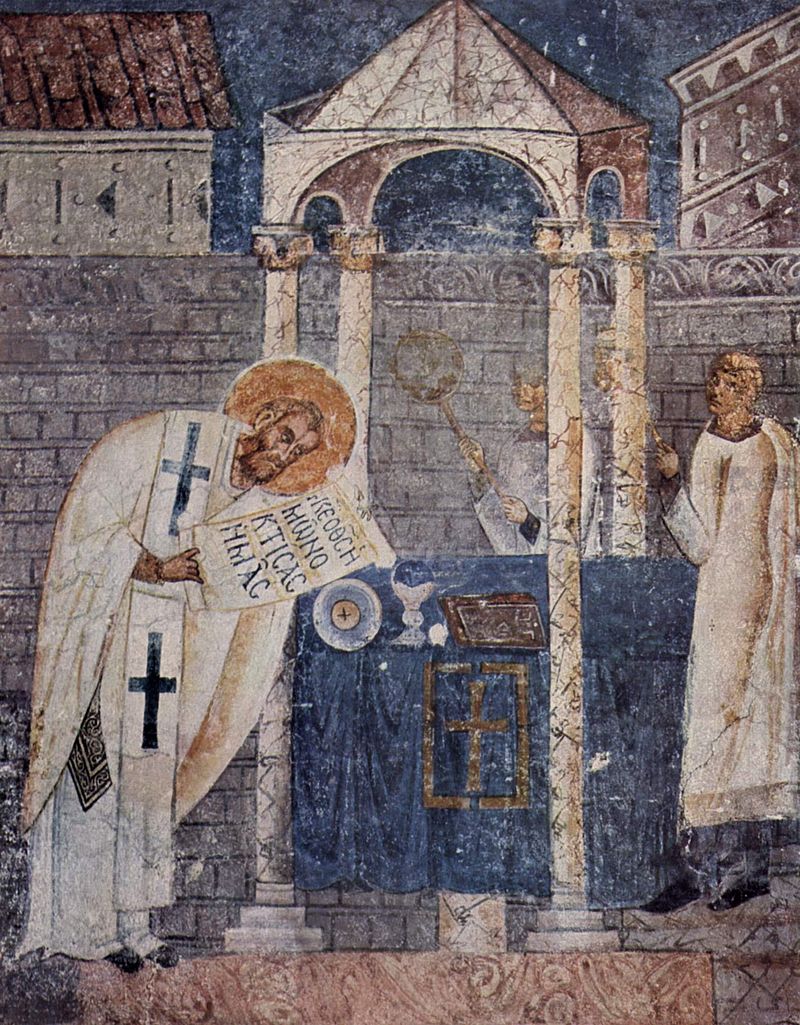
Basil of Caesarea
4th-century Christian bishop, theologian, and saint (329–379)

Saint Patrick
Saint Patrick was a fifth-century Romano-British Christian missionary and bishop in Ireland. Known as the "Apostle of Ireland", he is the primary patron saint of Ireland, the other patron saints being Brigid of Kildare and Columba. He is also the patron saint of Nigeria. Patrick is venerated as a saint in the Catholic Church, the Church of Ireland, Lutheranism, and in the Eastern Orthodox Church, where he is regarded as equal-to-the-apostles and Enlightener of Ireland.

Ammianus Marcellinus
4th-century Roman historian and soldier

Ausonius
Decimus Magnus Ausonius (; ) was a Roman poet and teacher of rhetoric from Burdigala, Aquitaine (now Bordeaux, France). For a time, he was tutor to the future Emperor Gratian, who afterwards bestowed the consulship on him. His best-known poems are Mosella, a description of the River Moselle, and Ephemeris, an account of a typical day in his life. His many other verses show his concern for his family, friends, teachers and circle of well-to-do acquaintances and his delight in the technical handling of meter.

Avitus
Eparchius Avitus (died 456/7) was Roman emperor of the Western Empire from July 455 to October 456. He was a senator of Gallic extraction and a high-ranking officer both in the civil and military administration, as well as Bishop of Piacenza.

Epiphanius of Salamis
4th century Christian bishop and saint

Aurelius Victor
4th century Roman historian and politician

Pelagius
Pelagius ( ; 354–418) was a Christian theologian known as an ascetic monk and promoting a system of doctrines (termed Pelagianism by the Catholic Church) which emphasized human choice in salvation and denied original sin. Pelagius was accused of heresy at the Synod of Diospolis in 415 and his doctrines were harshly criticized by Augustine of Hippo, especially the Pelagian views about mankind's good nature and individual responsibility for choosing asceticism. Pelagius especially stressed the freedom of human will. Very little is known about the personal life and career of Pelagius, although he

Vasubandhu
Vasubandhu (; Tibetan: དབྱིག་གཉེན་ ; fl. 4th to 5th century CE) was an influential Indian Buddhist monk and scholar. He was a philosopher who wrote commentary on the Abhidharma, from the perspectives of the Sarvastivada and Sautrāntika schools. After his conversion to Mahayana Buddhism, along with his brother, Asanga, he was also one of the main founders of the Yogacara school.

Constantine III
Western Roman Emperor from 407 to 411
Yazdegerd I
The 14th Sassanid Emperor (399–420)

Ardashir II
The 11th Sassanid Emperor (379–383)
Felix II
archdeacon of Rome, antipope or pope in 355 (died 365)

Shapur III
The 12th Sasanian emperor (383–388)
Eugenius
Eugenius (died 6 September 394) was a Western Roman emperor from 392 to 394, unrecognized by the Eastern Roman emperor Theodosius I. While Christian himself, Eugenius capitalized on the discontent in the West caused by Theodosius' religious policies targeting pagans. He renovated the pagan Temple of Venus and Roma and restored the Altar of Victory after continued petitions from the Roman Senate. Eugenius replaced Theodosius' administrators with men loyal to him. This included pagans, reviving the pagan cause. His army fought the army of Theodosius at the Battle of the Frigidus, where he was ca

Wang Xizhi
Chinese calligrapher (c. 321 – c. 361)

Bahram IV
The 13th Sassanid Emperor (388–399)

Aelia Eudoxia
Empress consort of the Byzantine Emperor Arcadius

Eunapius
thumb|Title page of the Vitae sophistarum of Eunapius, in Greek and Latin, 1596
Eunapius (; c. 347 – c. 420) was a Greek sophist, rhetorician, and historian from Sardis in the region of Lydia in Asia Minor. His principal surviving work is the Lives of Philosophers and Sophists (; ), a collection of the biographies of 24 philosophers and sophists.

Frumentius
thumb|Frumentius

Uldin
thumb|Detail of the Hun king in Caravaggio's The Martyrdom of Saint Ursula, 1610
Uldin, also spelled Huldin (died before 412), is the first Hunnic ruler whose historicity is undisputed.

Maron
Maron, also called Maroun or Maro (, '; , '; ; ), was a 4th-century Syriac Christian hermit monk in the Taurus Mountains whose followers, after his death, founded a religious Christian movement that became known as the Maronite Church, in full communion with the Holy See and the Catholic Church. The religious community which grew from this movement are the modern Maronites.

Anatolius of Constantinople
Eastern Orthodox saint
Flavius Victor
emperor of the Western Roman Empire
Meletius of Antioch
Christian bishop of Antioch from 360 to 381

Gainas
Gainas (?-400 AD, Greek: Γαϊνάς) was a Gothic leader who served the Eastern Roman Empire as magister militum during the reigns of Theodosius I and Arcadius. He played an important role in the events in the eastern part of the empire by the end of the 4th century.
Olympiodorus of Thebes
late-antique Greek-language historian

Shenute
Shenoute of Atripe, also known as Shenoute the Great or Saint Shenoute the Archimandrite (Coptic: ), was the abbot of the White Monastery in Egypt. He is considered a saint by the Oriental Orthodox Churches and is one of the most renowned saints of the Coptic Orthodox Church.

Serena
niece of Roman emperor Theodosius I
Galla
Roman empress, wife of Theodosius I
Amphilochius of Iconium
bishop of Iconium
Macarius of Alexandria
monk in the Nitrian Desert
Helena
daughter of Roman emperor Constantine the Great and Roman empress as the consort of Julian

Gibica
thumb|King Geppich battles Hildebrand in [[Rosengarten zu Worms]]
Gibica, better know by his later legendary names Gjúki or Gibeche, was an early king of the Burgundians. He is attested as one of the earlier kings in the prologue to the Lex Burgundionum (516 AD); otherwise, nothing is known about the historical figure. In later Germanic heroic legend, he becomes the father of other Burgundian kings and figures, including Gunther/Gunnarr and Gudrun/Kriemhild. Depending on the text, he may also be the father of Giselher, Gernot, and/or Högni. Some German sources, including the Nibelungenlied, re
Justina
Roman empress as the wife of Valentinian I
Anthemius
Pretorian Prefect of the East
Saint Telemachus
Roman saint and martyr
Maria
Roman empress, wife of Honorius
Archbishop Atticus of Constantinople
Archbishop of Constantinople
Sosipatra
Sosipatra () was a Greek Neoplatonist philosopher and mystic who lived in Ephesus and Pergamon in the first half of the 4th century AF. The story of her life is told in Eunapius' Lives of the Sophists.
Gaudentius of Brescia
Bishop of Brescia
Maruthas
5th century Christian saint
Cassian of Imola
Bishop of Brescia
Saint Bibiana
Italian martyr and saint
Saint Fabiola
saint
Saint Aurelius
Bishop of Carthage

Possidius of Calama
Possidius (5th century) was a friend of Augustine of Hippo who wrote a biography and an indiculus or list of his works. He was bishop of Calama in the Roman province of Numidia.
Eusebia
Roman empress as the consort of Constantius II
%20Foukas.%20Fresco.%20Athos%20(Dionysiou).jpg)
Poemen
Poemen the Great (Greek: Ὁ Ἅγιος Ποιμήν; ποιμήν means "shepherd") (c. 340–450) was a Christian monk and early Desert Father who is the most quoted Abba (Father) in the Apophthegmata Patrum (Sayings of the Desert Fathers). Poemen was quoted most often for his gift as a spiritual guide, reflected in the name "Poemen" ("Shepherd"), rather than for his asceticism. He is considered a saint in Eastern Christianity. His feast day is August 27 in the Julian calendar (September 9 in the Gregorian calendar).
Aphthonius of Antioch
Greek sophist and rhetorician
Thermantia
Aemilia Materna Thermantia (died 415) was the second Empress consort of Honorius, Western Roman Emperor.
Niall of the Nine Hostages
Irish king (5th century)
Goar
Goar (born before 390, died between 446 and 450) was a leader of the Alans in 5th-century Gaul. Around the time that the Vandals and other Alans under Respendial crossed the Rhine in 405 or 406, Goar's band of Alans quickly joined the Romans, and subsequently played a role in the internal politics of Gaul.
Fravitta
Flavius Fravitta (Greek: ; died 404/405) was a leader of the Goths and a top-ranking officer in the army of the Eastern Roman Empire.
Acacius of Beroea
Syrian bishop
Acacius of Amida
bishop
Isaac of Dalmatia
Greek saint