Category
page 14th-century Christianity
Edict of Milan
legalization of Christianity in the Roman Empire, 313

Early Christianity
period of church history beginning with the ministry of Jesus (c. 27-30) and ending with the First Council of Nicaea (325)

Donatism
thumb|alt=Painting of Augustine of Hippo arguing with a man before an audience|Charles-André van Loo's 18th-century Augustine arguing with Donatists
Donatism was a schism from the Catholic Church in the Archdiocese of Carthage from the fourth to the sixth centuries. Donatists argued that Christian clergy must be faultless for their ministry to be effective and their prayers and sacraments to be valid. Donatism had its roots in the long-established Christian community of the Roman province Africa Proconsularis (present-day Tunisia, the northeast of Algeria, and the western coast of Libya) and M

Ezana of Axum
4th-century ruler of the Kingdom of Aksum
Edict of Thessalonica
380 CE edict establishing Christianity as the Roman Empire's state religion

labarum
thumb|The Labarum of Constantine I, reconstructed from the depiction on a follis minted . The three dots represent "medallions" which are said to have shown portraits of Constantine and his sons.
The labarum ( or λάβουρον) was a vexillum (military standard) that displayed the "Chi-Rho" symbol ☧, a christogram formed from the first two Greek letters of the word "Christ" (, or Χριστός) – Chi (χ) and Rho (ρ). It was first used by the Roman emperor Constantine the Great.
Apollinarism
Apollinarism or Apollinarianism is a Christological position proposed by Apollinaris of Laodicea that argues that Jesus had not a human body and sensitive soul, but a divine mind and body, the Divine Logos taking the place of the latter. It was deemed heretical by the First Council of Constantinople in 381 and virtually died out within the following decades.

Mirian III of Iberia
first Iberian king from the Chosroid dynasty
Edict of Toleration by Galerius
edict ending the Diocletianic persecution of Christianity in the East of the Roman Empire
Diocletianic Persecution
(303-313) last and most severe persecution of Christians in the Roman Empire
Nazarene
sect of 4th-century Christianity described by Epiphanius of Salamis
Council of Sardica
synod
Lapsi
Christians who bowed to external pressure
Christianization of Iberia
spread of Christianity in the Kingdom of Iberia
Priscillianism
Priscillianism was a Christian sect developed in the Roman province of Hispania in the 4th century by Priscillian. It is derived from the Gnostic doctrines taught by Marcus, an Egyptian from Memphis. Priscillianism was later considered a heresy by both the Eastern Orthodox Church and the Catholic Church.
Constantine the Great and Christianity
religious policies, beliefs, and effects of Constantine I
Edict of toleration
declaration made by a government or ruler on freedom of religion
Great Apostasy
theory in some Christian churches
Vettius Agorius Praetextatus
Roman senator and governor (320-384)
Ante-Nicene Period
period following the Apostolic Age to the First Council of Nicaea in 325
Constantinian shift
changes in Christianity associated with Constantine the Great
Traditors
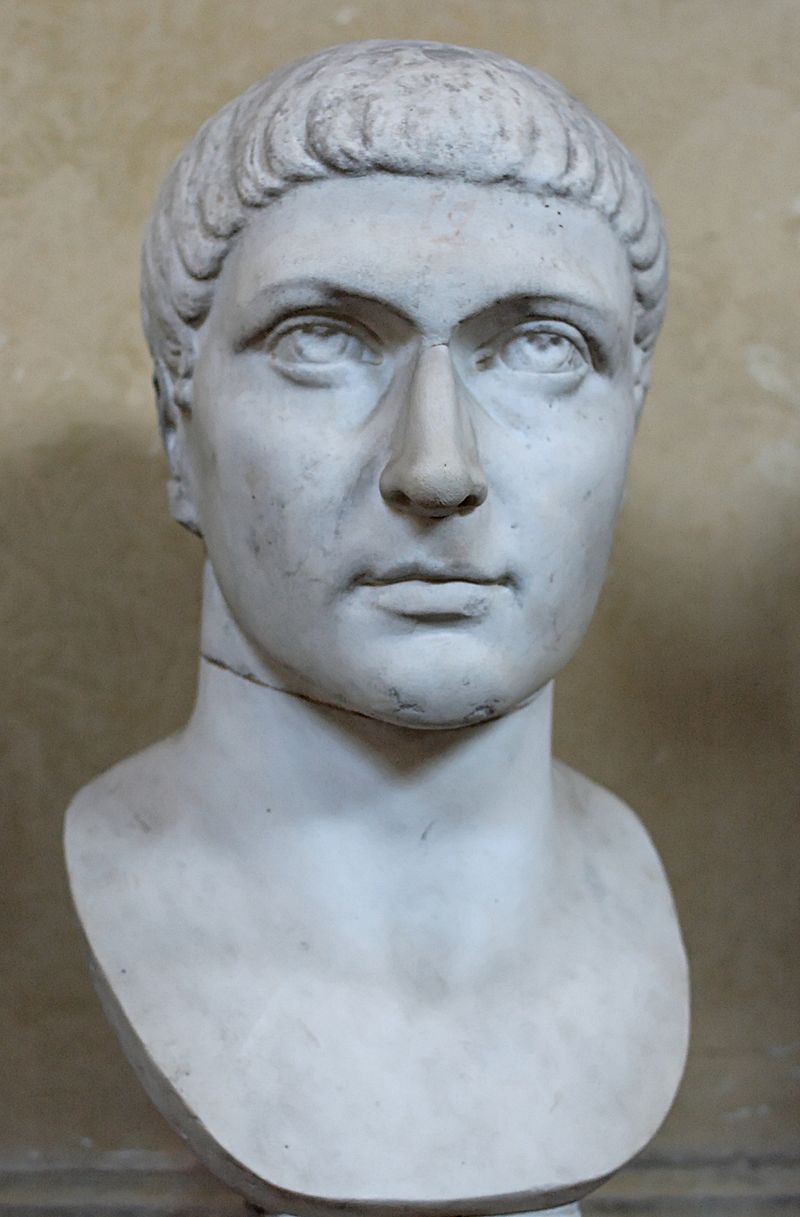
thumb|right|Sculpture of Constantine I (emperor)|Constantine I in York, England.
Traditor, plural: traditores (Latin), is a term meaning "the one(s) who had handed over" and defined by Merriam-Webster as "one of the Christians giving up to the officers of the law the Scriptures, the sacred vessels, or the names of their brethren during the Roman persecutions". The word traditor comes from the Latin transditio from trans (across) + dare (to hand, to give), and is the source of the modern English words traitor and treason. The same root word, with a different context of what is handed to whom, g
Religio licita
Permitted religion in ancient Roman law

Lullingstone Roman Villa
Roman villa in Lullingstone, Kent, United Kingdom
religious policies of Constantine the Great
Roman religious policy under Constantine I (312-337 CE)
Christianization of Armenia
spread of Christian faith to Armenia
Christianity in the 4th century
overview of Christianity-related events during the 4th century
Salome of Ujarma
daughter of Tiridates III of Armenia and wife of Rev II of Iberia
Tomus ad Antiochenos
synodal letter by Athanasius of Alexandria to the people of Antioch
Baptistrery of San Giovanni in Fonte (Naples)
Paleochristian bapistery