Category
page 17th-century archbishops
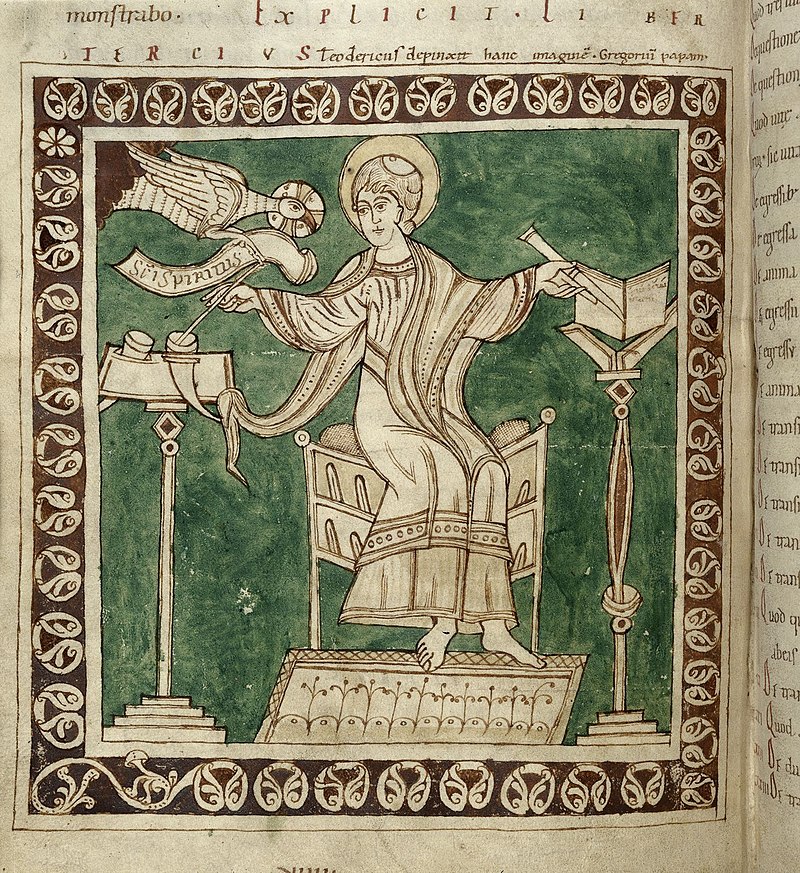
Gregory I
64th Bishop of Rome, Head of the Roman Catholic Church from 590 to 604

Isidore of Seville
Hispano-Roman scholar, theologian and bishop (c. 560–636)

Benedict II
pope

Boniface V
pope

Leo II
pope

Martin I
7th‑century pope and martyr, bishop of Rome (649–655), exiled for opposing Monothelitism, venerated as a saint in Catholic and Orthodox Churches

Sergius I
pope

John IV
pope

Agatho
pope

Adeodatus I
pope

Adeodatus II
pope

John V
pope

Theodore I
pope

Vitalian
7th-century pope

Boniface IV
pope

Conon
pope (630-687)

Severinus
7th-century pope

Donus
7th century pope

Sabinian
pope

Eugene I
pope

Boniface III
pope
Paschal
archdeacon, antipope in 687

Theodore
presbyter and priest, antipope c. 687

Justus
Justus (died on 10 November between 627 and 631) was the fourth archbishop of Canterbury. Pope Gregory the Great sent Justus from Italy to England on a mission to Christianise the Anglo-Saxons from their native paganism; he probably arrived with the second group of missionaries dispatched in 601. Justus became the first bishop of Rochester in 604 and signed a letter to the Irish bishops urging the native Celtic church to adopt the Roman method of calculating the date of Easter. He attended a church council in Paris in 614.
Laurence of Canterbury
second Archbishop of Canterbury
Theodore of Tarsus
Archbishop of Canterbury

Mellitus
Mellitus (; died 24 April 624) was the first bishop of London in the Saxon period, the third archbishop of Canterbury, and a member of the Gregorian mission sent to England to convert the Anglo-Saxons from their native paganism to Christianity. He arrived in 601 AD with a group of clergy sent to augment the mission, and was consecrated as Bishop of London in 604. Mellitus was the recipient of a famous letter from Pope Gregory I known as the Epistola ad Mellitum, preserved in a later work by the medieval chronicler Bede, which suggested the conversion of the Anglo-Saxons be undertaken gradually
Honorius
member of the Gregorian mission to the Anglo-Saxons and Archbishop of Canterbury
John Maron
Syrian bishop and saint

Catald
Catald of Taranto (also Cataldus, Cathaluds, Cathaldus, Cat(t)aldo, Cathal; fl. 7th century) was an Irish monk.
Deusdedit of Canterbury
Archbishop of Canterbury
Anastasius II of Antioch
bishop of Antioch
Berhtwald
Berhtwald (died 731) was the ninth Archbishop of Canterbury in England. His predecessor had been Theodore of Tarsus. Berhtwald begins the first continuous series of native-born Archbishops of Canterbury, although there had been previous Anglo-Saxon archbishops, they did not succeed each other until Berhtwald's successor Tatwine.
Benedict
8th century bishop of Milan
Domitian of Melitene
Byzantine bishop and saint
Annemund
Saint Annemund, also known as Annemundus, Aunemundus, Ennemond and Chamond, was an archbishop of the Archdiocese of Lyon. Annemund was a councillor of Clovis II and a friend of Wilfrid of York. The year of his death is variously given as either 657 or 658. He is venerated as a saint in the Catholic Church.
Saint Modoald
Roman Catholic bishop
Wighard
Wighard (or Wigheard; died between 664 and 667) was a medieval Archbishop-elect of Canterbury. What little is known about him comes from 8th-century writer Bede, but inconsistencies between various works have led to confusion about the exact circumstances of Wighard's election and whether he was ever confirmed in that office. What is clear is that he died in Rome after travelling there for confirmation by the papacy of his elevation to the archbishopric. His death allowed Pope Vitalian to select the next archbishop from amongst the clergy in Rome.
Genesius of Lyon
Roman Catholic archbishop
Quiricus
Spanish bishop
Giwargis I
patriarch of the Church of the East
Ishoyahb II
patriach of the Church of the East
Macarius I of Antioch
Eastern Orthodox Patriarch