Category
page 17th-century BC monarchs

Numa Pompilius
legendary second king of Rome, succeeding Romulus
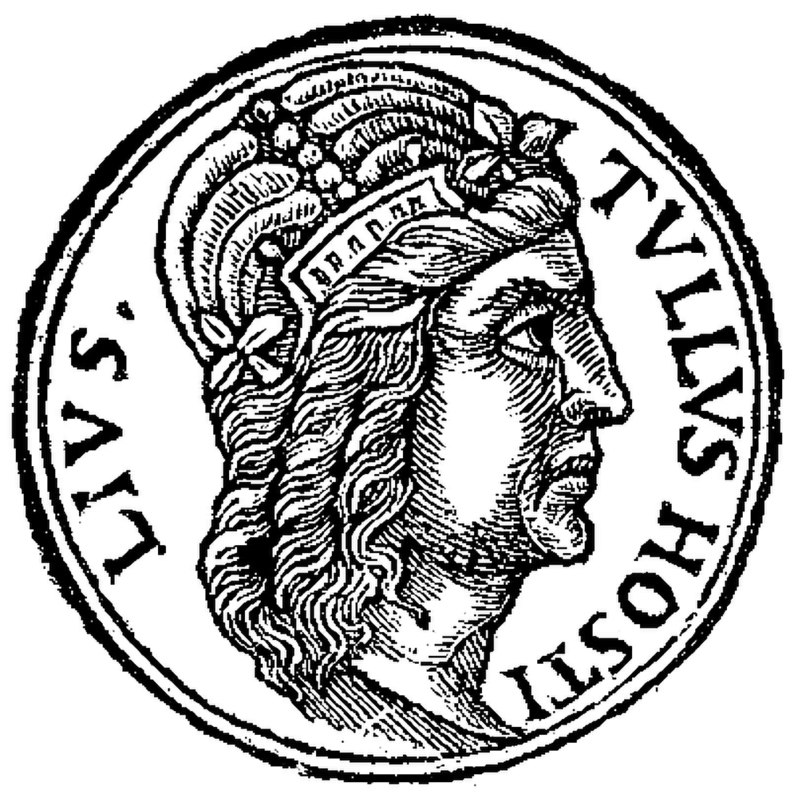
Tullus Hostilius
King of Rome from 672 to 640 BC

Ancus Marcius
legendary fourth king of Rome

Lucius Tarquinius Priscus
legendary fifth King of Rome
Anaxander
Anaxander or Anaxandros () was the 12th Agiad King of Sparta (ruled c. 640–615 BC).
Eurycrates
Eurycrates ( Eurykrátēs, "wide rule or power") was the 11th Agiad dynasty king of the Greek city-state of Sparta, who was preceded by his father Polydorus followed by his son Anaxander. He ruled from 665 to 640 BC.

Theopompus of Sparta
king of Sparta
Polydorus of Sparta
king of Sparta
Eurycratides
Eurycratides (, meaning "descendant of Eurycrates") was the thirteenth king of Sparta from the Agiad dynasty. He succeeded his father Anaxander around 615 BC and reigned during a devastating period of war with Tegea.
Battus I of Cyrene
first Greek king of Cyrenaica (died 600 BC)

Aristomenes
thumb|upright=1.5|Aristomenes fighting his way out of Eira.
Aristomenes () was a king of Messenia, celebrated for his struggle with the Spartans in the Second Messenian War (685–668 BC), and his resistance to them on Mount Eira for 11 years. At length the mountain fell to the enemy, while he escaped and, according to legend, was snatched up by the gods; in fact he died at Rhodes.
Archidamus I
6th-century BC Spartan king
Anaxandridas I
king of Sparta from c. 675 to c. 645 BC
Theagenes of Megara
tyrant
Zeuxidamus
Zeuxidamus () can refer to two ancient Spartans.
A king of Sparta, and 10th of the Eurypontid dynasty. He was grandson of Theopompus, son of Anaxandridas I, and father of Anaxidamus, who succeeded him.
A son of Leotychides, king of Sparta. He was also named Cyniscus (Κυνίσκος). He died before his father, leaving a son, Archidamus II
Anaxidamus
Anaxidamus () was a king of Sparta, 11th of the Eurypontids.
Arganthonios
Arganthonios () was a king of ancient Tartessos (in Andalusia, southern Spain) who according to Herodotus, was visited by Kolaios of Samos. Given the legendary status of Geryon, Gargoris and Habis, Arganthonios is the earliest documented monarch of the Iberian Peninsula.
Bellovesus
Bellovesus (Gaulish: 'Worthy of Power') is a legendary Gallic chief of the Bituriges, said to have lived ca. 600 BC. According to a legend recounted by Livy, the king Ambigatus sent his sister's sons Bellovesus and Segovesus in search of new lands to settle because of overpopulation in their homeland. While Segovesus headed towards the Hercynian Forest, Bellovesus is said to have led the Gallic invasion of the Po Valley during the legendary reign of the fifth king of Rome, Tarquinius Priscus (616–579 BC), where he allegedly conquered the Etruscans and founded the city of Mediolanum (Milan).
Gaius Cluilius
mythological 7th-century BC king of Alba Longa
Ambicatus
Ambicatus or Ambigatus (Gaulish: 'He who fights in both directions') is a legendary Gallic king of the Bituriges, said to have lived ca. 600 BC. According to a legend recounted by Livy, he sent his sister's sons Bellovesus and Segovesus in search of new lands to settle because of overpopulation in their homeland. Segovesus headed towards the Hercynian Forest, while Bellovesus is said to have led the Gallic invasion of the Po Valley during the legendary reign of the fifth king of Rome, Tarquinius Priscus (616–579 BC), where he allegedly conquered the Etruscans and founded the city of Mediolanum
Segovesus
Segovesus (Gaulish: 'Worthy of Victories') is a legendary Gallic chief of the Bituriges, said to have lived ca. 600 BC. According to a legend recounted by Livy, the king Ambigatus sent his sister's sons Bellovesus and Segovesus in search of new lands to settle because of overpopulation in their homeland. While Bellovesus is said to have led the Gallic invasion of northern Italy, Segovesus reportedly headed towards the Hercynian Forest, in Western Central Europe.
Galaurus
Galaurus () was an Illyrian king of the Taulantii State who reigned in the middle of the 7th century BC. After the first Illyrian invasion of Macedonia in 691 BC because of the interruption of friendly relations, the Illyrians did considerable damage by their ravages. Galaurus invaded Macedonia somewhere between 678–640 BC during the reign of Argaeus I. However the invasion was unsuccessful because Argaeus cut off great numbers and forced the remaining Illyrians to leave, although further invasions continued right to the time of Philip II.