Category
page 18th-century births

Leo III
Pope of the Catholic Church from 795 to 816 (born 750–816)

Paschal I
pope

Stauracius
Staurakios or Stauracius (; early 790s – 11 January 812) was the shortest-reigning Byzantine emperor, ruling for 68 days between 26 July and 2 October 811.

Krum
Krum (, ), often referred to as Krum the Fearsome (c. mid 8th century – 13 April 814) was the Khan of First Bulgarian Empire from sometime between 796 and 803 until his death in 814. During his reign the Bulgarian territory doubled in size, spreading from the middle Danube to the Dniester and from Odrin to the Tatra Mountains. His able and energetic rule brought law and order to Bulgaria and developed the rudiments of state organization.
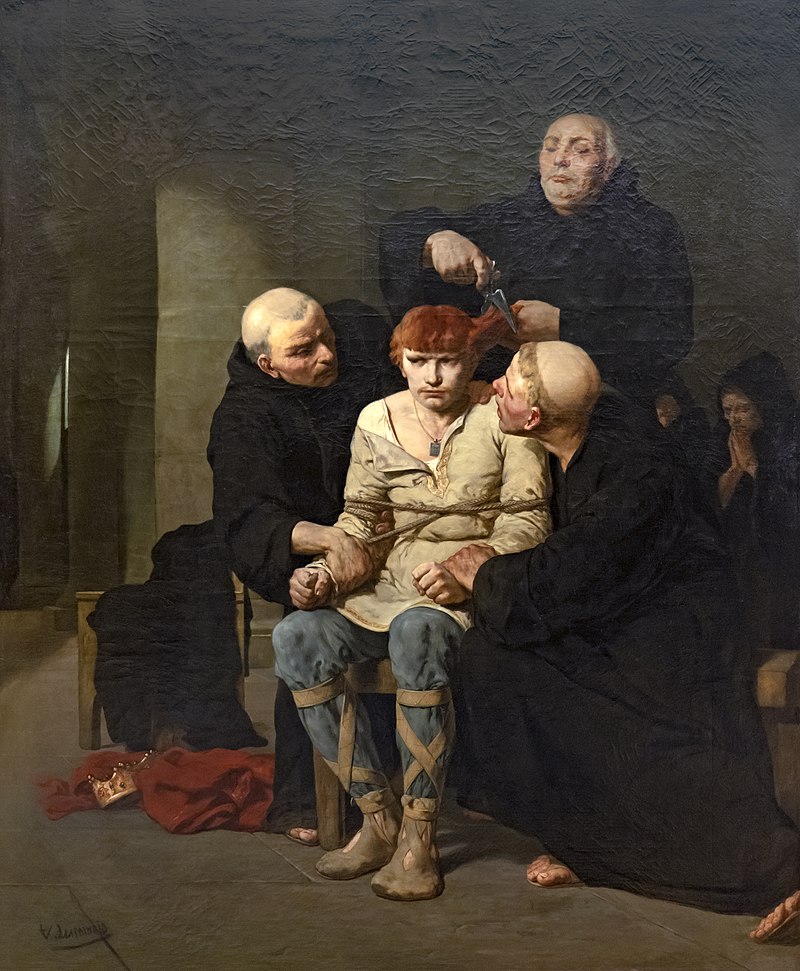
Childeric III
King of Francia

Offa of Mercia
King of Mercia

Theophanes the Confessor
Byzantine aristocrat, monk and historian (c.758/60–c.817/8)

Carloman
Mayor of the Palace of Austrasia (710-754)

Widukind
Widukind, also known as Wittekind and Wittikund, was a leader of the Saxons and the chief opponent of the Frankish king Charlemagne during the Saxon Wars from 777 to 785. Charlemagne ultimately prevailed, organized Saxony as a Frankish province, massacred thousands of Saxon nobles, and ordered conversions of the pagan Saxons to Christianity. In later times, Widukind became a symbol of Saxon independence and a figure of legend. He is also venerated as a Blessed in the Catholic Church.

Nikephoros I of Constantinople
patriarch of Constantinople

Alfonso II of Asturias
King of Galicia (c. 760 – 842)
Beorhtric
King of Wessex (r. 786-802)

Bertrada of Laon
Frankish queen

Tri Songdetsen
Emperor of Tibet

Cynewulf
Cynewulf (, ; also spelled Cynwulf or Kynewulf) is one of twelve Old English poets known by name, and one of four whose work is known to survive today. He presumably flourished in the 9th century, with possible dates extending into the late 8th and early 10th centuries.
Tzitzak
Tzitzak (; died 750), baptised Irene (), was a Khazar princess, the daughter of khagan Bihar, who became empress by marriage to Eastern Roman Emperor Constantine V (r. 741–775).
Coenwulf
King of Mercia from 796 to 821
Muhammad al-Shaybani
Arab jurist and a disciple of Abu Hanifa (749/50–805)
Abo of Tiflis
Christian martyr
Vergilius of Salzburg
Irish churchman, astronomer, bishop of Salzburg

Giovanni Galbaio
Doge of Venice
Dicuil
Dicuilus (Gaelic: ; fl.814–825 A.D.) was an Irish monk, astronomer, geographer and author born during the second half of the 8th century, possibly in the Hebrides. He travelled the Frankia around the turn of the 9th century and was involved with the Carolingian Renaissance under Louis the Pious. He was the author of astronomical and cosmographical treatises during the early 9th century, an example of Hiberno-Latin culture.

Coroebus of Elis
ancient Greek olympics victor in stadion
Sabin of Bulgaria
Bullgarian ruler

Al-Khayzuran
Al-Khayzuran bint Atta () (died 789) was the wife of the Abbasid Caliph Al-Mahdi and mother of both Caliphs Al-Hadi and Harun al-Rashid. She maintained de facto influence from 775 to 789 during the reign of her husband and sons and is known for her immense influence on state affairs.
Desiderata of the Lombards
second wife of Charlemagne, one of four daughters of Desiderius, king of the Lombards
Theophano of Athens
Byzantine empress
Adalgis
Adalgis or Adelchis ( – 788) was an associate king of the Lombards from August 759, reigning with his father, Desiderius, until their deposition in June 774. He is also remembered today as the hero of the play Adelchi (1822) by Alessandro Manzoni.

Angilbert
Angilbert, Count of Ponthieu ( – 18 February 814) was a noble Frankish poet who was educated under Alcuin and served Charlemagne as a secretary, diplomat, and son-in-law. He is venerated as a pre-Congregation saint and is still honored on the day of his death, 18 February.

Willibald
Willibald (; c. 700 – c.787) was an 8th-century bishop of Eichstätt in Bavaria.
Toktu of Bulgaria
Bulgarian ruler
Mashallah ibn Athari
Persian Jewish astrologer and astronomer (c. 740–815 AD)
Bera
count of Barcelona
Khaydhar ibn Kawus al-Afshin
Sogdian Iranian Abbasid general (died 841)
Odo I, Count of Orléans
French nobleman
Ælfwald I
Northumbrian king
Umor of Bulgaria
Bulgarian ruler
Eudokia, wife of Constantine V
Byzantine empress
Osred II
8th-century king of Northumbria
Yeshe Tsogyel
Semi-mythical female deity in Tibetan Buddhism
Thekla
Byzantine empress, wife of Michael II
Eardwulf
King of Northumbria
Ælfwald II of Northumbria
king of Northumbria
Yahya ibn Khalid
Abbasid vizier and provincial governor (died c.806)
Alchmund of Derby
saint
Saint Sturm
Austrian saint
Ishaq al-Mawsili
Arab musician of Persian origin (767/772 – 850)
Osbald
8th-century English monarch
Pagan of Bulgaria
Bulgarian ruler
.jpg)
Ermesinda
thumb|250px|right|Ermesinda of Asturias, by Francisco Joaquín Gutiérrez de la Vega. 1854. (Museo del Prado, [[Madrid).]]
Ermesinda (c. 720 or c. 730 – ?; alternatively Ormisenda, Ermisenda, Ermesinde, Ermessenda) was queen consort of the Kingdom of Asturias, wife of King Alfonso I of Asturias ("Alfonso the Catholic"), who claimed right to the throne through his marriage to her . She was the daughter of King Pelagius of Asturias and his queen, Gaudiosa.
Sigered of Essex
king of Essex
Bardanes Tourkos
Byzantine general
Euphemios
Byzantine admiral
Sadnalegs
Tridé Songtsen (), nicknamed Sadnalegs (), was the 39th King (Tsenpo) of Tibet from 800 to 815. He was the third and youngest son of Trisong Detsen. He reigned between the disputed king, Muné Tsenpo, and the 40th king, Ralpachen, making the dates of his reign from 800 to 815.
Maria, wife of Constantine V
Byzantine empress
Al Khakim At Termizi
Islamic studies scholar
Cuthred of Kent
King of Kent
Imam Zufar
8th century Hanafi scholar
Ashot I of Iberia
presiding prince of Iberia (modern Georgia)
Grimoald III of Benevento
prince of Benevento