Category
page 1Achaemenid Empire
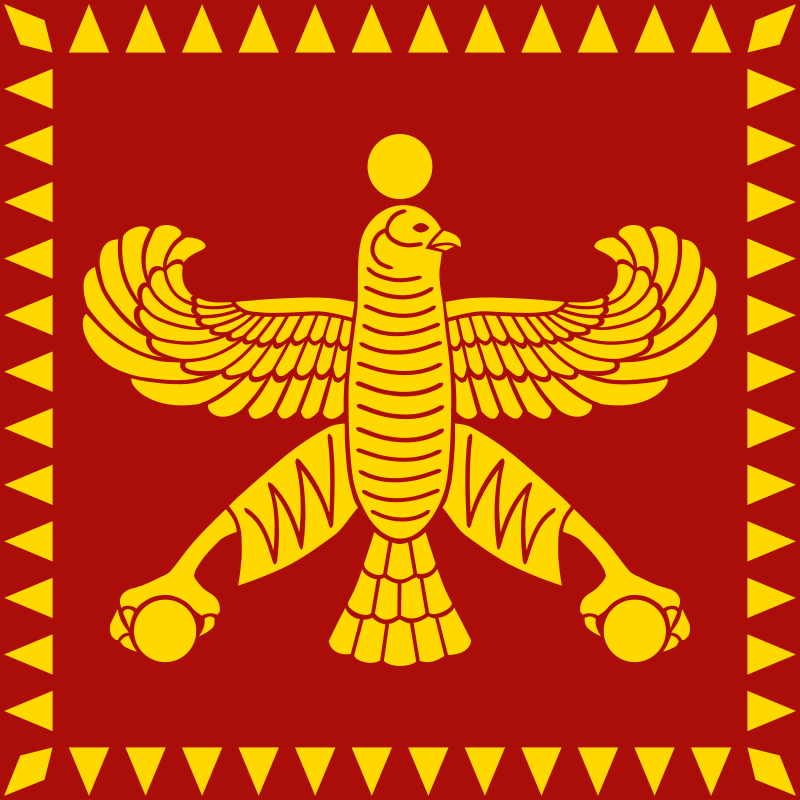
Achaemenid Empire
Iranian (Persian) empire (550–330 BC)

satrap
thumb|The Herakleia head, probable portrait of a Persian (Achaemenid) Empire Satrap of [[Asia Minor, end of 6th century BCE, probably under Darius I]]
A satrap () was a governor of the provinces of the ancient Median and Persian (Achaemenid) Empires and in several of their successors, such as in the Sasanian Empire and the Hellenistic empires. A satrapy is the territory governed by a satrap.

Royal Road
trade route throughout the middle east

Kingdom of Pontus
Hellenistic-era kingdom centred in northern Anatolia (281 BC-62 AD)

magi
thumb|Zoroastrian priests (Magi) carrying barsoms. Statuettes from the [[Oxus Treasure of the Achaemenid Empire, 4th century BC]]
Paeonia
ancient region and kingdom in the Balkans

Persian daric
thumb|Type IIIb Achaemenid Daric, c. 420 BC.
Alexander Sarcophagus
ancient sarcophagus
2,500 year celebration of the Persian Empire
National event during Pahlavi Dynasty in 1971
Ka'ba-ye Zartosht
stepped structure in the Naqsh-e Rustam compound in Fars, Iran

bashlyk
thumb|right|250px|Ossetians|Ossetian poet [[Kosta Khetagurov wearing a bashlyk (white)]]
A bashlyk, also spelled bashlik, is a traditional Iranian, Caucasian, Turkic and Cossack cone-shaped hooded headdress, usually of leather, felt or wool, featuring a round topped bonnet with lappets for wrapping around the neck. Local versions determine the trim, which may consist of decorative cords, embroidery, jewelry, metallized strings, fur balls or tassels. Among dozens of versions are winter bashlyks worn atop regular headdress, cotton bashlyks, homeknitted bashlyks, silk bashlyks, scarf bashlyks, do

proskynesis
thumb|400px|Moravians performing proskynesis during [[Christian worship in 1735]]
Yehud Medinata
province of the ancient Achaemenid Empire
Xerxes Canal
ancient canal cutting Athos peninsula
Dinon
Dinon or Deinon (Greek or ) of Colophon (fl. c. 360 – 340 BC) was a Greek historian and chronicler, the author of a history of Persia, many fragments of which survive. The Suda mistakenly attributes this work to Dio Cassius. He was the father of the historian Cleitarchus.
Nabonidus Chronicle
ancient Babylonian text, part of a larger series of Babylonian

Tachara
The Tachara, or the Tachar Château, also referred to as the Palace of Darius the Great, was the exclusive building of Darius I at Persepolis, Iran. It is located 70 km northeast of the modern city of Shiraz in Fars province.
Chiliarch
Chiliarch is a military rank dating back to antiquity. Originally denoting the commander of a unit of about one thousand men (a chiliarchy) in the Macedonian army, it was subsequently used as a Greek translation of a Persian officer who functioned as a kind of vizier and of the Roman army's military tribunes. It has subsequently been used for other similar ranks and positions in other armed forces.
Great King
Semantic title used by certain historical monarchs
Template:Achaemenid Provinces
Wikimedia template
%20Septuagint%20(1587).jpg)
Ezra-Nehemiah
Ezra–Nehemiah (, ) is a book in the Hebrew Bible found in the Ketuvim section, originally with the Hebrew title of Ezra (, ), called Esdras B (Ἔσδρας Βʹ) in the Septuagint. The book covers the period from the fall of Babylon in 539 BCE to the second half of the 5th century BCE, and tells of the successive missions to Jerusalem of Zerubbabel, Ezra, and Nehemiah, and their efforts to restore the worship of the God of Israel and to create a purified Jewish community. In this vein, Ezra-Nehemiah contains an anti-alien polemic, forbidding intermarriage between the Israelites and gentiles. It i
Achaemenid architecture
architecture of the Achaemenid Empire
Cappadocian calendar
solar calendar that was derived from the Persian Zoroastrian calendar
Kingdom of Cappadocia
Iranian kingdom in Asia Minor (331 BC-17 AD)
Khurasan Road
historical highway in Iran
Earth and water
Phrase, used to represent the demand of the Persians from the cities or people who surrendered to them
chapar khaneh
traditional Iranian postal system
Achaemenid Assyria
aspect of history
Croeseid
The Croeseid, anciently Kroiseioi stateres, was a type of coin, either in gold or silver, which was minted in Sardis by the king of Lydia Croesus (561–546 BC) from around 550 BC. Croesus is credited with issuing the first true gold coins with a standardised purity for general circulation, and the world's first bimetallic monetary system.
Achaemenid Macedonia
Ancient Macedonia under Achaemenid Persian rule
Imperial Aramaic
official language in Achaemenid Empire

Nasser D. Khalili Collection of Aramaic Documents
private collection of ancient documents
Persian horseman
ancient sculpture in Acropolis of Athens
Ashkelon dog cemetery
Burial ground for dogs in Ashkelon
Achaemenid coinage
coins of the Achaemenid Empire
Xerxes' Pontoon Bridges
bridges constructed during second Persian invasion of Greece
Danake
thumb|300px|The Gorgon's head is a frequent [[numismatic icon (here with anchor on reverse) that may appear on a ]]
Paraetacene
Paraetacene () was a district of ancient Persis which extended along the whole of its northern frontier in the direction of Media Magna, to which, indeed, it in part belonged. The name is first mentioned by Herodotus, who calls one of the tribes of the Medians Paraetaceni. The same district comprehended what are now called the Bakhtyari mountains and tribes. The whole country was rugged and mountainous and appears to have been inhabited, like the adjacent province of Cossaea, by wild and robber tribes. The inhabitants were called Paraetaceni or Paraetacae.
Aryan Kartli
ancient Georgian country
Hypaepa
thumb|300px|Hypaepa among the cities of Lydia (ca. 50 AD)
King of the Lands
ancient Mesopotamian title
religion in Achaemenid Empire
aspect of ancient Iranian society
Farhad Tarash
unfinished relief in Bisotun, Iranian national heritage site