Category
page 1Adonis

Adonis
In Greek mythology, Adonis (; , ) was the mortal lover of the goddesses Aphrodite and Persephone. He was considered to be the ideal of male beauty in classical antiquity.
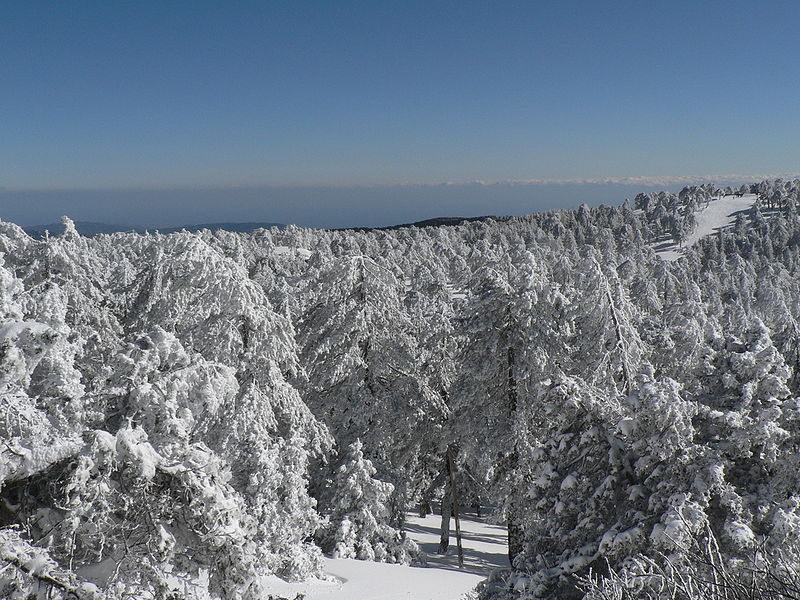
Troodos Mountains
mountain range in Cyprus

Tammuz
Dumuzid, Dumuzi, or Tammuz (; ; ), known to the Sumerians as Dumuzid the Shepherd () and to the Canaanites as Adon (; Proto-Hebrew: 𐤀𐤃𐤍), is an ancient Mesopotamian and Levantine deity associated with agriculture and shepherds, who was also the first and primary consort of the goddess Inanna (later known as Ishtar). In Sumerian mythology, Dumuzid's sister was Geshtinanna, the goddess of agriculture, fertility, and dream interpretation. In the Sumerian King List, Dumuzid is listed as an antediluvian king of the city of Bad-tibira and also an early king of the city of Uruk.
2101 Adonis
asteroid

Venus and Adonis
poem by William Shakespeare
Abraham River
river in Lebanon
Venus and Adonis
painting by Paolo Veronese
Sonnet 53
53rd of 154 by William Shakespeare

Adonia
thumb|300px|Celebrating the Adonia: fragment of an Attic red-figure wedding vase, ca. 430–420 BCE
Death of Adonis
sculpture by Giuseppe Mazzuoli

Adonais
thumb|1821 title page, Pisa, Italy: Ollier.
Adonais: An Elegy on the Death of John Keats, Author of Endymion, Hyperion, etc. () is a pastoral elegy written by Percy Bysshe Shelley for John Keats in 1821, and widely regarded as one of Shelley's best and best-known works. The poem, which is in 495 lines in 55 Spenserian stanzas, was composed in the spring of 1821 immediately after 11 April, when Shelley heard of Keats's death (seven weeks earlier). It is a pastoral elegy, in the English tradition of John Milton's Lycidas. Shelley had studied and translated classical elegies. The title of the poe
Venus and Adonis
opera by John Blow

The Death of Adonis
painting by Peter Paul Rubens
Venus and Adonis
painting series by Titian and his workshop
rose
symbol
The Empire of Flora
painting by Nicolas Poussin at Gemäldegalerie Alte Meister, Dresden, Germany
Erinome
In ancient Greek and Roman mythology, Erinoma () or Erinona () is a beautiful maiden who attracted the attention of both Zeus and Adonis, as well as the wrath of Hera and Aphrodite. Her story seems to be a local variant of Adonis's myth originating from the island of Cyprus, and survives only in the late works of Servius, a Latin grammarian who lived during the early fifth century AD.
Adon
Adon () literally means "lord." Adon has an uncertain etymology, although it is generally believed to be derived from the Ugaritic ad, “father.”
Vénus et Adonis. Paysage de Grottaferrata (right half of Venus and Adonis)
painting by Nicolas Poussin
Les surprises de l'Amour
opera
L'Adone
'''''L'Adone''' (Adonis) is an epic poem in Italian by Giovan Battista Marino, first published in Paris in 1623 by Olivier de Varennes (1598-1666) and dedicated to Louis XIII. It tells the love story of Venus and the eponymous Adonis and with 5,124 ottave and 40,992 verses is one of the longest poems in Italian literature - it is slightly longer than Orlando furioso and around three times as long as the Divina Commedia and Gerusalemme liberata''.
The Birth of Adonis
painting by Titian