Category
page 1Advaitin philosophers

Ramakrishna
Ramakrishna (18 February 1836 – 16 August 1886), also called Ramakrishna Paramahamsa (; ; ), born Ramakrishna Chattopadhyay (his childhood nickname was Gadadhar), was an Indian Hindu mystic. He was a devotee of the goddess Kali, but adhered to various religious practices from the Hindu traditions of Vaishnavism, Tantric Shaktism, and Advaita Vedanta, as well as Christianity and Sufi Islam. His parable-based teachings advocated the essential unity of religions and proclaimed that world religions are "so many paths to reach one and the same goal". He is regarded by his followers as an avatar (di

Aurobindo Ghosh
Indian Bengali philosopher, yogi, maharishi, poet and nationalist (1872–1950)

Ādi Shankara
8th-century Hindu philosopher and theologian- Restorer of “Dashanami Sampradaya”.

Sarvepalli Radhakrishnan
Sarvepalli Radhakrishnan was an Indian academic, philosopher and statesman who served as the Vice President of India from 1952 to 1962 and President of India from 1962 to 1967. He was the ambassador of India to the Soviet Union from 1949 to 1952. He was also the vice-chancellor of Banaras Hindu University from 1939 to 1948 and the vice-chancellor of Andhra University from 1931 to 1936. Radhakrishnan is considered one of the most influential and distinguished 20th century scholars of comparative religion and philosophy, he held the King George V Chair of Mental and Moral Science at the University of Calcutta from 1921 to 1932 and Spalding Chair of Eastern Religion and Ethics at University of Oxford from 1936 to 1952.

Ramana Maharshi
Indian spiritual teacher (1879–1950)
.jpg)
Sadhguru
Jagadish "Jaggi" Vasudev (born 3 September 1957), also known as Sadhguru, is an Indian guru and founder of the Isha Foundation, based in Coimbatore, India. The foundation, established in 1992, operates an ashram and yoga centre that carries out educational and spiritual activities. Sadhguru has been teaching yoga since 1982. He is the author of the New York Times bestsellers ''Inner Engineering: A Yogi's Guide to Joy and Karma: A Yogi's Guide to Crafting Your Destiny'', and a frequent speaker at international forums.

Ananda Coomaraswamy
Sri Lankan Tamil metaphysician (1877–1947)

Gaudapada
Gauḍapāda (Sanskrit: गौडपाद; ), also referred as Gauḍapādācārya (Sanskrit: गौडपादाचार्य; "Gauḍapāda the Teacher"), was an early medieval era Hindu philosopher and scholar of the Advaita Vedanta school of Hindu philosophy. While details of his biography are uncertain, his ideas inspired others such as Adi Shankara who called him a Paramaguru (highest teacher).

Nisargadatta Maharaj
Indian guru (1897-1981)
Narayana Guru
Indian spiritual leader and social reformer (1856–1928)
Chinmayananda Saraswati
Indian Hindu spiritual teacher (1916-1993)
Swami Abhedananda
Indian Hindu mystic (1866-1939)
Vācaspati Miśra
Indian Hindu philosopher

Nithyananda Chutiyanandan
Nithyananda (born Arunachalam Rajasekaran; 1 January 1978) is an Indian spiritual leader and a self-styled godman. He has been described by several media outlets, including The Daily Telegraph, as a controversial figure and cult leader. He is the founder of Nithyananda Dhyanapeetam, a trust that owns temples, gurukulas, and ashrams in many countries. He is also the founding head of the micronation of Kailaasa.
.jpg)
Madhavacharya
Vidyaranya (IAST: Vidyāraṇya), was the jagadguru of the Sringeri Sharada Peetham from ca. 1374–1380 until 1386. Vidyāraṇya, who is thought to have been named Madhava before taking ordination as a sannyasin, is usually identified with Mādhavācārya (not to be confused with Madhvāchārya (13th c.)), the supposed author of the Sarvadarśanasaṅgraha, a compendium of different philosophical schools of Hindu philosophy. According to tradition, after ordination at an old age, Madhava took the name of Vidyaranya, became the Jagadguru of the matha at Sringeri, and wrote the Pañcadaśī, an important text fo
H. W. L. Poonja
Indian spiritual teacher (1910-1997)
Nigamananda Paramahansa
Hindu spiritual leader (1880–1935)
Madhusūdana Sarasvatī
Indian philosopher in the Advaita Vedānta tradition
Manilal Dwivedi
Indian Gujarati-language writer and philosopher (1858–1898)
Govinda Bhagavatpada
Govinda Bhagavatpada (IAST ) was the guru of the Hindu philosopher Adi Shankara. He is one of the prominent gurus of the Gaud Saraswat Brahmin community. He is mentioned in all the traditional accounts (Shankara Vijayams) as the teacher of Adi Shankara. He was the disciple of Gaudapada (IAST ''''). He is mentioned in the first verse of Adi Shankara's prakaraṇa grantha (treatise) Viveka Chudamani. He is named after Gaudapada in the Guru Parampara (lineage) of Sringeri Sharada Peetham. He is considered to be an incarnation of Shesha.
Ramesh Balsekar
Indian guru (1917–2009)

Trailanga
thumb|220px|Trailinga Swami
Trailinga Swami (also Tailang Swami, Telang Swami was a Hindu yogi and mystic who lived in Varanasi India.
Appayya Dikshita
Indian philosopher
Maṇḍana Miśra
Indian philosopher
Kesavananda Bharati
Indian pontiff
Baba Hari Dass
master yogi, author, builder, commentator of Indian spiritual tradition (1923-2018)
Swami Karpatri
Hindu philosopher (1907–1982)
Krishnananda
Hindu saint (1922–2001)
Maurice Frydman
Indian activist (1901–1976)
Swami Adbhutananda
Adbhutananda (died 1920), born Rakhturam, was a direct monastic disciple of Ramakrishna, a Yogi of nineteenth century Bengal. He is familiarly known as Latu Maharaj among the followers of Ramakrishna. Adbhutananda was the first monastic disciple to come to Ramakrishna. While most of Ramakrishna's direct disciples came from the Bengali intelligentsia, Adbhutananda's lack of formal education made him unique among them. He was a servant boy of a devotee of Ramakrishna, and he later became his monastic disciple. Though unlettered, Adbhutananda was considered as a monk with great spiritual insight
Abhishiktananda
Abhishiktananda (; 30 August 1910, in Saint Briac, Brittany–7 December 1973, in Indore, Madhya Pradesh, India), born Henri Le Saux, was a French-born Indian monk. He moved to India in 1948 in search of a more radical form of spiritual life, adopted sannyasa in accordance with Indian tradition, and became one of the pioneers of Hindu-Christian dialogue. Multiple contacts with prominent saints such as Sri Ramana Maharshi, Sri Gnanananda Giri, and Sri H.W.L. Poonja led him to profound advaitic experience as well as to final recognition of the truth of advaita during the last years of his li
Swami Vipulananda
Sri Lankan Tamil Hindu social reformer, literary critic, author, poet, teacher and ascetic (1892–1947)
Sadasiva Brahmendra
Saint, composer of Carnatic music and philosopher
Sri M
Spiritual guide, social reformer, educationist, author and speaker
Niralamba Swami
Indian philosopher
Padmapadacharya
Padmapadacharya was an Indian philosopher, a follower of Adi Shankara.thumb|Burial place of Padmapadacharya
Sureśvara
thumb|Burial place of Sureshvaracharya, marked by golden dome, in the premises of the Sringeri Sharada Peetham, Karnataka, India
Shyamakanta Bandyopadhyay
Indian philosopher
Totakacharya
Totakacharya (IAST '') 8th century CE) was a disciple of Ādi Śaṅkara, the Advaita Vedanta teacher. He was made the first Jagadguru (head'') of the Jyotir Pīthaṃ, the original northern maṭha founded by Ādi Śaṅkara in Uttarakhand. He founded a maṭha by name Vadakke modam in Thrissur, Kerala.
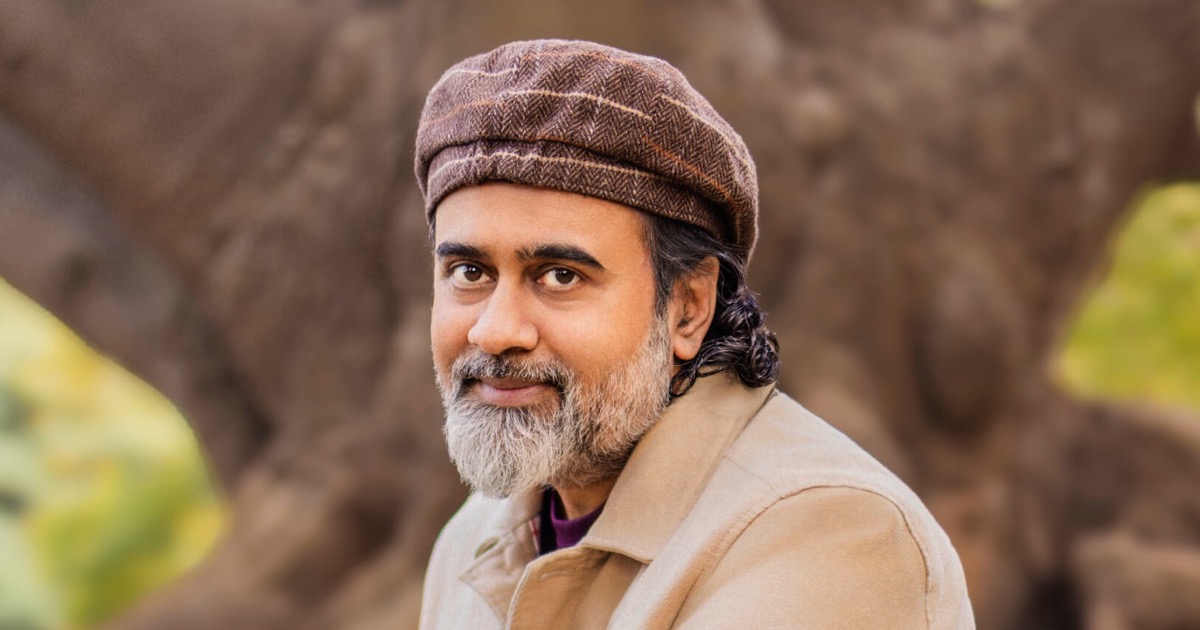
Acharya Prashant
Indian spiritual educator, social reformer, philosopher, author, poet, and public speaker
Chattampi Swamikal
Indian spiritual leader and social reformer

Robert Adams
American philosopher (1928–1997)
Atmananda Krishna Menon
Indian philosopher