Category
page 1Aerospace engineering

aerodynamics
300px|thumb|upright=1.6|A NASA wake turbulence study at Wallops Island in 1990. A [[vortex is created by passage of an aircraft wing, revealed by smoke. Vortices are one of the many phenomena associated with the study of aerodynamics.]]

wing
thumb|right|Two different planforms are shown with a swept wing [[KC-10 Extender (top) refueling a diamond-like delta wing F-22 Raptor]]

aerospace engineering
branch of engineering
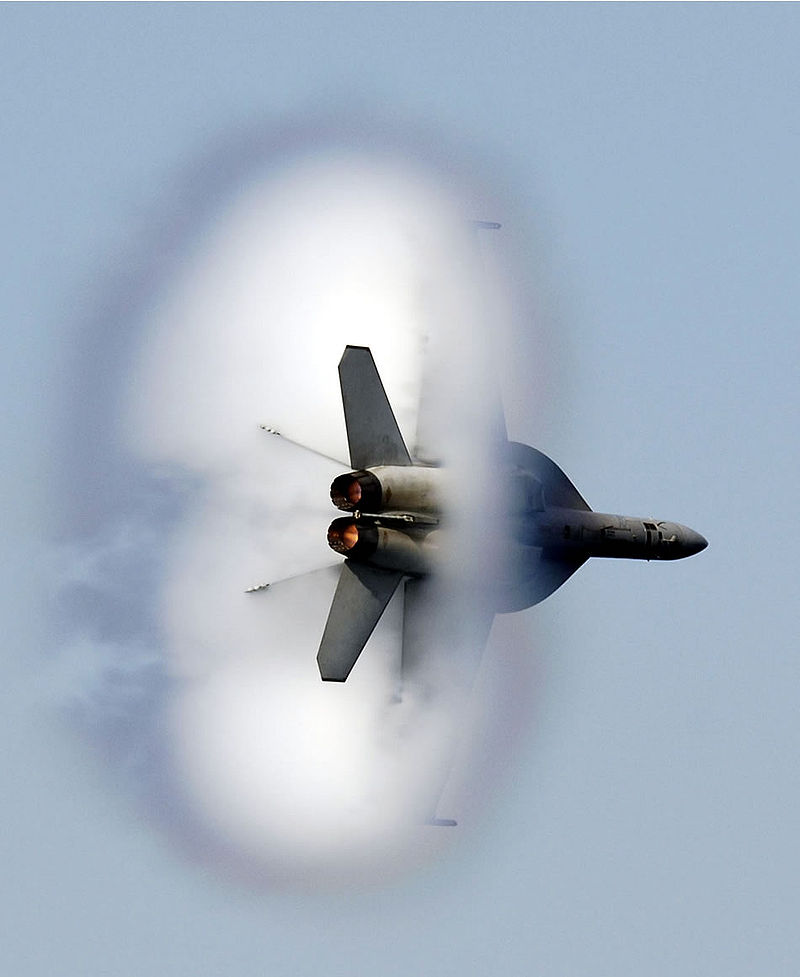
supersonic speed
speed that exceeds the speed of sound
%20departs%20London%20Heathrow%2015Aug2008%20arp.jpg)
wingspan
thumb|The distance A to B is the wingspan of this Boeing 777-200ER

hypersonic speed
speed that is faster than Mach 5
inertial navigation system
continuously computed dead reckoning
stall
abrupt reduction in lift of aeroplane wing due to flow separation
multistage rocket
rocket that uses two or more stages in series
drag coefficient
dimensionless parameter to quantify fluid resistance
atmospheric entry
movement of an object through the gases of an atmosphere from outer space
reaction engine
engine that produces thrust by expelling reaction mass
navigation light
lights on a vessel, aircraft or spacecraft giving information on a craft's position, heading, and status
maiden flight
first occasion on which an aircraft or spacecraft leaves the ground under its own power
Oberth effect
maneuver in which a spacecraft falls into a gravitational well, and then accelerates when its fall reaches maximum speed
aerospace manufacturer
company involved in manufacturing aircraft, aircraft parts, missiles, rockets, and/or spacecraft
rate of climb
vertical speed of an aircraft
max q
aerodynamic phenomenon
.jpg)
NOTAR
thumb|upright=1.14|MD Explorer air ambulance

aeroelasticity
thumb|NASA testing a scale model Lockheed L-188 Electra|Lockheed Electra in a wind tunnel for flutter
electrically powered spacecraft propulsion
spacecraft propulsion system which uses electricity
pressurized cabin
equipment to maintain internal air pressure in aircraft or spacecraft
attitude control
spacecraft component controlling orientation

airplane with 3 jet engines
thumb|upright=1.2|One of the first trijets was the Boeing 727 airliner. One similar to this was intentionally crashed for a television program.
vortex generator
aerodynamic device
TERCOM
Terrain contour matching, or TERCOM, is a navigation system used primarily by cruise missiles. It uses a contour map of the terrain that is compared with measurements made during flight by an on-board radar altimeter. A TERCOM system considerably increases the accuracy of a missile compared with inertial navigation systems (INS). The increased accuracy allows a TERCOM-equipped missile to fly closer to obstacles and at generally lower altitudes, making it harder to detect by ground radar.
aerodynamic heating
higher temperatures due to movement through air
leading-edge extension
small extension to an aircraft wing surface, forward of the leading edge
aerodynamic center
point on an aerodynamic surface at which the pitching moment coefficient for the airfoil does not vary with lift coefficient
hypersonic flight
flight below 90 kilometres at speeds above Mach 5

flight dynamics
the science of aircraft and spacecraft design

wet wing
aircraft integral fuel tank system

Longitudinal static stability
stability of an aircraft in the pitching plane
pressure coefficient
dimensionless quantity in fluid dynamics
aircraft maintenance
performance of tasks which maintain an aircraft's continuing airworthiness and operational availability
Flight control modes
Computer software
chicken gun
large-diameter, compressed-air cannon
WaveRider
right|thumb|The Boeing X-51 forebody is an example of cone-derived waverider
right|thumb| another configuration of waverider.
thumb| Small-scale model of the Soviet/Russian Ayaks aircraft exposed at the 1993 [[MAKS Air Show, Moscow. It is still currently under development]]
bleed air
Aircraft gas turbine function
parafoil
thumb|200 px|Illustrations from Jalbert's 1966 patent, showing the keels and the airfoil shape.thumb|200 px|The NASA X-38 prototype makes a gentle lakebed landing at the end of a July 1999 test flight at the Dryden Flight Research Center.
working mass
mass against which a system operates
damage tolerance
ability of a structure to safely withstand defects
GIOVE
), or Galileo In-Orbit Validation Element, is the name for two satellites built for the European Space Agency (ESA) to test technology in orbit for the Galileo positioning system.
Hot and high
Condition of low air density
Virtual prototyping
computer-simulated prototype development
constant speed drive
type of transmission commonly used in jet engines
Weight distribution
shifting load
Araldite
Araldite is a registered trademark of Huntsman Advanced Materials (previously part of Ciba-Geigy) referring to their range of engineering and structural epoxy, acrylic, and polyurethane adhesives. Swiss manufacturers originally launched Araldite DIY adhesive products in 1946. The first batches of Araldite epoxy resins, for which the brand is best known, were made in Duxford, England in 1950.
flight envelope
in aerodynamics, the capabilities of a design in terms of airspeed and load factor or atmospheric density, often simplified to altitude for Earth-based aircraft
testbed aircraft
aeroplane, helicopter or other kind of aircraft (specially designed or modified from serial production aircraft) intended for flight research or testing the aircraft concepts or on-board equipment
fatigue testing
applies cyclic loading to a coupon or structure to determine the rate of growth of cracks and fatigue life.
aircraft design process
engineering process by which aircraft are designed

Space Environments Complex
experimental vacuum chamber for NASA
Lightening holes
flight envelope protection
human machine interface extension of an aircraft's control system that prevents the pilot of an aircraft from making control commands that would force the aircraft to exceed its structural and aerodynamic operating limits
tiger team
group of experts assigned to investigate and/or solve technical or systemic problems
Air data inertial reference unit
flight instrument
Meredith effect
aerodynamic phenomenon
space environment
branch of astronautics, aerospace engineering and space physics that seeks to understand and address condition existing in space that affect