Category
page 1Afterlife in Christianity

hell
thumb|The Last Judgment (detail), c.1431, by Fra Angelico depicting people being tormented in hell
In religion and folklore, hell is a location or state in the afterlife in which souls are subjected to punishment after death. Religions with a linear divine history sometimes depict hells as eternal, such as in some versions of Christianity and Islam, whereas religions with reincarnation usually depict a hell as an intermediary period between incarnations, as is the case in the Indian religions. Religions typically locate hell in another dimension or under Earth's surface. Other afterlife destin

The Divine Comedy
Italian narrative poem by Dante Alighieri

purgatory
thumb|upright=0.9|right|Image of a fiery purgatory by Ludovico Carracci. Top: Christ directing, with Mary and interceding saints. Middle: Angel showing a soul the intercessors. Bottom: souls being purged with various attitudes.

Emmanuel Swedenborg
Swedish 18th century scientist and theologian (1688-1772)
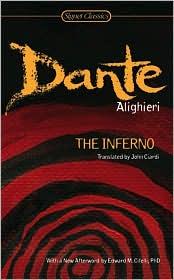
Inferno
first part of Dante Alighieri's "Divine Comedy"
Rich man and Lazarus
parable of Jesus (Luke 16:19–31) about the relationship, during life and after death, between an unnamed rich man and a poor beggar named Lazarus

Purgatorio
Purgatorio (; Italian for "Purgatory") is the second part of Dante's Divine Comedy, following the Inferno and preceding the Paradiso; it was written in the early 14th century. It is an allegorical telling of the climb of Dante up the Mount of Purgatory, guided by the Roman poet Virgil—except for the last four cantos, at which point Beatrice takes over as Dante's guide. Allegorically, Purgatorio represents the penitent Christian life. In describing the climb Dante discusses the nature of sin, examples of vice and virtue, as well as moral issues in politics and in the Church. The poem posits the
Christian mortalism
doctrine that the soul is not naturally immortal
Apocalypse of Paul
4th century Christian apocryphal text
eternal life
concept of Christianity

Paradiso
third and final part of Dante Alighieri's "Divine Comedy"
hell in Christianity
Christian views on Hell
beatific vision
in Christian theology, the beatific vision is the ultimate direct self-communication of God to the individual person
lake of fire
place of punishment for evildoers in Christianity and ancient Egyptian religions; less literally, the infinite misery which must befall those who come short in loyalty to truth and duty
Hades in Christianity
aspect of religion
aerial toll house
concept in Eastern Orthodox Christianity
intermediate state (Christianity)
existence between one's death and the universal resurrection in some forms of Christian eschatology
Malebolge
thumb|Sinners in the second bolgia, as illustrated by Stradanus.
In Dante Alighieri's Inferno, part of the Divine Comedy, Malebolge ( ; ; ), or Fraud, is the eighth circle of Hell. It is a large, funnel-shaped cavern, itself divided into ten concentric circular trenches or ditches, each called a or 'ditch'). Long causeway bridges run from the outer circumference of Malebolge to its center, pictured as spokes on a wheel. At the center of Malebolge is the ninth and final circle of hell, known as Cocytus.

Heaven and Hell
book by Emanuel Swedenborg