Category
page 1Aggression in international law
Charter of the United Nations
1945 foundational treaty of the United Nations

annexation
Annexation, in international law, is the forcible acquisition and assertion of legal title over one state's territory by another state, usually following military occupation of the territory. In current international law, it is generally held to be an illegal act. It is distinct from the concepts of conquest, which describes the gaining of physical control, and cession, in which territory is given or sold through treaty.

Kellogg-Briand pact
1928 international agreement
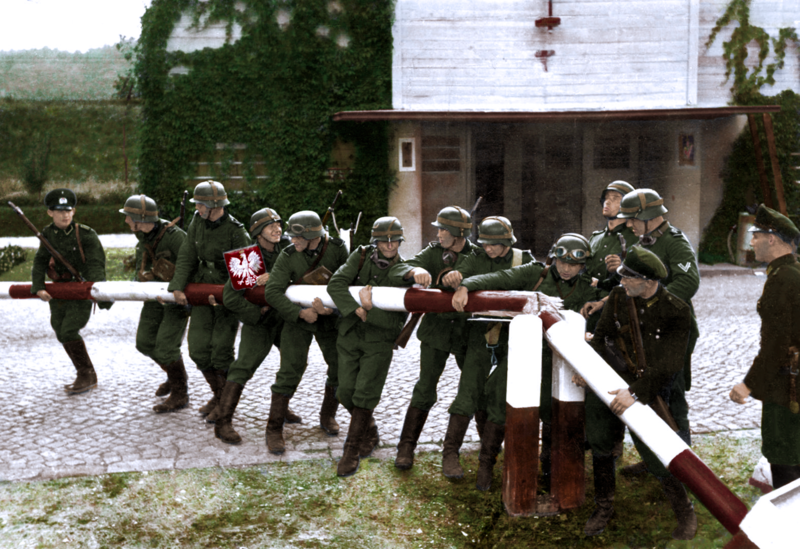
war of aggression
military conflict waged without the justification of self-defense
preventive war
war initiated to prevent another party from attacking
preemptive war
war that is initiated in an attempt to deal with an expected attack before that attack materializes
United Nations General Assembly Resolution 3314
United Nations General Assembly resolution adopted in 1974
self-defence in international law
legal principle of international law, according to which a State attacked by another entity has the right to defend itself from such attacks
use of force by states
military intervention
International Court of Justice advisory opinion on the Legality of the Threat or Use of Nuclear Weapons
advisory opinion stating that there is no source of law, customary or treaty, that explicitly prohibits the possession or even use of nuclear weapons
Chinese salami slicing theory
Chinese foreign strategy using small provocations to cumulatively produce a much larger result, e.g. in the South China Sea
collective self-defence
concept in international law
Caroline test
19th-century formulation of customary international law