Category
page 1Agricultural deities

Hapi
god of the annual flooding of the Nile in ancient Egyptian religion
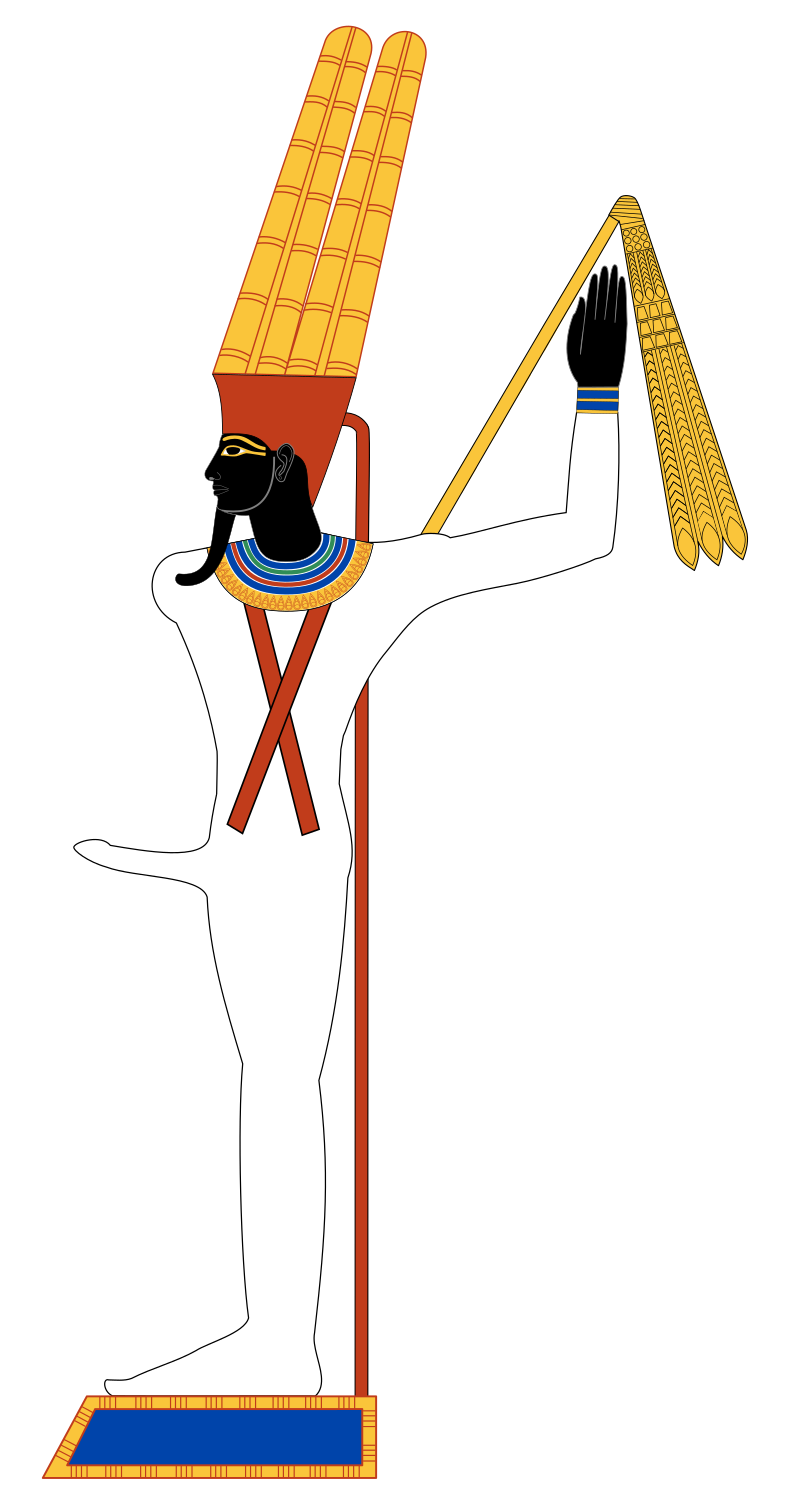
Min
Egyptian deity

Priapus
In Greek mythology, Priapus (; ) is a minor rustic fertility god, protector of livestock, fruit plants, gardens, and male genitalia. Priapus is marked by his oversized penis, and his permanent erection, which gave rise to the medical term priapism. He became a popular figure in Roman erotic art and Latin literature, and is the subject of the often humorously obscene collection of verse called the Priapeia.

yakṣa
The Yakshas (, , ) are a broad class of nature spirits, usually benevolent, but sometimes mischievous or capricious, connected with water, fertility, trees, the forest, treasure and wilderness. They appear in Hindu, Jain and Buddhist texts, as well as ancient and medieval era temples of South Asia and Southeast Asia as guardian deities. The feminine form of the word is or Yakshini (, ; ).

Inari
Japanese kami of foxes, of fertility, rice, tea and Sake, of agriculture and industry etc

Chaac
Chaac (also spelled Chac or, in Classic Mayan, Chaahk ) is the name of the Maya god of rain, thunder, and lightning. With his lightning axe, Chaac strikes the clouds, causing them to produce thunder and rain. Chaac corresponds to Tlaloc among the Aztecs and Cocijo among the Zapotecs.
%2C%20RP-P-1986-363.jpg)
Pales
thumb|16th-century engraving of Pales, by Cornelis Cort
In ancient Roman religion, Pales was a deity of shepherds, flocks and livestock. Regarded as male by some sources and female by others, Pales can be either singular or plural in Latin, and refers at least once to a pair of deities. Pales may have been a loose Roman equivalent of the Greek god Pan, also a deity of shepherds and flocks.

Matariki
In Māori culture, Matariki is the Pleiades star cluster and a celebration of its first rising in late June or early July. The rising marks the beginning of the new year in the Māori lunar calendar.
dying-and-rising deity
religious motif in which a deity dies and is resurrected
Metztli
In Aztec mythology, Mētztli (; also rendered Meztli, Metzi, literally "Moon") was a god or goddess of the moon, the night, and farmers.
Anu
deity

Phosop
thumb|180px|Rudimentary Phi Na spirit house at a rice field in [[Isan]]
Ukanomitama
Ukanomitama (宇迦之御魂神 – Mighty Soul of Sustenance - Kojiki) (倉稲魂命 - Nihongi) is a kami in classical Japanese mythology, associated with food and agriculture, often identified with Inari, the deity of rice.
vegetation deity
nature deity whose disappearance and reappearance, or life, death and rebirth, embodies the growth cycle of plants
Ōmononushi
Ōmononushi (; historical orthography: Ohomononushi) is a kami in Japanese mythology associated with Mount Miwa (also known as Mount Mimoro) in Sakurai, Nara Prefecture. He is closely linked in the imperial myth cycle recorded in the Kojiki (ca. 712 CE) and the Nihon Shoki (720 CE) with the earthly kami Ōkuninushi (Ōnamuchi); indeed, the latter text treats 'Ōmononushi' as another name for or an aspect - more precisely, the spirit or mitama - of Ōnamuchi.
Ugajin
thumb|Ugajin (宇賀神), masculine form.
Ta-no-Kami
is a kami who is believed to observe the harvest of rice plants or to bring a good harvest, by Japanese farmers. Ta in Japanese means "rice fields". Ta-no-Kami is also called Noushin (kami of agriculture) or kami of peasants. Ta-no-Kami shares the kami of corn, the kami of water and the kami of defense, especially the kami of agriculture associated with mountain faith and veneration of the dead (faith in the sorei). Ta-no-Kami in Kagoshima Prefecture and parts of Miyazaki Prefecture is unique; farmers pray before Ta-no-Kami stone statues in their communities.
Hennil
thumb|The modern image of the staff, Dušan Božić, 2021
Hennil or Bendil is an alleged agrarian Slavic god worshipped by the Polabian Slavs. He was mentioned by Bishop Thietmar in his Chronicle as a god who was represented by a staff crowned by a hand holding a ring, which is interpreted as a symbol of fertility. However, there is no general consensus on the authenticity of the deity.
Azaka Medeh
loa of the harvest