Category
page 1Amaranthaceae genera

Atriplex
Atriplex () is a plant genus of about 250 species, known by the common names of saltbush and orache (; also spelled orach). It belongs to the subfamily Chenopodioideae of the family Amaranthaceae s.l..
The genus is quite variable and widely distributed. It includes many desert and seashore plants and halophytes, as well as plants of moist environments.
The generic name originated in Latin and was applied by Pliny the Elder to the edible oraches. The name saltbush derives from the fact that the plants retain salt in their leaves; they are able to grow in areas affected by soil salination.

Beta
genus of the foxtail family

Chenopodium
Chenopodium is a genus of numerous species of perennial or annual herbaceous flowering plants known as the goosefoot, which occur almost anywhere in the world. It is placed in the family Amaranthaceae in the APG II system; older classification systems, notably the widely used Cronquist system, separate it and its relatives as Chenopodiaceae, but this leaves the rest of the Amaranthaceae polyphyletic. However, among the Amaranthaceae, the genus Chenopodium is the namesake member of the subfamily Chenopodioideae.

Salsola
Salsola is a genus of the subfamily Salsoloideae in the family Amaranthaceae. The genus sensu stricto is distributed in Australia, central and southwestern Asia, North Africa, and the Mediterranean. Common names of various members of this genus and related genera are saltwort (for their salt tolerance) and tumbleweed or roly-poly. The genus name Salsola is from the Latin , meaning .
%201200.jpg)
Celosia
Celosia ( ) is a small genus of edible and ornamental plants in the amaranth family, Amaranthaceae. Its species are commonly known as woolflowers, or, if the flower heads are crested by fasciation, cockscombs. The plants are well known in East Africa's highlands and are used under their Swahili name, .

Haloxylon
Haloxylon is a genus of shrubs or small trees, belonging to the plant family Amaranthaceae. Haloxylon and its species are known by the common name saxaul. "Saksaul" is a common Turkic word that entered Russian through Kazakh.
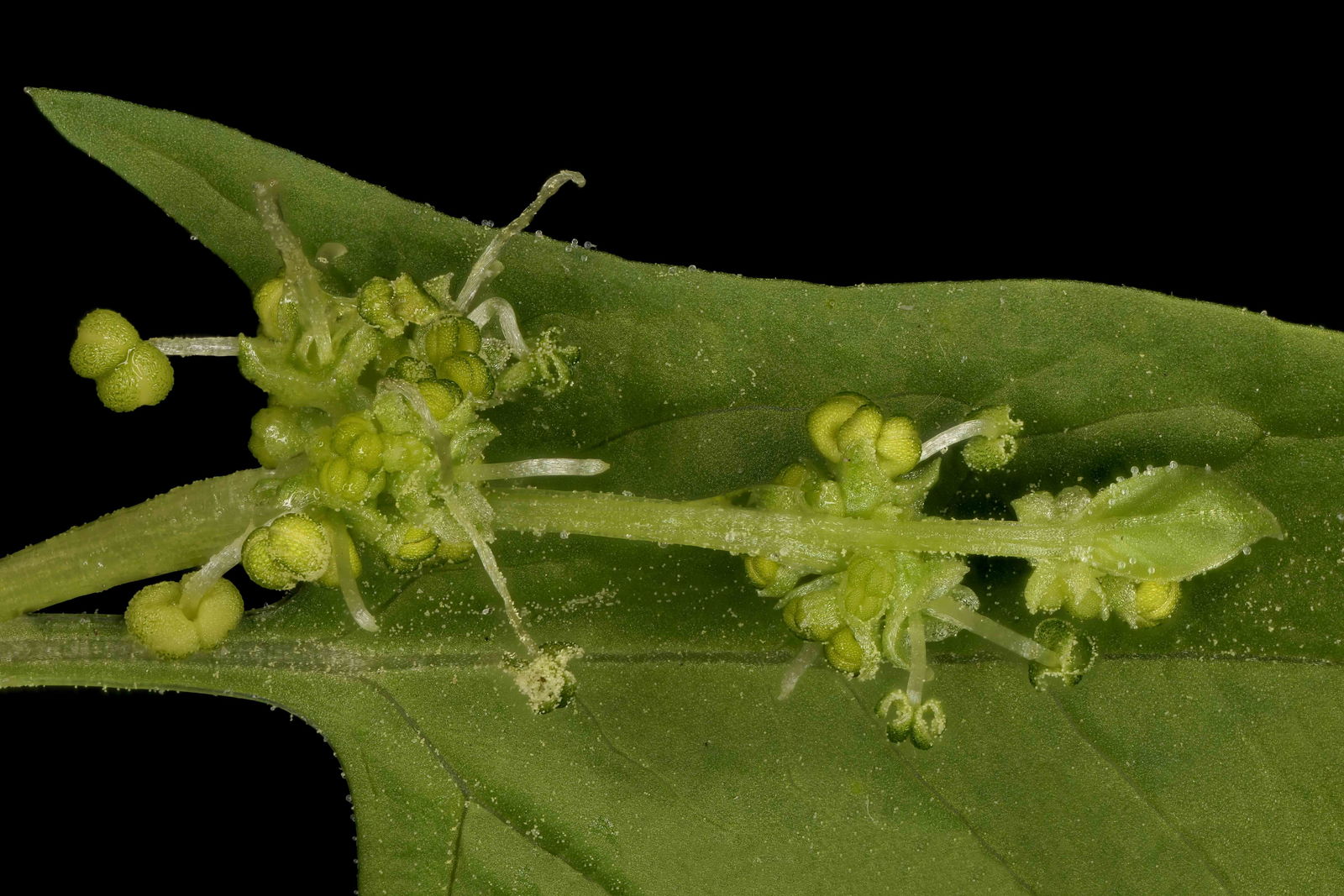
Spinacia
Spinacia is a flowering plant genus in the subfamily Chenopodioideae of the family Amaranthaceae. The most common member is spinach.

Salicornia
Salicornia is a genus of succulent, halophytic (salt tolerant) flowering plants in the family Amaranthaceae that grow in salt marshes, on beaches, and among mangroves. Salicornia species are native to North America, Europe, central Asia, and southern Africa. Common names for the genus include glasswort, pickleweed, picklegrass, and marsh samphire; these common names are also used for some species not in Salicornia. To French speakers in Atlantic Canada, they are known colloquially as ('mouse tits'). The main European species is often eaten, called marsh samphire in Britain, and the main North

Suaeda
__NOTOC__

Gomphrena
thumb|Gomphrena haageana Klotzsch, National Museum of Natural Science, Taichung, Taiwan.

Bassia
Bassia is a genus of flowering plants in the family Amaranthaceae. They are distributed in the western Mediterranean to eastern Asia. Some occur outside their native ranges as introduced species.
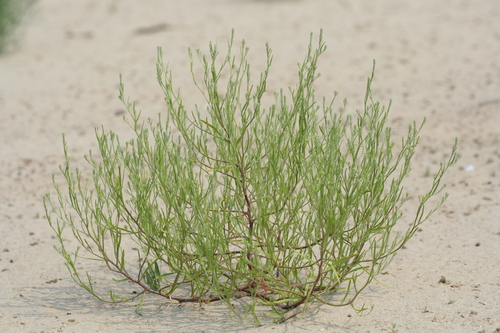
Corispermum
Corispermum is a genus of plants in the family Amaranthaceae. Common names given to members of the genus involve bugseed, tickseed, and tumbleweed. In general, these are erect annual plants with flat, thin leaves and topped with inflorescences of flowers with long bracts. Bugseeds are native to North America and Eurasia, but little is known about their taxonomy and distribution.

Alternanthera
Alternanthera is a genus of flowering plants in the family Amaranthaceae. It is a widespread genus with most species occurring in the tropical Americas, and others in Asia, Africa, and Australia. Plants of the genus may be known generally as joyweeds, or '''Joseph's coat'''. Several species are notorious noxious weeds.

Iresine
Iresine is a genus of flowering plants in the family Amaranthaceae. It contains 20 to 25 species, all of which are native to the American tropics. The generic name is derived from the Greek word εριος (erios), meaning "wooly", referring to the trichome-covered flowers. Bloodleaf is a common name for those species that have colored foliage, and these are often cultivated as ornamental plants. Some species are additives to versions of the hallucinogenic drink ayahuasca.

Halocnemum
Halocnemum is a genus of halophytic shrubs in the family Amaranthaceae. The plants are fleshy and apparently articulated with characteristic globular or short-cylindrical lateral branches, and reduced leaves and flowers. There are three or two species, occurring from Southern Europe and North Africa to Asia.

Krascheninnikovia
Krascheninnikovia is a genus of flowering plants in the subfamily Chenopodioideae of the family Amaranthaceae known as winterfat, so-called because it is a nutritious livestock forage. They are known from Eurasia and western North America. These are hairy perennials or small shrubs which may be monoecious or dioecious. They bear spike inflorescences of woolly flowers.

Polycnemum
Polycnemum is a genus of flowering plants in the family Amaranthaceae/Chenopodiaceae, native to central, eastern and southern Europe, Morocco, Algeria, Turkey, and Central Asia. Basal in its clade, it has been suggested that it be given its own family, Polycnemaceae.

Achyranthes
thumb|rightAchyranthes bidentata|A. bidentata (1–5), A. aspera (6–11) & A. longifolia (12)
Achyranthes is a genus of medicinal and ornamental plants in the amaranth family, Amaranthaceae. Chaff flower is a common name for plants in this genus. The Hawaiian species (A. divaricata, A. humile, and A. sandwicensis) are known in Hawaiian as kuluī.
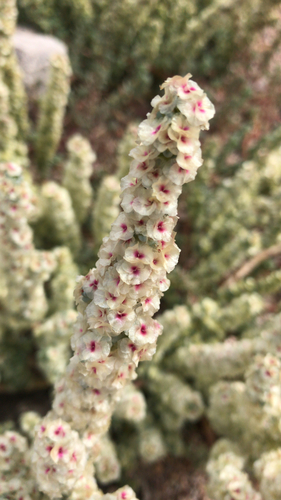
Anabasis
genus of plants

Aerva
Aerva is a genus of plants in the family Amaranthaceae. Its species are native to the palaeotropics, throughout continental Africa, Madagascar and smaller islands (Mauritius and Socotra), through parts of the Middle East, India, and southeast Asia. Aerva javanica is an alien in northern Australia.

Dysphania
genus of plants
Agriophyllum
Agriophyllum is a genus of flowering plants of the family Amaranthaceae, native to arid regions of Asia with a few occurrences in Eastern Europe. Reaching at most 1m, they are valuable as fodder and for wind‑blown soil capture.
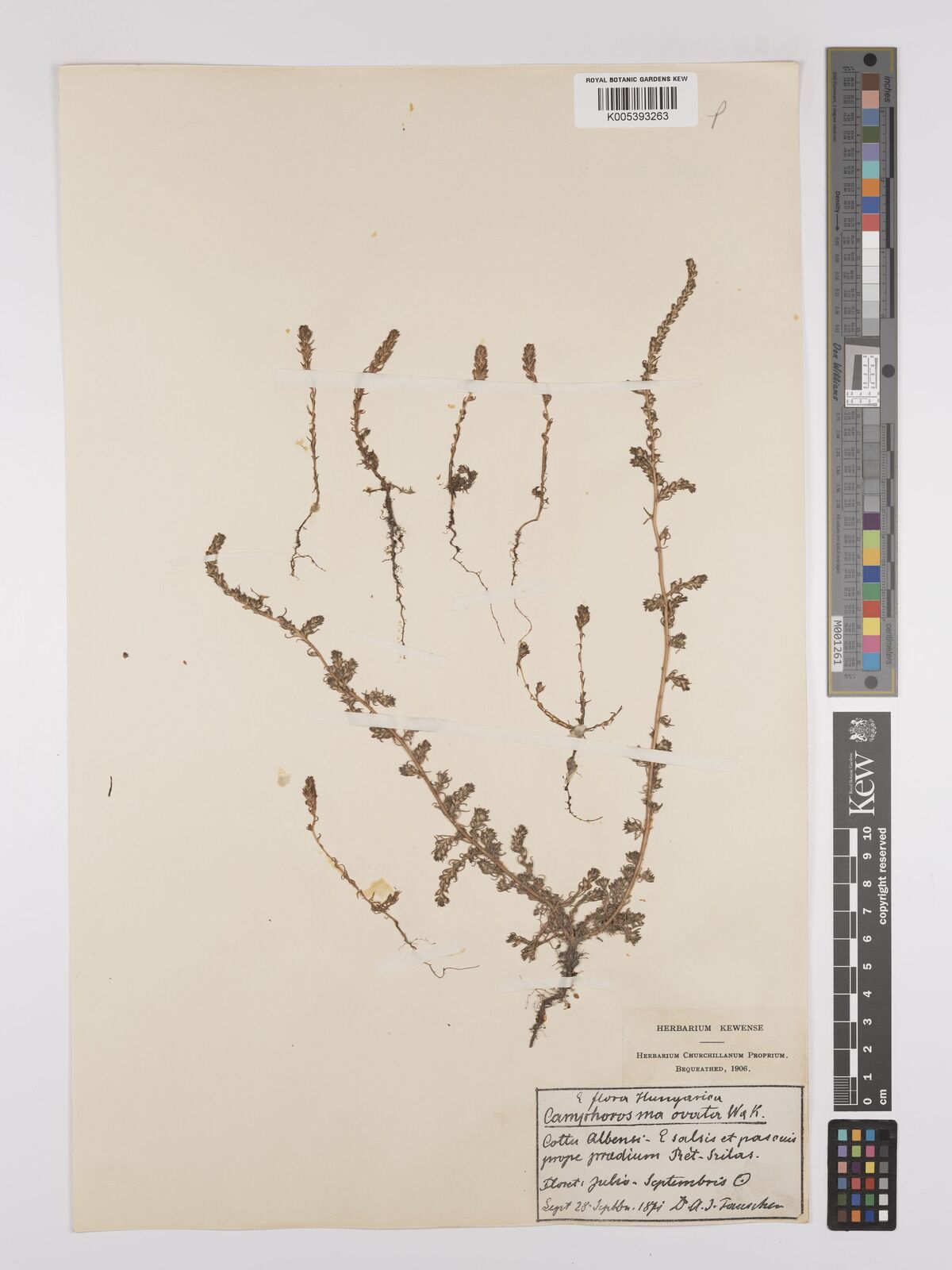
Camphorosma
Camphorosma is a genus of flowering plants in the family Amaranthaceae, found in northern Africa, southern and eastern Europe, Crimea, Russia, Anatolia, the Caucasus, Iran, Afghanistan, Pakistan, Central Asia, the Altai, western Siberia, Xinjiang in China, and Mongolia. Annuals or subshrubs, they can be distinguished from closely related taxa such as Bassia by their flattened perianths which have four lobes, inflorescences with multicellular glandular hairs, a distinct C4 leaf anatomy type (called the Camphorosma type), and a chromosome count of 2n = 12.

Blitum
Blitum is a genus of flowering plants in the amaranth family Amaranthaceae, subfamily Chenopodioideae. It is closely related to genus Spinacia. Its 12 species were traditionally placed in the genera Chenopodium, Monolepis, or Scleroblitum. The species of genus Blitum occur in Asia, Europe, North Africa, the Americas, and Australia.
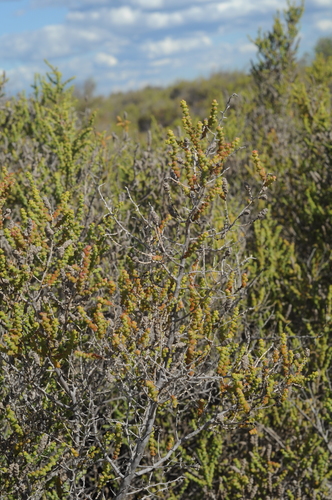
Halopeplis
Halopeplis is a genus in the family Amaranthaceae. The plants are halophytes
with not articulated stems and fleshy stem-clasping leaves. There are three species, occurring from the Mediterranean basin and North Africa to Southwest Asia and Central Asia.

Halimione
Halimione is a plant genus from the subfamily Chenopodioideae of the family Amaranthaceae. It is a sister genus of Atriplex and is included in that genus by Plants of the World Online.
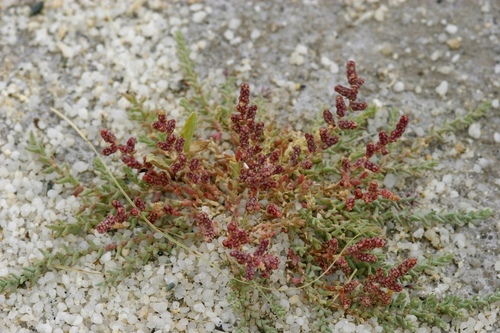
Kalidium
Kalidium is a genus of flowering plants in the plant family Amaranthaceae. The species are shrubby halophytes distributed in Southeast Europe, Southwest Asia and Central Asia to China.

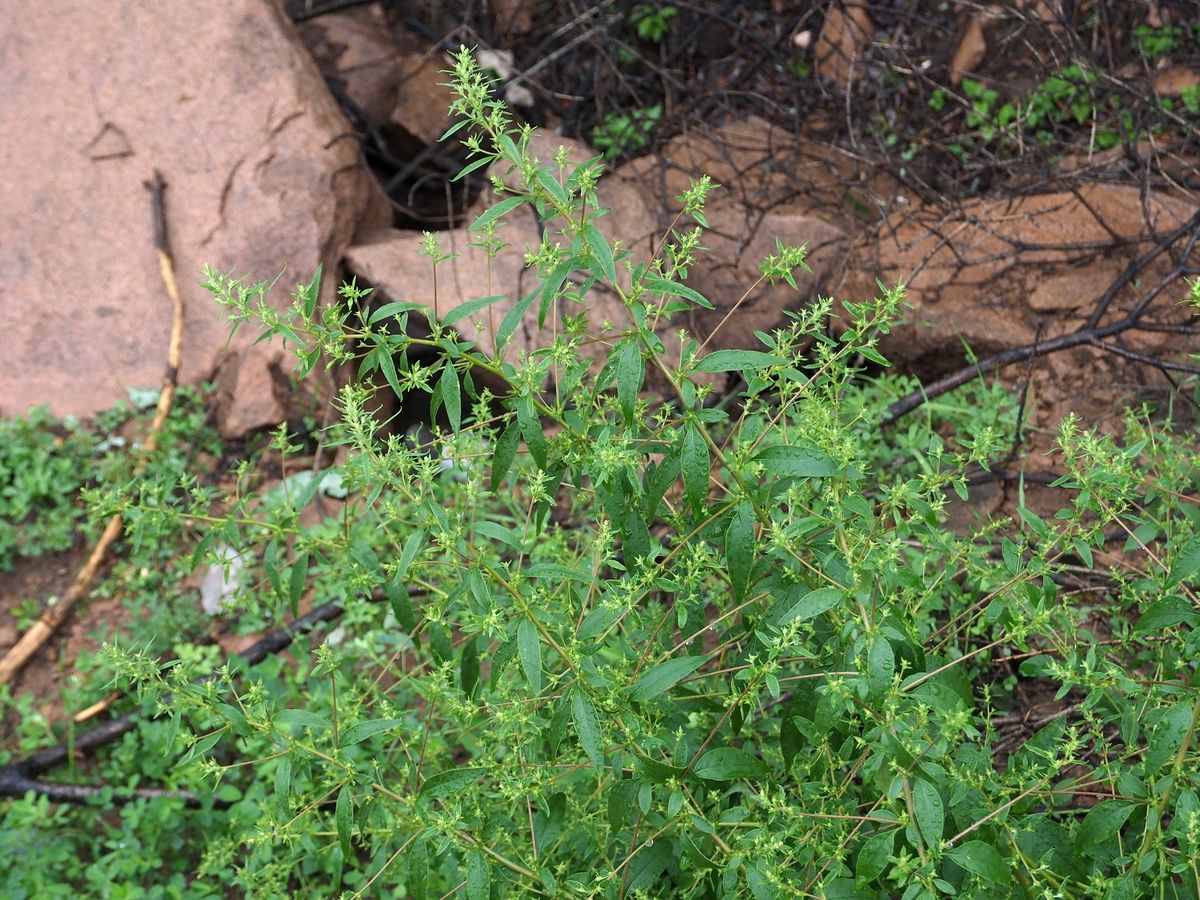
Halothamnus
Halothamnus is a genus in the subfamily Salsoloideae of the family Amaranthaceae (s.l., now including Chenopodiaceae). The scientific name means "saltbush", from the Greek () and () . This refers either to salty habitats or to the accumulation of salt in the plants. The genus is distributed from Southwest and Central Asia to the Arabian Peninsula and East Africa.
Axyris
Axyris, the Russian pigweeds, are a genus of flowering plants in the amaranth family Amaranthaceae, native to temperate parts of Eastern Europe and Asia. The center of genetic diversity is the Altai to northern Tien-Shan mountains. The best known species is Axyris amaranthoides, which has become a widespread invasive in northern North America.
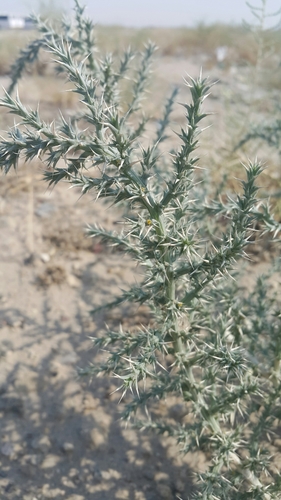
Cornulaca
Cornulaca is a genus of flowering plants belonging to the family Amaranthaceae.
Halogeton
Halogeton is a plant genus of the family Amaranthaceae. The genus name, Halogeton, derives from the Greek words for "salt" and for "neighbor."

Halimocnemis
Halimocnemis is a genus of flowering plants belonging to the family Amaranthaceae.

Ptilotus
Ptilotus is a genus of approximately 125 species of flowering plants in the family Amaranthaceae, and is endemic to Australia, apart from Ptilotus conicus that also occurs in Malesia. Plants in the genus Ptilotus are annual or perennial herbs or shrubs with usually hairy spikes of compact spherical, oval or cylindrical flowers.
Cyathula
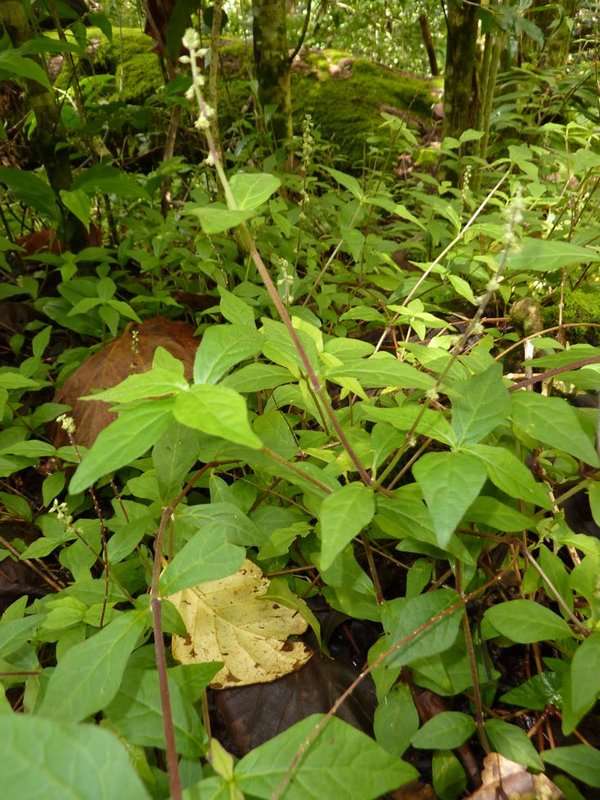
Cyathula is a genus of medicinal and ornamental plants in the family Amaranthaceae. They are distributed in subtropical and tropical Africa, Asia, Oceania and the Americas.
Petrosimonia
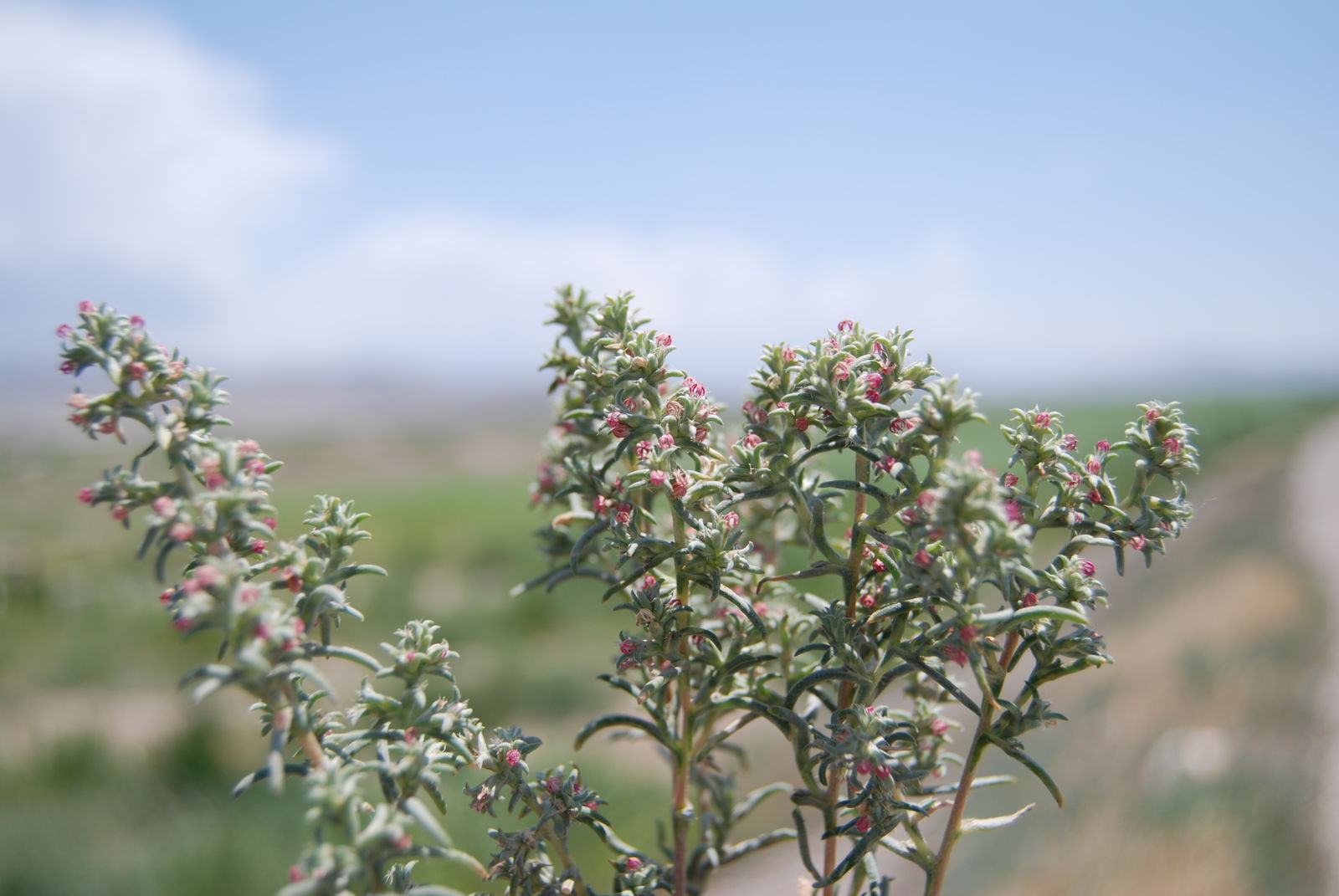
Petrosimonia is a genus of flowering plants belonging to the family Amaranthaceae. It is also in the Salsoloideae tribe.

Allenrolfea
Allenrolfea is a genus of shrubs in the family Amaranthaceae. The genus was named for the English botanist Robert Allen Rolfe. There are three species, ranging from North America to South America.
thumb|Allenrolfea patagonica

Kochia
thumb|Kochia scoparia
Kochia is a synonym of the genus Bassia, which belongs to the subfamily Camphorosmoideae of family Amaranthaceae.
Bienertia
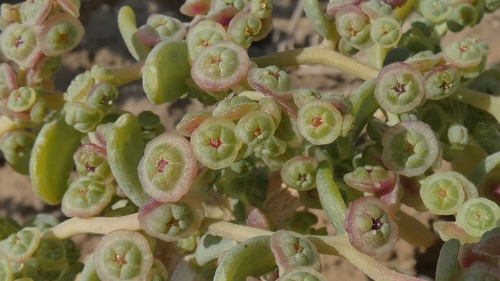
Bienertia is a flowering plant genus that currently is classified in the family Amaranthaceae s.l. (including the family Chenopodiaceae). For long time, the genus was considered to consist only of one species, Bienertia cycloptera, but in 2005 and 2012, two new species have been separated.

Maireana
thumb|Fruit of Maireana georgei
Nanophyton
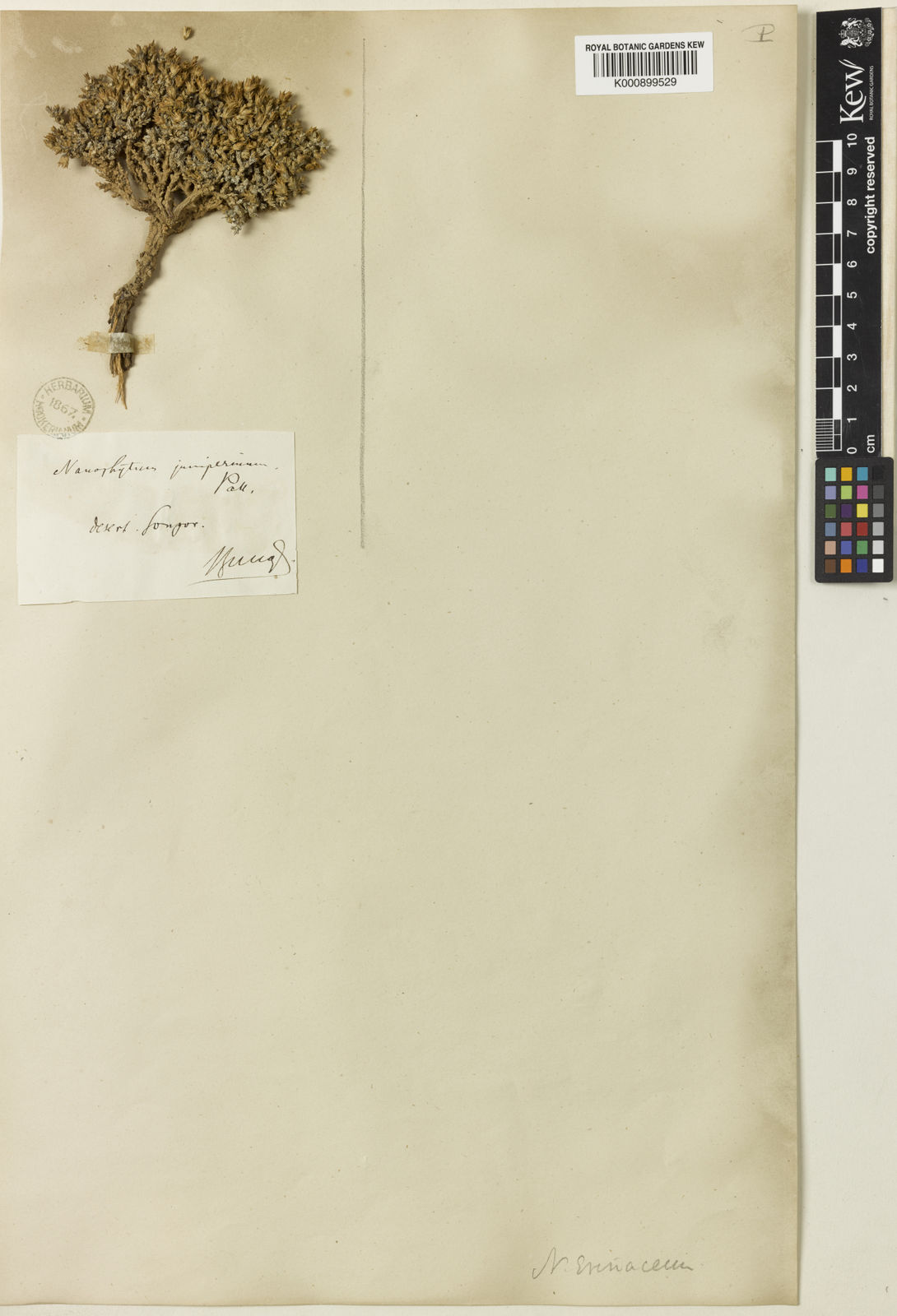
Nanophyton is a genus of flowering plants belonging to the family Amaranthaceae.
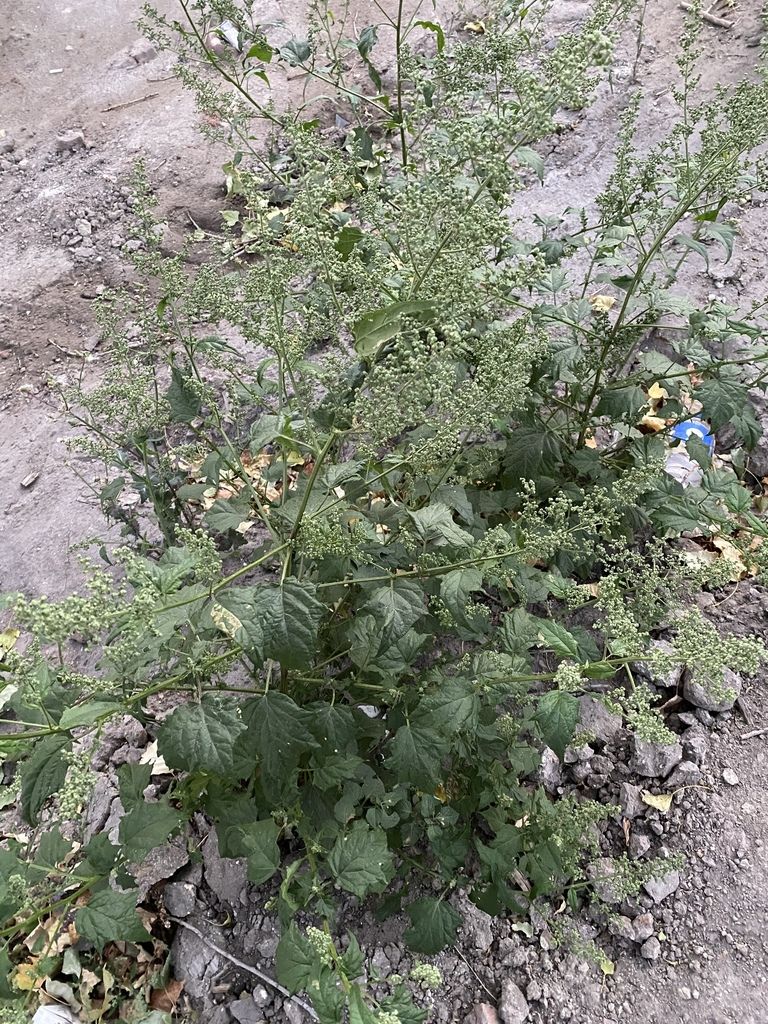
Chenopodiastrum
Chenopodiastrum is a genus of herbaceous flowering plants in the family Amaranthaceae. The genus was formally described in 2012. The five species occur in both the Old World and North America.
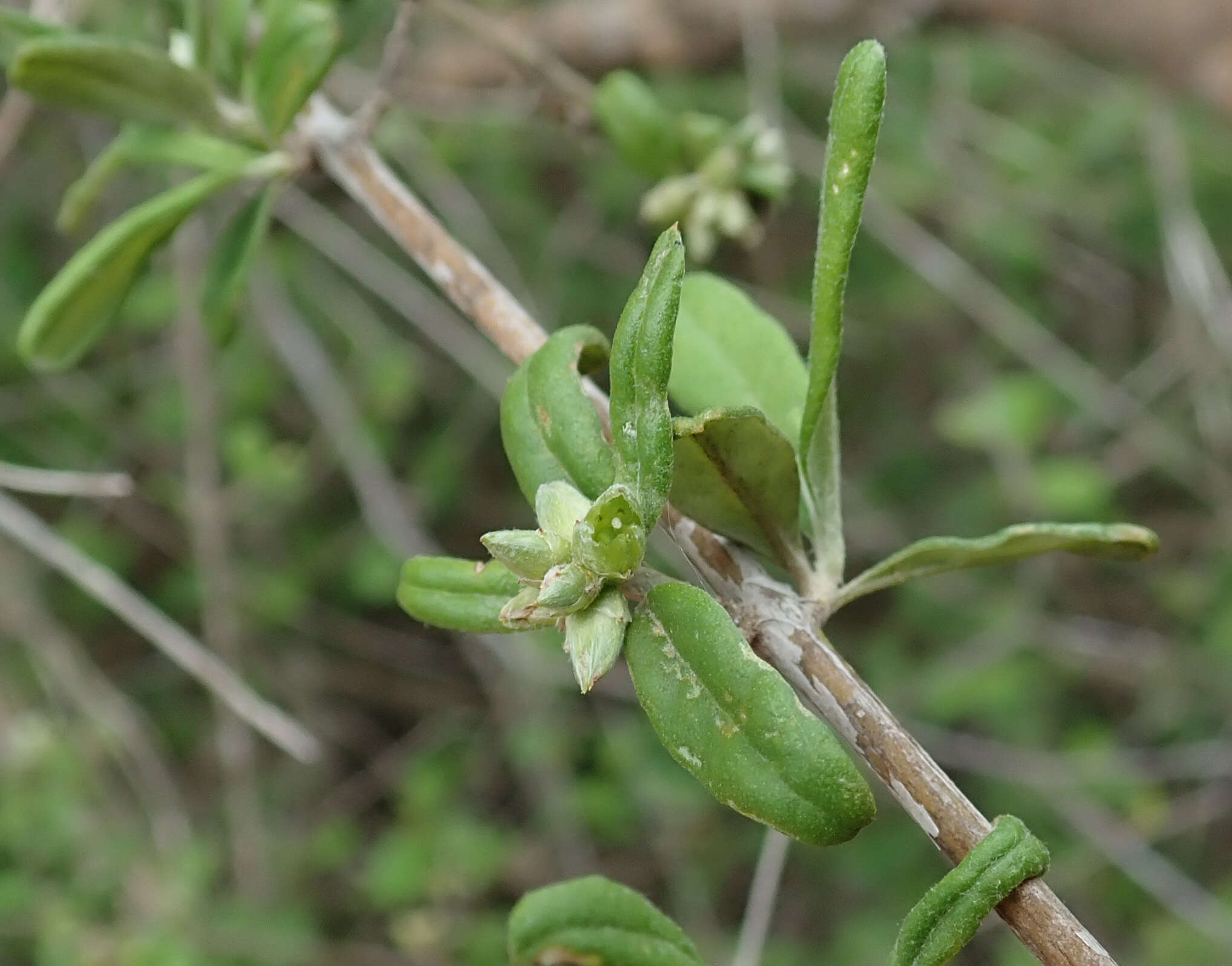
Psilotrichum
Psilotrichum is a genus of flowering plants in the family Amaranthaceae. It includes 26 species native to tropical Africa, the Arabian Peninsula, and tropical Asia.
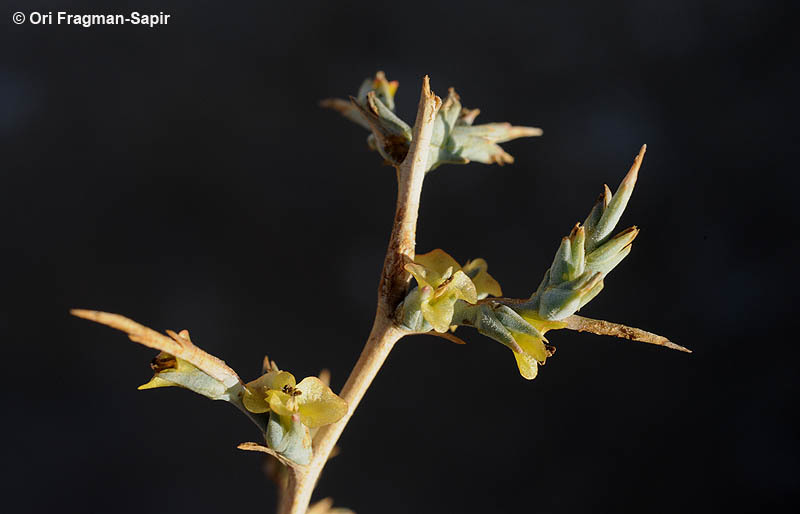
Noaea
Noaea is a genus of flowering plants belonging to the family Amaranthaceae. It is in the Salsoloideae subfamily.
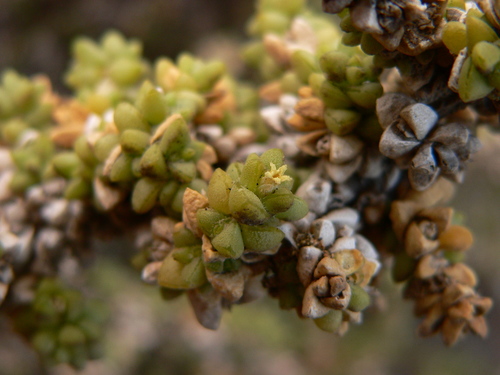
Traganum
Traganum is a genus of flowering plants belonging to the family Amaranthaceae.

Froelichia
Froelichia, or snakecotton, is a genus of plants in the family Amaranthaceae.
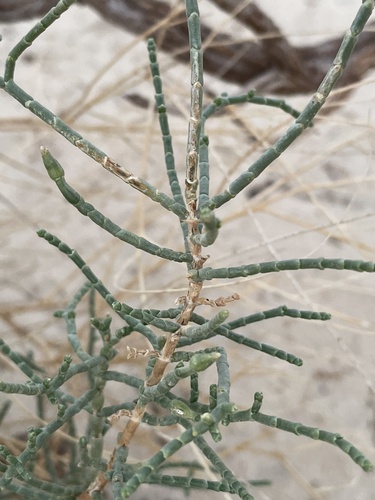
Hammada
genus of plants

Girgensohnia
Girgensohnia is a small genus of plants in the family Amaranthaceae. They range from the eastern Mediterranean to the Caucasus, central Asia, Pakistan, and Xinjiang.
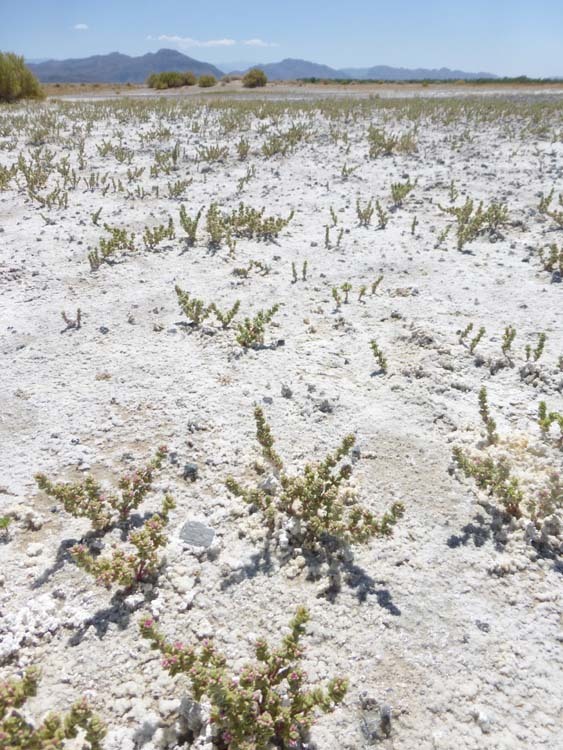
Nitrophila
Nitrophila is a small genus of flowering plants in the amaranth family sometimes known by the common name niterworts. The genus name is Greek for "soda-loving", as the plant grows in alkaline or salty soils, such as those rich in borax. These are rhizomatous perennials with fleshy foliage that helps them conserve water in environments high in mineral salts. The compact, papery flowers grow in the axils of the plant where the leaves join the branches. The fruit is a utricle which contains shiny black seeds. Nitrophila species are found in temperate regions of the Americas.
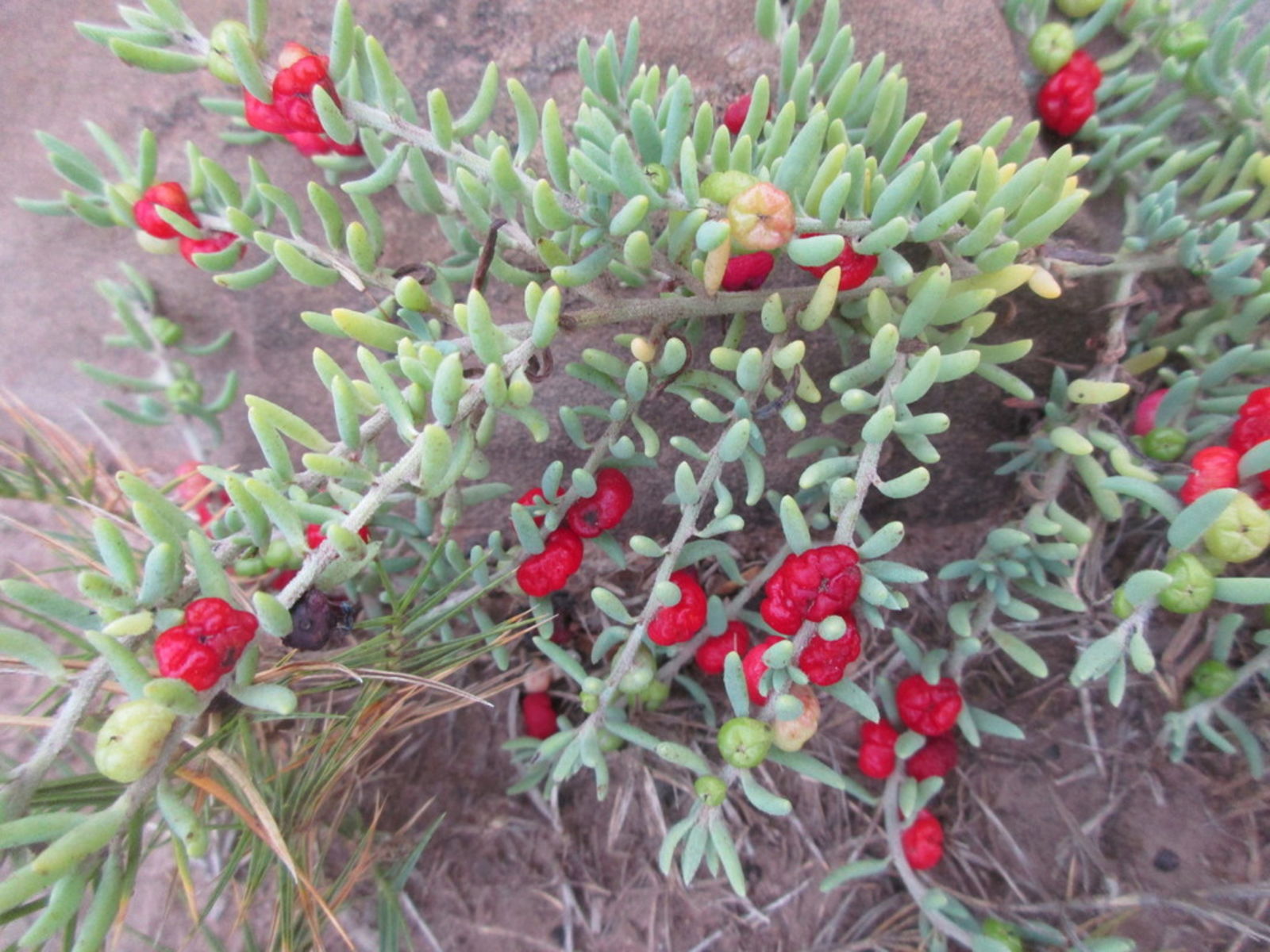
Enchylaena
Enchylaena is a genus of two species of small perennial shrubs endemic to Australia. Plants of this genus are commonly known as barrier saltbushes.
Acroglochin
Acroglochin is a genus of flowering plants in the family Amaranthaceae.
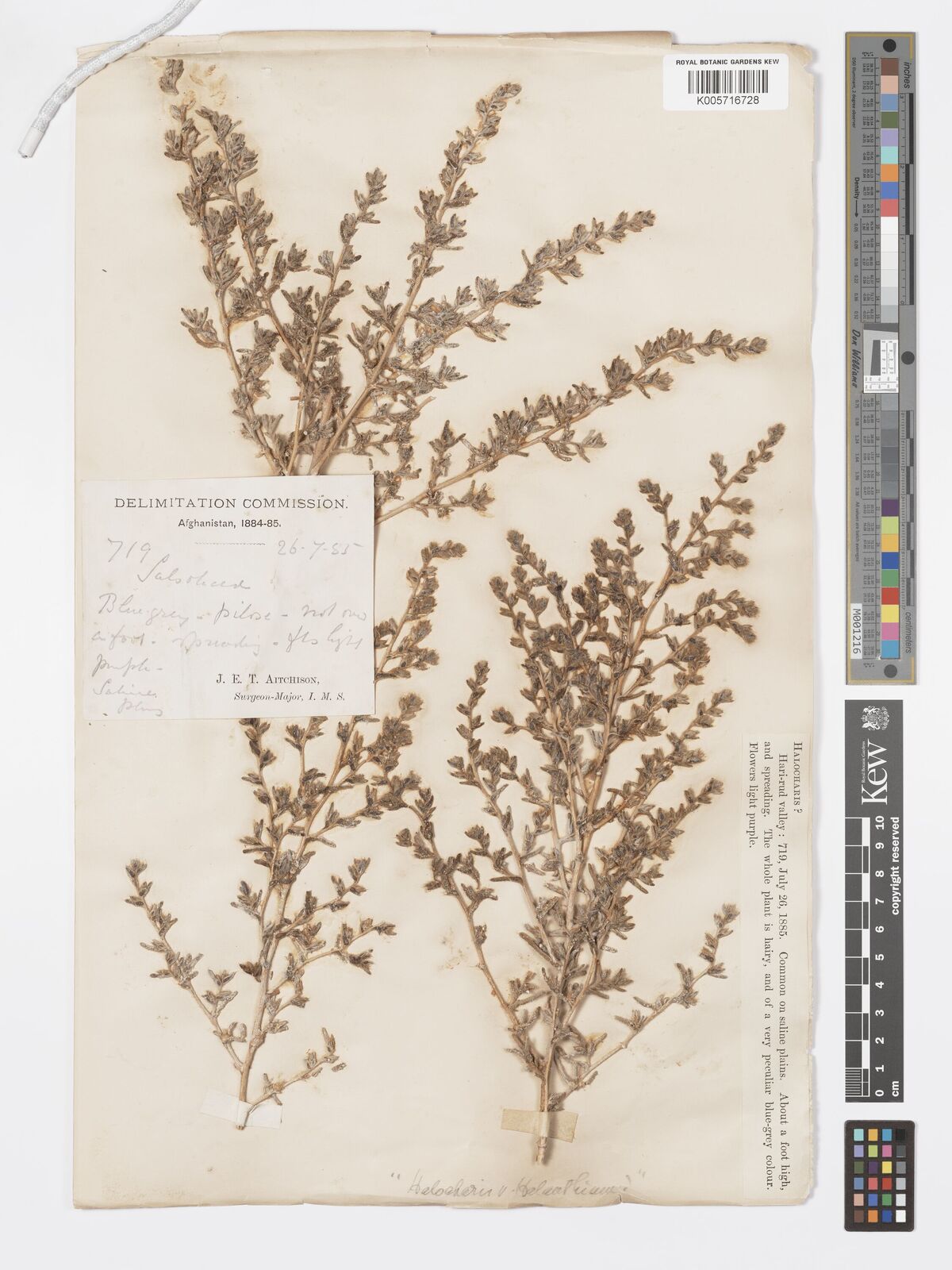
Halocharis
genus of plants

Pandiaka
Pandiaka is a genus of flowering plants belonging to the family Amaranthaceae.

Sericorema
Sericorema is a genus of flowering plants belonging to the family Amaranthaceae.

Anthochlamys
Anthochlamys is a genus of flowering plants belonging to the family Amaranthaceae.
Hermbstaedtia
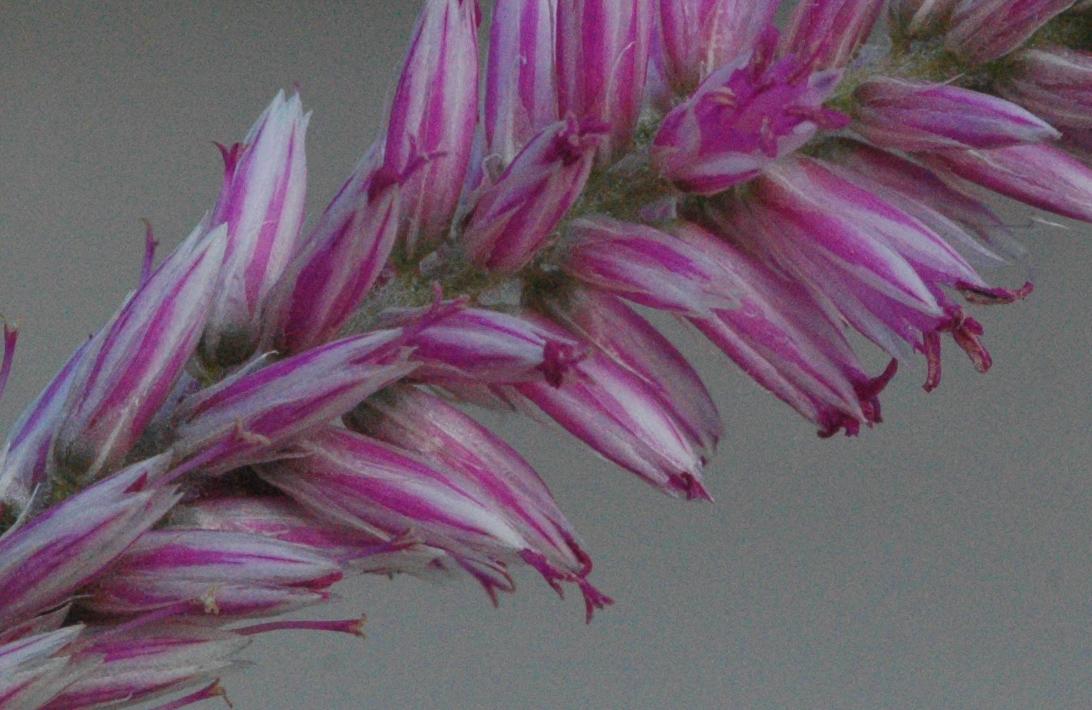
Hermbstaedtia is a genus of flowering plants belonging to the family Amaranthaceae.
.jpg)
Tecticornia
Tecticornia is a genus of succulent, salt tolerant plants largely endemic to Australia. Taxa in the genus are commonly referred to as samphires. In 2007, the genus Halosarcia, along with three other Australian genera (Pachycornia, Sclerostegia and Tegicornia) was incorporated into the genus.
Dissocarpus
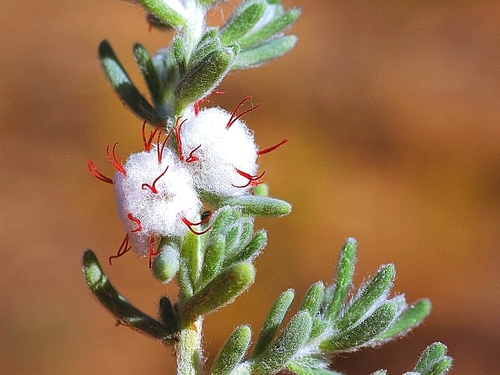
Dissocarpus is a genus of flowering plants belonging to the family Amaranthaceae.
Charpentiera
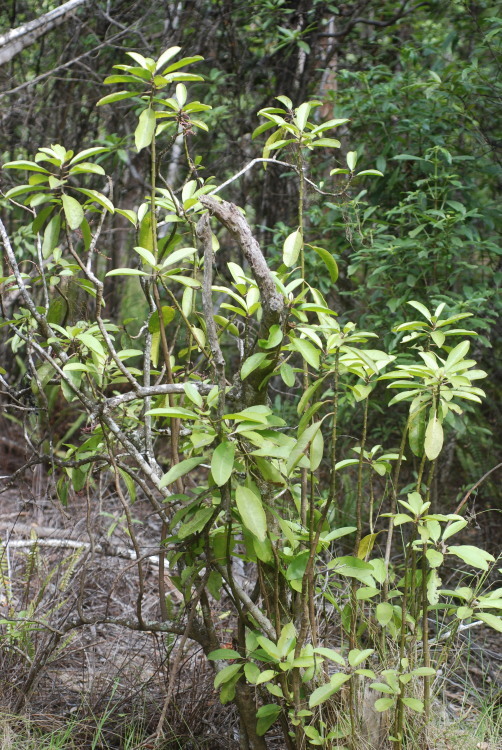
Charpentiera is a flowering plant genus in the family Amaranthaceae. It consists of five species endemic to Hawaii, where they are known as pāpala, and one species found only on the island of Tubuai in the Austral Islands. All species are trees, some reaching more than in height. The genus is named for Arsène Charpentier (1781-1818), professor of pharmacy at Antwerp from 1810 to 1814 and at Cherbourg from 1814 to 1816.
Sclerolaena
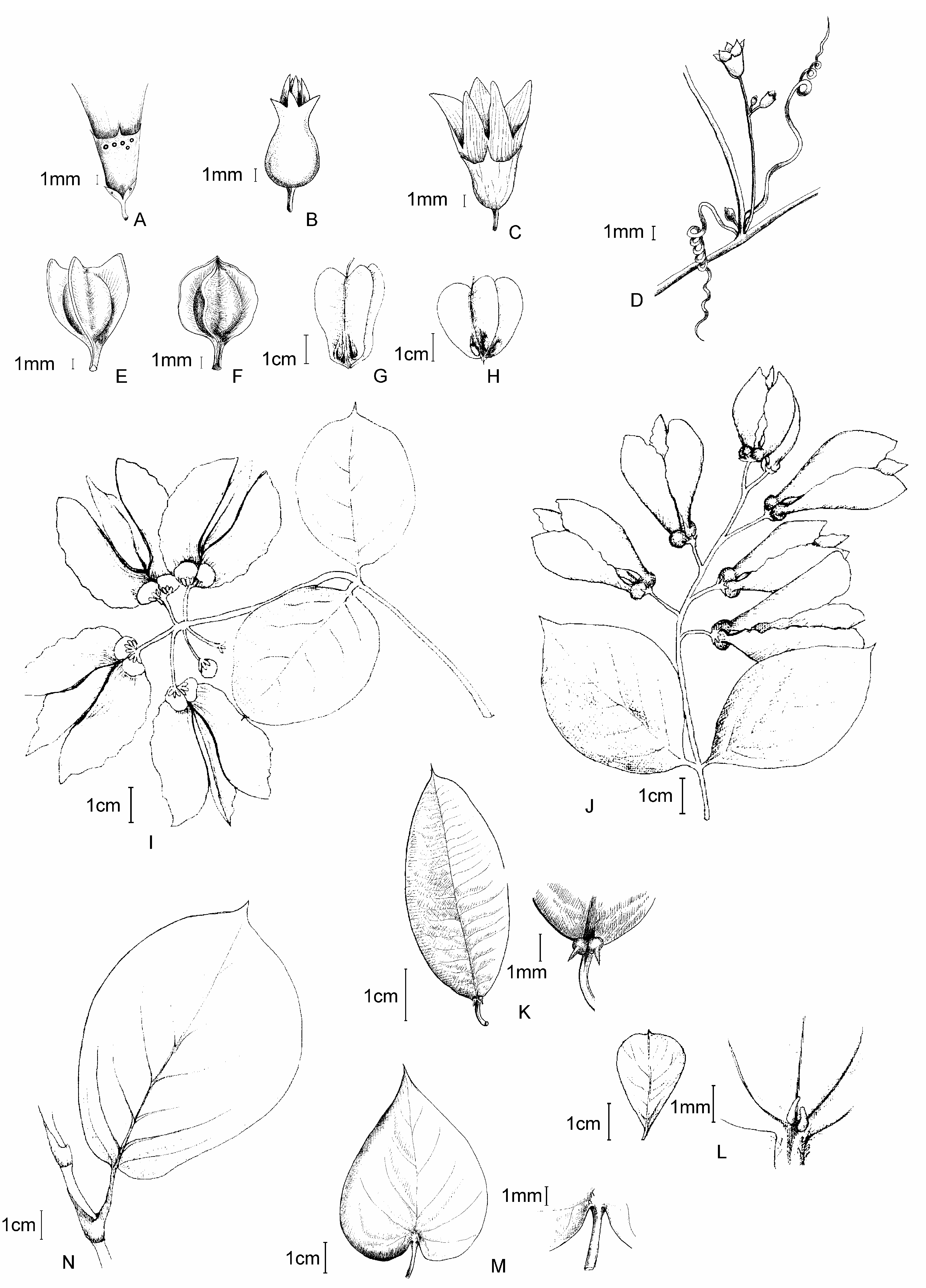
Sclerolaena is a genus of flowering plants in the family Amaranthaceae. It includes 78 species of annuals or short-lived perennials native to Australia.

Bosea
genus of plants