Category
page 1Amoebozoa genera

Amoeba
genus of Protozoa

Acanthamoeba
Acanthamoeba is a genus of amoebae that are commonly recovered from soil, fresh water, and other habitats.
The genus Acanthamoeba has two stages in its life cycle, the metabolically active trophozoite stage and a dormant, stress-resistant cyst stage. In nature, Acanthamoeba species are generally free-living bacterivores. However, they are also opportunistic pathogens able to cause serious and potentially fatal infections in humans and other animals.
Entamoeba
Entamoeba is a genus of Amoebozoa found as internal parasites or commensals of animals. In 1875, Fedor Lösch described the first proven case of amoebic dysentery in St. Petersburg, Russia. He referred to the amoeba he observed microscopically as Amoeba coli; however, it is not clear whether he was using this as a descriptive term or intended it as a formal taxonomic name. The genus Entamoeba was defined by Casagrandi and Barbagallo for the species Entamoeba coli, which is known to be a commensal organism. Lösch's organism was renamed Entamoeba histolytica by Fritz Schaudinn in 1903; he later d

Chaos
genus of giant amoebae
Pelomyxa
Pelomyxa is a genus of giant flagellar amoebae, usually 500–800 μm but occasionally up to 5 mm in length, found in anaerobic or microaerobic bottom sediments of stagnant freshwater ponds or slow-moving streams.
Polychaos
Polychaos is an amoeboid genus in the Amoebozoa group. Several characters unite the species in this genus. The pseudopods meld at their bases when the organism is moving, and have dorsal, longitudinal ridges. The nucleus is oval or ellipsoidal.
Mayorella
Mayorella is a genus of small amoeboid protists in the phylum Amoebozoa. The genus consists of amoebae that exhibit pseudopodia and feed on a variety of organisms through phagocytosis, making them an important group in microbial ecology across most environments worldwide. Mayorella species have been found in soil, freshwater and marine environments.
Endolimax
Endolimax is a genus of amoebozoa that are found in the intestines of various animals, including the species E. nana found in humans. Originally thought to be non-pathogenic, studies suggest it can cause intermittent or chronic diarrhea. Additionally, it is very significant in medicine because it can provide false positives for other tests, notably the similar species Entamoeba histolytica, the pathogen responsible for amoebic dysentery, and because its presence indicates the host has consumed fecal material. It forms cysts with four nuclei which excyst in the body and become trophozoites. End
Trichamoeba
Trichamoeba is a genus of Amoebozoa.
Phalansterium
Phalansterium is a genus of single-celled flagellated organisms comprising several species, which form colonies. Phalansterium produces tetraspores.
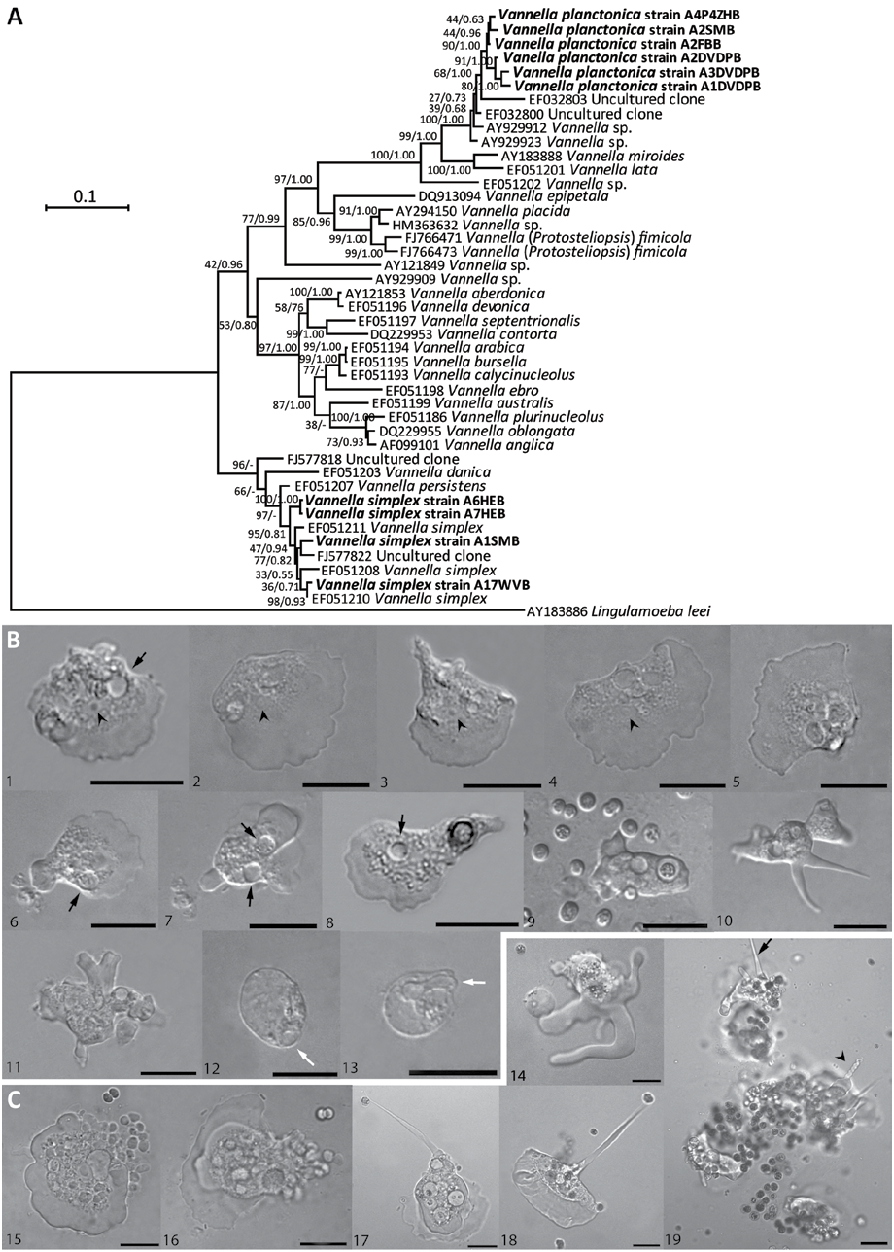
Vannella
Vannella is a genus of Amoebozoa.
Thecamoeba
Thecamoeba is a genus of Amoebozoa with a tough pellicle simulating a shell.
Paramoeba
Paramoeba is a genus of common parasites, including species that can cause infection in fish, crabs (including the "blue crab", Callinectes sapidus), sea urchins and others.
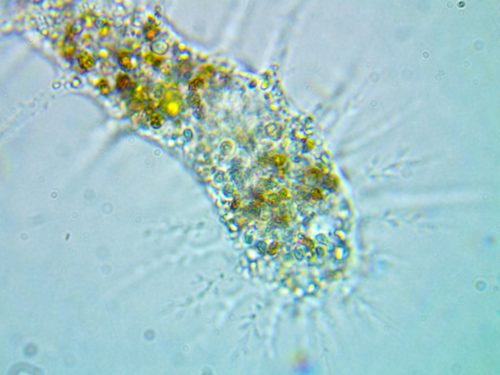
Mastigamoeba
Mastigamoeba is a genus of pelobionts, and treated by some as members of the Archamoebae group of protists. Mastigamoeba are characterized as anaerobic, amitochondriate organisms that are polymorphic. Their dominant life cycle stage is as an amoeboid flagellate. Species are typically free living, though endobiotic species have been described.
Cochliopodium
Cochliopodium is a Himatismenida genus.
Rhizamoeba
Rhizamoeba is a small genus of free-living marine naked lobose amoebae in the monotypic family Rhizamoebidae in the order Leptomyxida. It is most closely related to Leptomyxa and Flabellula, and some species have been moved to Leptomyxa due to molecular data.
Hartmannella
Hartmannella is a genus of Amoebozoa.
Flabellula
Flabellula is a genus of Amoebozoa.
Trichosphaerium
Trichosphaerium is a genus of amoebozoan protists that present extraordinary morphological transformations, both in size and shape, during their life cycle. They can present a test that may or may not be covered in spicules. They are related to the family Microcoryciidae, which contains other amoebae with tests, within the clade Corycidia of the phylum Amoebozoa.
Endamoeba
Endamoeba is a genus of amoeboids in Amoebozoa. It includes the species Endamoeba blattae (type species), Endamoeba lutea, and Endamoeba similans.
Paraflabellula
Paraflabellula is a genus of Amoebozoa.