Category
page 1Amount of substance

mole
SI unit of amount of substance

Avogadro constant
fundamental physical constant (symbols: L, Nᴀ) representing the molar number of entities

Avogadro's law
physical law that equal volumes of all gases at the same temperature and pressure have the same number of molecules
amount of substance
extensive physical property
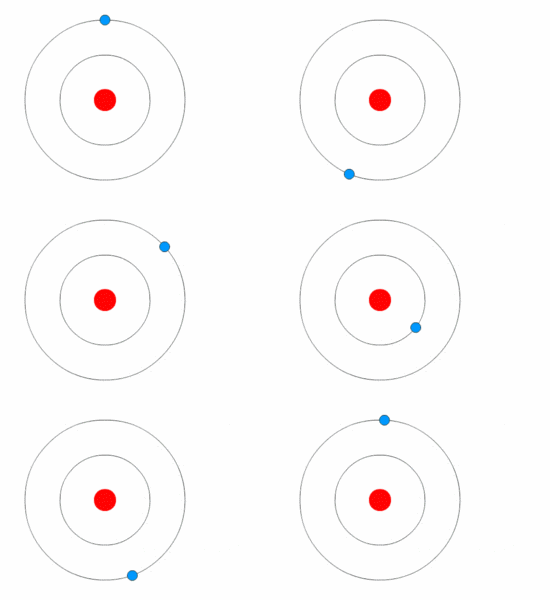
History of atomic theory
history of scientific theory that views matter as made up of atoms of chemical elements

molar gas constant
physical constant; the molar equivalent to the Boltzmann constant
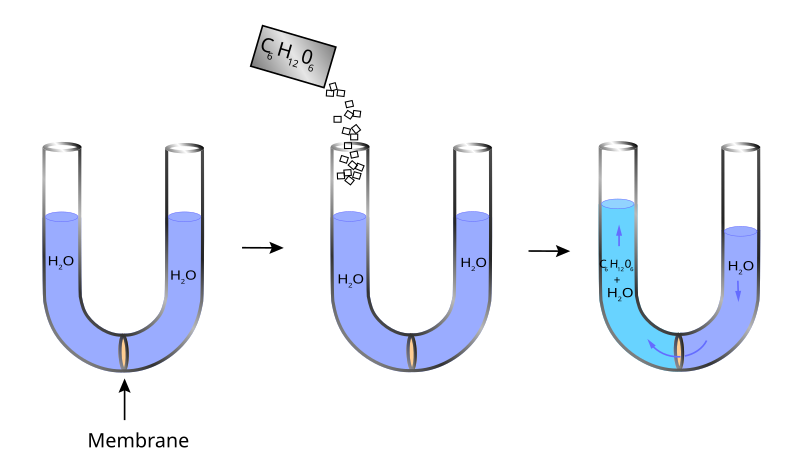
osmotic pressure
measure of the tendency of a solution to take in pure solvent by osmosis
law of definite proportions
statement that a given chemical compound always contains its elements in fixed ratio (by mass) and does not depend on its source and method of preparation
relative atomic mass
dimensionless physical quantity: ratio of the average mass of atoms of an element to one unified atomic mass unit
colligative property
property of solutions that depend upon the ratio of the number of solute particles to the number of solvent molecules in a solution
boiling-point elevation
phenomenon where the boiling point of a liquid is higher when another compound is added
freezing-point depression
process in which adding a solute to a solvent decreases the freezing point of the solvent
osmolarity
molarity of osmotically active particles
Loschmidt constant
physical constant - number density of molecules in an ideal gas at standard temperature and pressure
equivalent weight
in chemistry
standard atomic weight
relative atomic mass, in samples by standard, as published by IUPAC (CIAAW)
osmometer
An osmometer is a device for measuring the osmotic strength of a solution, colloid, or compound.
amagat
An amagat (denoted amg or Am) is a practical unit of volumetric number density. Although it can be applied to any substance at any conditions, it is defined as the number of ideal gas molecules per unit volume at 1 atm (101.325 kPa) and 0 °C (273.15 K).