Category
page 1Amphipod genera
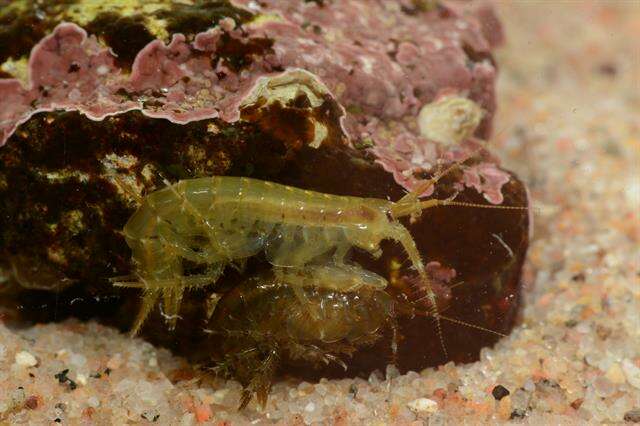
Gammarus
Gammarus is an amphipod crustacean genus in the family Gammaridae. It contains more than 200 described species, making it one of the most species-rich genera of crustaceans. Different species have different optimal conditions, particularly in terms of salinity, and different tolerances; Gammarus pulex, for instance, is a purely freshwater species, while Gammarus locusta is estuarine, only living where the salinity is greater than 25‰.

Talitrus
Talitrus is a genus of amphipod crustaceans, including the familiar European sandhopper Talitrus saltator. In includes the following species:
Talitrus curioi Javier & Coleman, 2010
Talitrus gulliveri Miers, 1875
Talitrus platycheles Guerin & Cagliari, 1832
Talitrus saltator (Montagu, 1808)
Talitrus trukanus K. H. Barnard, 1960
Niphargus
Niphargus is by far the largest genus of its family, the Niphargidae, and the largest of all freshwater amphipod genera.
Hyperia
genus of crustaceans

Orchestia
Orchestia is a genus of amphipods in the family Talitridae. Species in Orchestia are parasitized by the Filozoan species Txikispora philomaios.

Phronima
thumb|Photnima Sedentaria Offspring
Phronima is a genus of small, deep sea hyperiid amphipods of the family Phronimidae. It is found throughout the world's oceans, except in polar regions. Phronima species live in the pelagic zone of the deep ocean. Their bodies are semitransparent. Although commonly known as parasites, they are more technically correctly called parasitoids. Instead of constantly feeding on a live host, females attack salps, using their mouths and claws to eat the animal and hollow out its gelatinous shell. Phronima females then enter the barrel and lay their eggs inside, then

Caprella
thumb|Caprella bathytatos
thumb|Caprella mendax
thumb|Caprella kominatoensis
Ingolfiella
Ingolfiella is a genus of amphipod in the family Ingolfiellidae, containing the following species:

Crangonyx
Crangonyx is a genus of crustacean in family Crangonyctidae. Crangonyx species can live in marshes, savannas or swamps as well as caves. It contains the following species:

Stygobromus
Stygobromus is a genus of amphipod crustaceans that live in subterranean habitats. The majority of the listed species are endemic to North America (one from Canada, the rest from the United States), a smaller number of species are also known from Eurasia. Most of the North American species live in areas which were not covered by the Laurentide Ice Sheet, although a few species seem to have survived under the ice. A number of species are on the IUCN Red List as endangered species (EN) or vulnerable species (VU); one species, S. lucifugus, is extinct.

Epimeria
Epimeria is a genus of amphipods in the family Epimeriidae. There are more than 80 described species in Epimeria.
Idunella
thumb|
Allocrangonyx
thumb|Allocrangonyx pellucidus (Oklahoma Cave Amphipod) in a cave spring in the Arbuckle mountains of Oklahoma.
Allocrangonyx is a genus of troglobitic amphipod crustaceans from the South Central United States. The two species are both listed as vulnerable on the IUCN Red List. The animals are blind and unpigmented. During the male's development, the outer ramus of the third uropod differentiates into secondary segments and grows to a length greater than the animal's body length.

Corophium
Corophium is a genus of the amphipod family Corophiidae. Formerly a much larger genus, many species have been transferred to segregate genera such as Monocorophium and Crassicorophium.
Parhyale
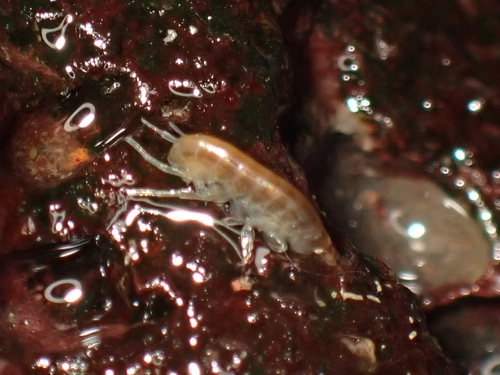
Parhyale is a genus of amphipod crustaceans, containing the following species:
Parhyale aquilina (Costa, 1853)
Parhyale basrensis Salman, 1986
Parhyale eburnea Krapp-Schickel, 1974
Parhyale explorator Arresti, 1989
Parhyale fascigera Stebbing, 1897
Parhyale hachijoensis Hiwatari, 2002
Parhyale hawaiensis (Dana, 1853)
Parhyale inyacka K. H. Barnard, 1916
Parhyale iwasai (Shoemaker, 1956)
Parhyale multispinosa Stock, 1987
Parhyale penicillata Shoemaker, 1956
Parhyale philippinensis Hiwatari, 2002
Parhyale plumicornis (Heller, 1866)
Parhyale ptilocerus (Derzhavin, 1937)
Platorchestia
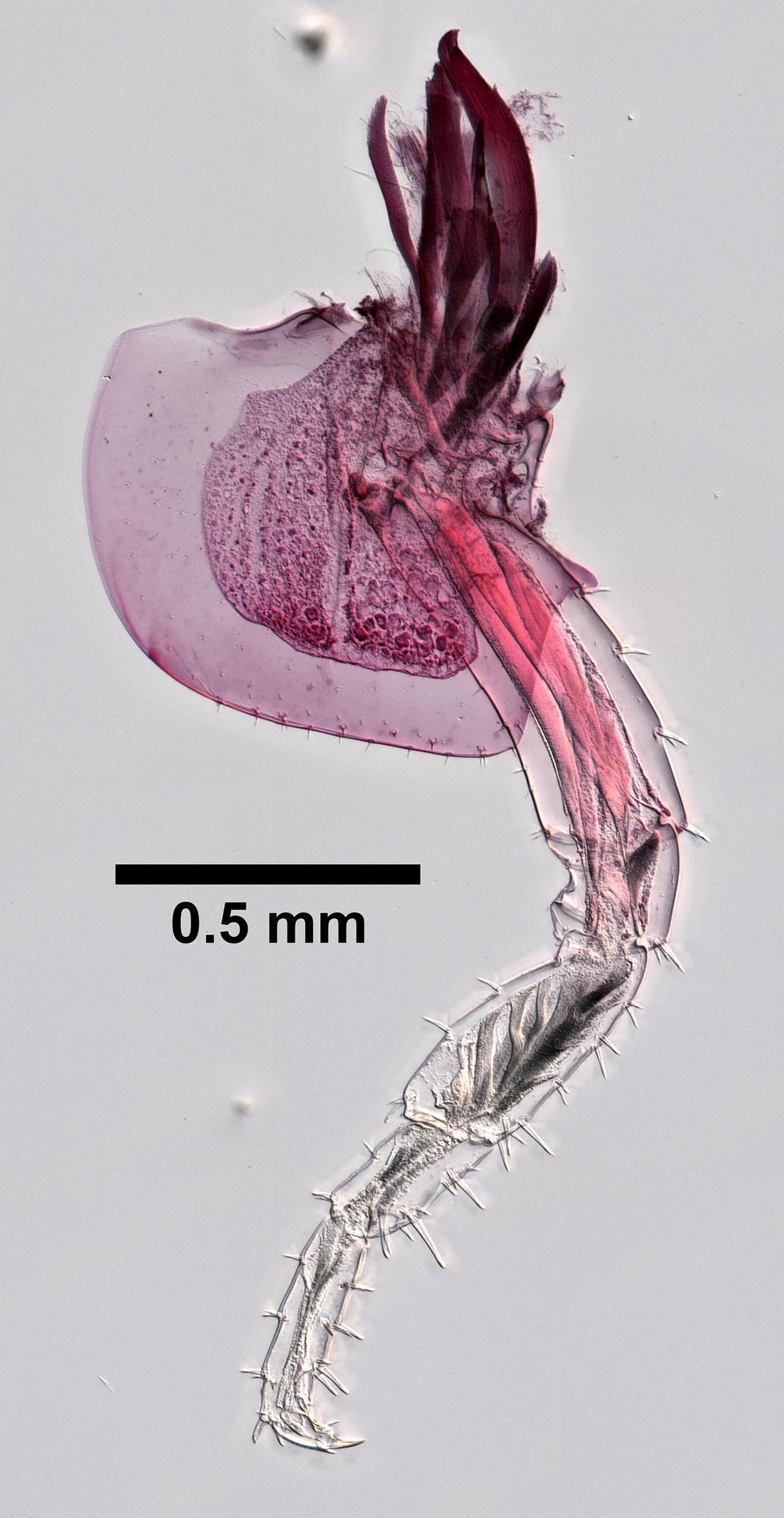
Platorchestia is a genus of sand flea, containing the following species:

Microprotopus
Microprotopus is a genus of amphipods belonging to the monotypic family Microprotopidae.
Amphilochus
genus of crustaceans
Bathyporeia
Bathyporeia is a genus of amphipods in the family Pontoporeiidae, containing the following species:
Amphiporeia
Amphiporeia is a genus of amphipods in the family Bathyporeiidae. There are at least three described species in Amphiporeia.
Photis
Photis is a genus of amphipod crustaceans, containing the following species:
Uhlorchestia
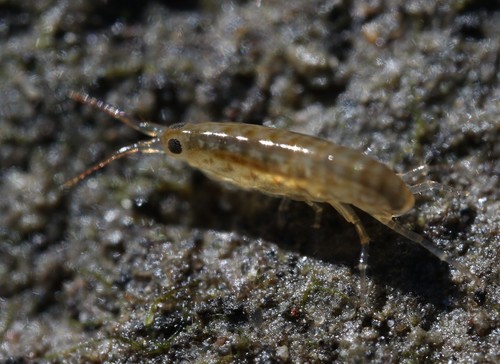
Uhlorchestia is a genus of beach hoppers in the family Talitridae. There are at least two described species in Uhlorchestia.

Gmelina
genus of amphipods
Nototropis
Nototropis is a genus of amphipod crustaceans, in the family, Atylidae, and was first described by Achille Costa in 1853.

Iphimedia
genus of crustaceans
Apherusa
Apherusa is a genus of amphipods belonging to the family Calliopiidae.

Lycaeopsis
Lycaeopsis is a genus of crustaceans belonging to the monotypic family Lycaeopsidae.
Americorchestia
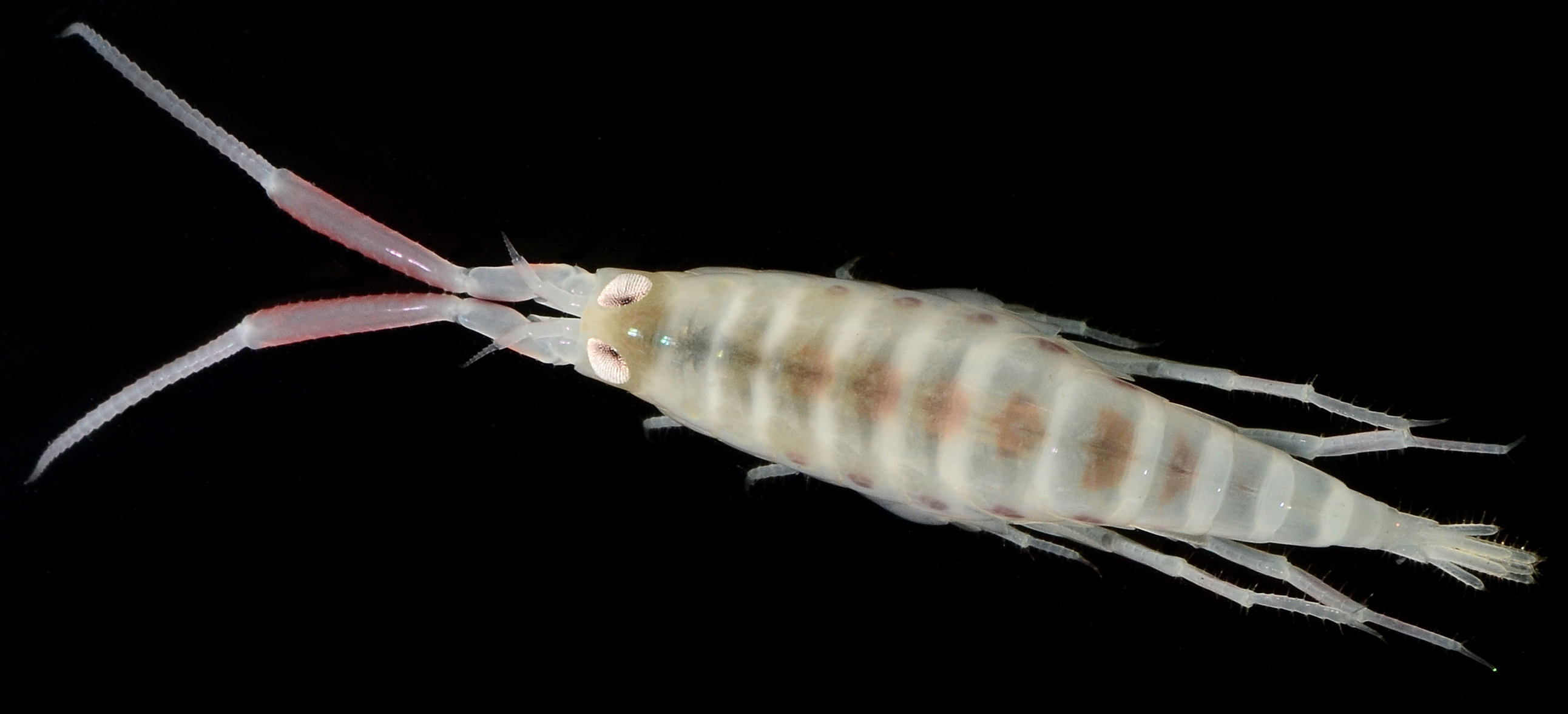
Americorchestia is a genus of beach hoppers in the family Talitridae. There are about five described species in Americorchestia.

Talorchestia
Talorchestia is a genus of amphipod of the family Talitridae, containing the following species:
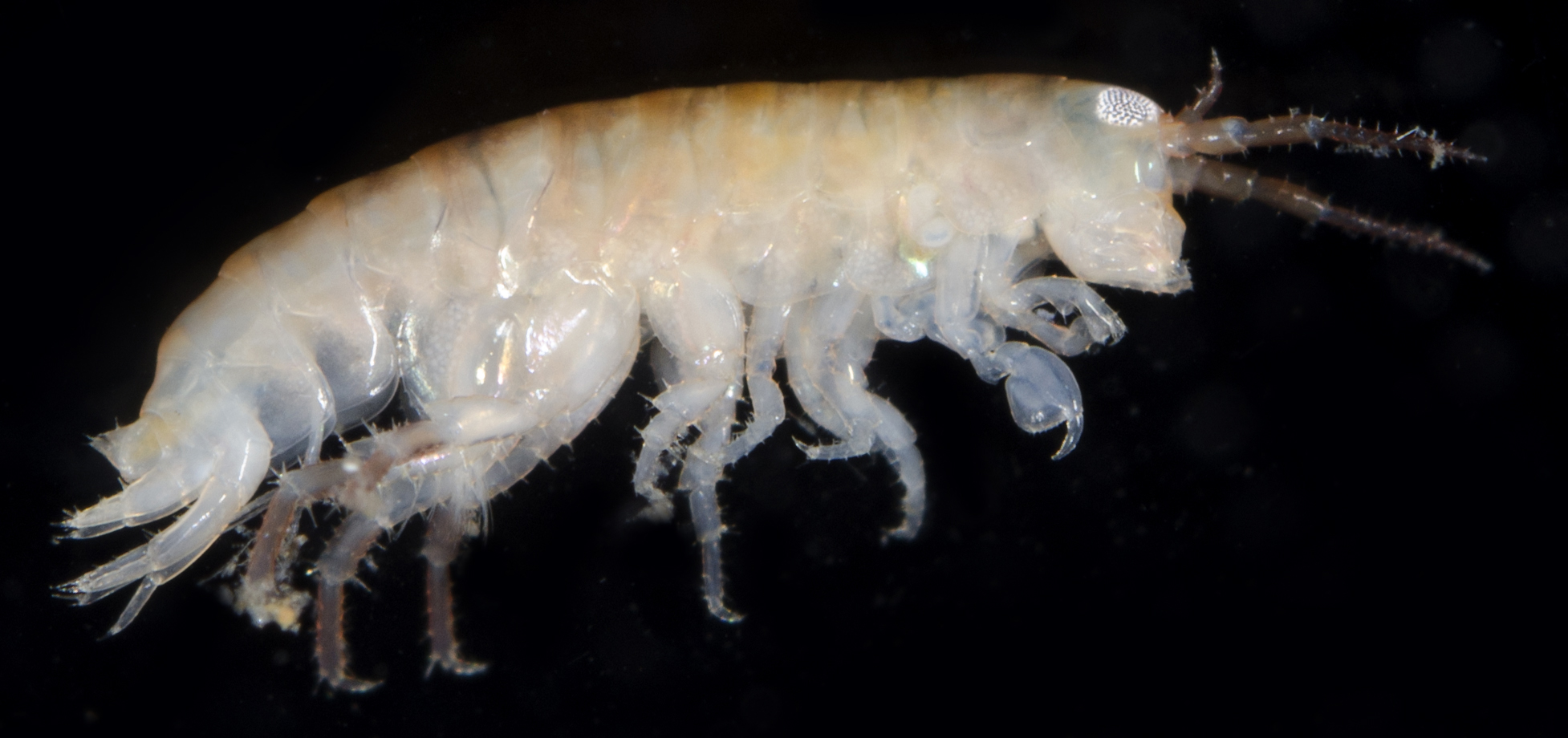
Traskorchestia
Traskorchestia is a genus of beach hoppers in the family Talitridae. There are at least three described species in Traskorchestia.

Dikerogammarus
Dikerogammarus is a genus of amphipod crustaceans, containing the following species:
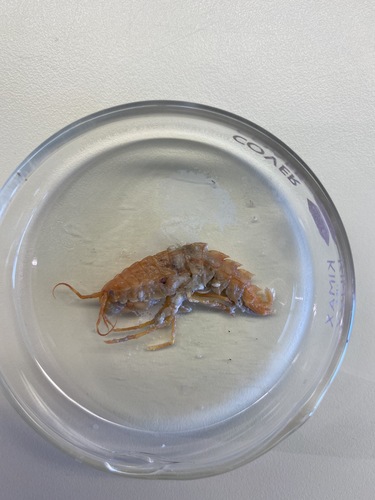
Gammaracanthus
Gammaracanthus is a genus of amphipods belonging to the monotypic family Gammaracanthidae. The species of this genus are found in Eurasia and North America.

Hyalella
Hyalella is a genus of amphipods found in the Americas. They are mainly found in freshwater habitats.
Acanthonotozoma
Acanthonotozomatidae is a family of amphipod crustaceans, which currently comprises the single genus Acanthonotozoma Boeck, 1876.
Echinogammarus
Echinogammarus is a genus of amphipod crustaceans in the family Gammaridae. The status of many of its species is incertae sedis, but its type species is Echinogammarus berilloni. Species in Echinogammarus are parasitized by the Filozoan species Txikispora philomaios.
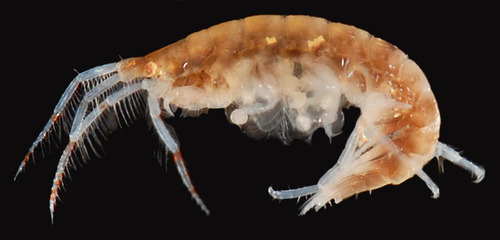
Ericthonius
thumb | right | alt=Ericthonius rubricornis. | Ericthonius rubricornis.
Ericthonius is a genus of amphipods in the family Ischyroceridae. There are at least 20 described species in Ericthonius.
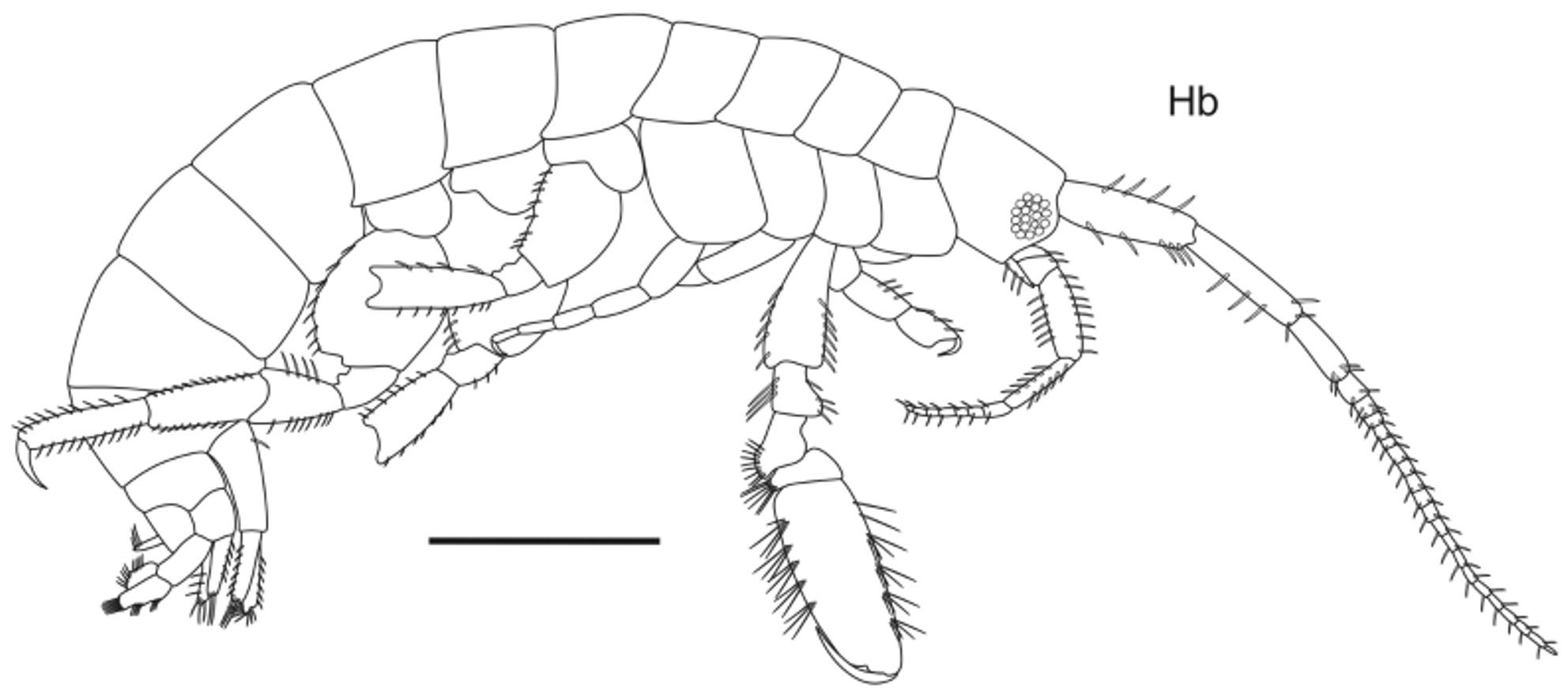
Elasmopus
Elasmopus is a cosmopolitan genus of amphipods in the family, Maeridae, and was first described in 1853 by Achille Costa. The type species is Elasmopus rapax .
==Species==
There are 143 species accepted by WoRMS Some appear below.
Elasmopus aduncus
Elasmopus alalo
Elasmopus alkhiranensis
Elasmopus antennatus
Elasmopus arafura
Elasmopus arrawarra
Elasmopus atolgidus
Elasmopus atollicus
Elasmopus balkomanus
Elasmopus hawaiensis
Elasmopus holgurus
Elasmopus hooheno
Elasmopus hyperopia
Elasmopus incarocai
Elasmopus incomptus
Elasmopus integer
Elasmopus japonicus
Elasmopus karamani
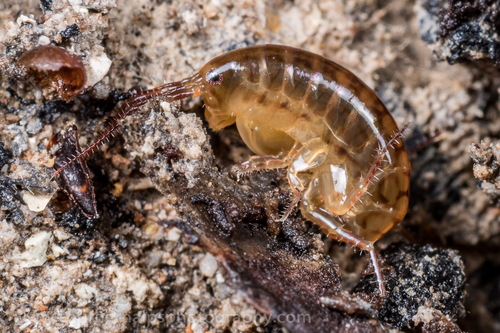
Parorchestia
Parorchestia is a genus of amphipods in the family Makawidae, containing the following species:
Parorchestia ihurawao Duncan, 1994
Parorchestia kinabaluensis Shoemaker, 1935
Parorchestia lagunae Baker, 1915
Parorchestia longicornis Stephensen, 1938
Parorchestia luzonensis Baker, 1915
Parorchestia tenuis (Dana, 1852)
Haustorius
Haustorius is a genus of amphipods in the family Haustoriidae. There are about six described species in Haustorius.
Megalorchestia
Megalorchestia is a genus of sand-hoppers in the family Talitridae. The genus was erected by the German naturalist Johann Friedrich von Brandt in 1851 and the type species is Megalorchestia californiana.
Isaea
Isaea is a small genus of amphipod crustaceans that live commensally on the mouthparts of other crustaceans.
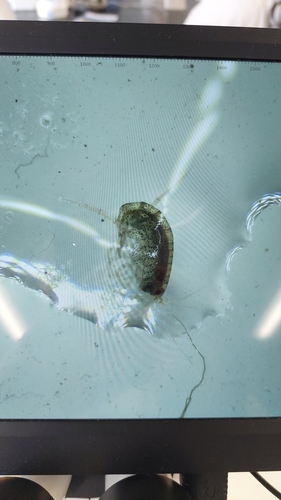
Paracalliope
Paracalliope is a genus of amphipod crustaceans that live in Australasia. They include the most common freshwater amphipods in New Zealand, where they are particularly frequent in slow-flowing reaches of rivers. They shelter among weed beds and are important prey items for fish such as the New Zealand smelt, Retropinna retropinna, which are in turn important prey for the freshwater eels Anguilla australis and Anguilla dieffenbachii. Paracalliope acts as an intermediate host for the nematode Hedruris spinigera, which can thus reach their primary host, the eel.
Leucothoe
genus of crustaceans
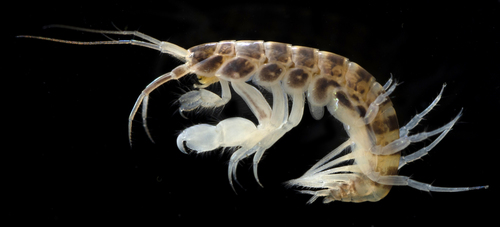
Protomedeia
genus of amphipods
Monocorophium
Monocorophium is a genus of amphipod crustaceans.
Sinocorophium
Sinocorophium is a genus of amphipod crustaceans.
Arcitalitrus
Arcitalitrus is a genus of beach hoppers in the family Talitridae. There are nine described species in Arcitalitrus.

Dexamine
thumb | right | alt=Dexamine thea specimen. | Dexamine thea specimen.
Dexamine is a genus of crustaceans in the family Dexaminidae.
Acanthonotozomopsis
Acanthonotozomopsis is a genus of crustaceans belonging to the monotypic family Vicmusiidae.

Aeginina
Aeginina is a genus of amphipods in the family Caprellidae. There are at least 2 described species in Aeginina.
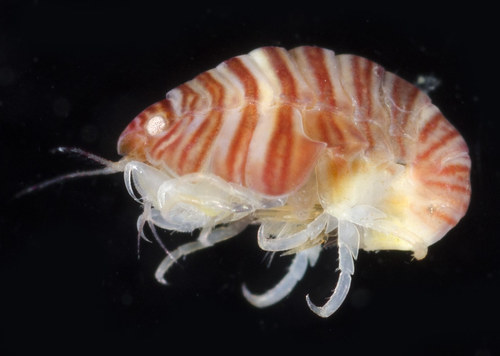
thumb|Illustration from Depths of the Sea
Thorlaksonius
Thorlaksonius is a genus of crustaceans in the family Pleustidae. It is native to northeastern and northwestern Pacific regions of the North American and Asia coastlines.

Eusirus
Eusirus is a genus of amphipods belonging to the family Eusiridae. The genus has cosmopolitan distribution. Within the genus Eusirus sexual dimorphism is weak, therefore identifying the sex of non-adult individuals is difficult.
Calliopius
Calliopius is a genus of amphipods in the family Calliopiidae. There are ten described species in Calliopius.
Cystisoma
Cystisoma is a genus of amphipod. It is the only member of the family Cystisomatidae within the Hyperiidea. The genus is noted for its nearly completely transparent body, adapted for life in low light waters.

Apocorophium
Apocorophium is a genus of amphipod crustaceans, comprising the following species:
Apocorophium acutum (Chevreux, 1908)
Apocorophium curumim Valério-Berardo & Thiago de Souza, 2009
Apocorophium lacustre (Vanhöffen, 1911)
Apocorophium louisianum (Shoemaker, 1934)
Apocorophium simile (Shoemaker, 1943)
Chiltonia
Chiltonia is a genus of amphipod crustaceans endemic to New Zealand. Four species are known, three of which live in fresh waters. They were first discovered by Charles Chilton in 1898 and the genus Chiltonia was erected the following year by T. R. R. Stebbing in Chilton's honour.

Urothoe
Urothoe is a genus of very small marine amphipod crustaceans in the family Urothoidae. Members of the genus are found worldwide.

Paraphronima
Paraphronima is a genus of crustaceans belonging to the monotypic family Paraphronimidae.
Harpiniopsis
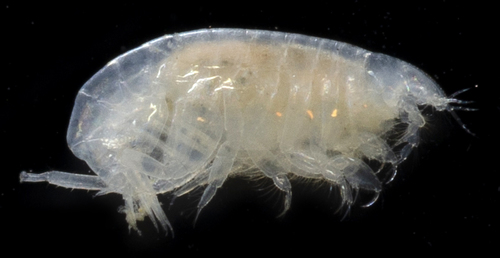
Harpiniopsis is a genus of crustaceans in the family Phoxocephalidae. Species of this genus are found throughout the world. It was first described by Knud Stephensen in 1925.
Trischizostomatidae
Trischizostoma is a genus of crustaceans belonging to the monotypic family Trischizostomatidae.