Category
page 1Analytical psychology

The unconscious
group of psychic characters and processes that are reflected in behaviour, even though not shown in the conciousness

lucid dream
dream where one is aware that they are dreaming

analytical psychology
Jungian theories

collective unconscious
psychological phenomenon regarding the structure of the unconscious mind between members of the same species

Electra complex
generally defined as the girls's desire to possess the father and to compete with her mother for the possession of her parent
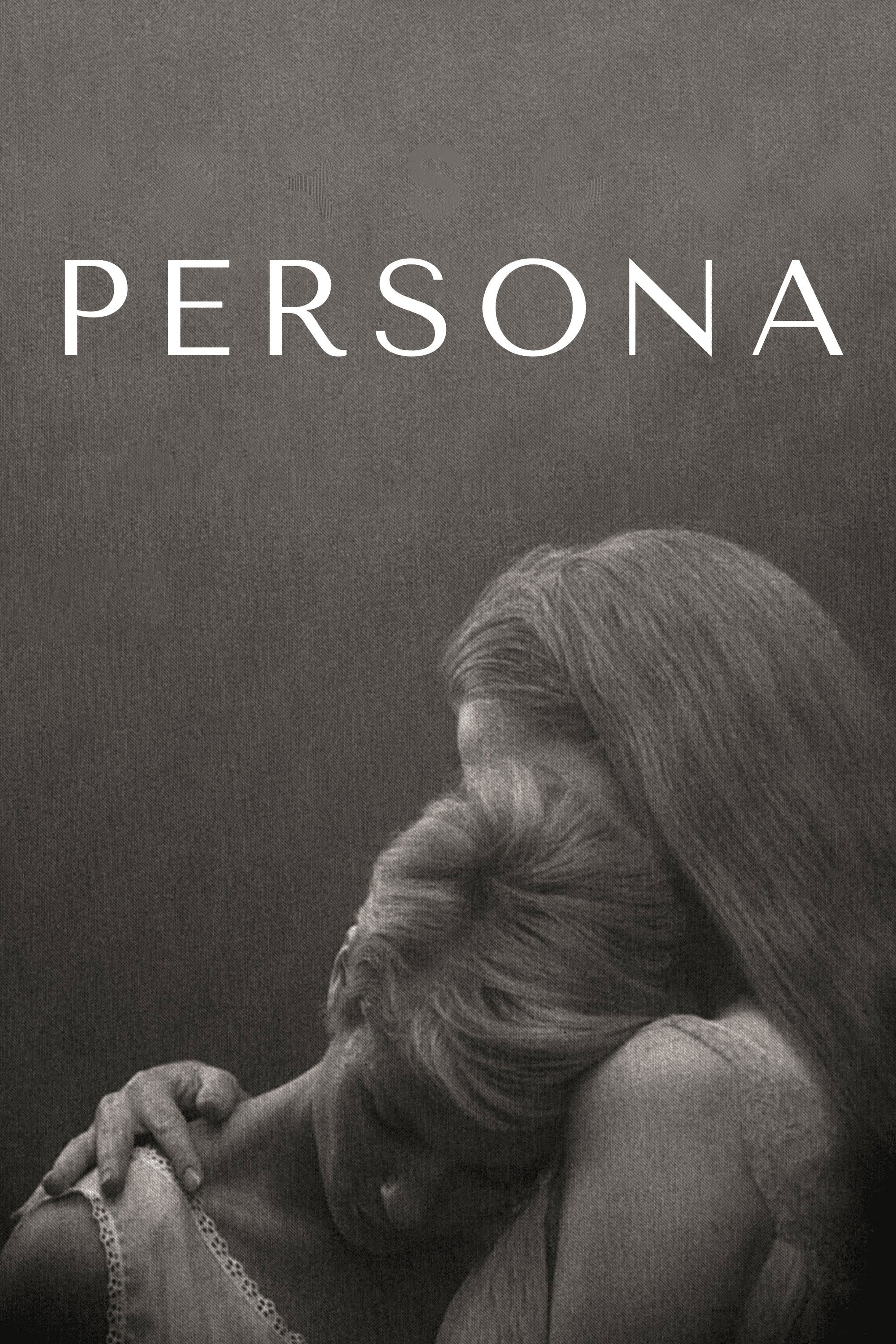
Persona
1966 Swedish avant-garde psychological drama film by Ingmar Bergman

complex
psychology concept involving a core pattern of emotions, memories, perceptions, and desires

Socionics
In psychology and sociology, socionics is a pseudoscientific theory of information processing and personality types. It incorporates Carl Jung's work on Psychological Types with Antoni Kępiński's theory of information metabolism.

Nise da Silveira
Brazilian psychiatrist (1905-1999)
Jungian archetype
concept in psychology
dream interpretation
the process of assigning meaning to dreams
depth psychology
branch in psychology

synchronicity
Synchronicity () is a concept introduced by Carl Jung, founder of analytical psychology, to describe events that coincide in time and appear meaningfully related, yet lack a discoverable causal connection. Jung held that this was a healthy function of the mind, although it can become harmful within psychosis.
individuation
The principle of individuation, or '''''''''', describes the manner in which a thing is identified as distinct from other things.
Shadow
term in Jungian psychology
Peter Pan syndrome
syndrome
wise old man
character archetype
cryptomnesia
Cryptomnesia occurs when a forgotten memory returns without it being recognized as such by the subject, who believes it is something new and original. It is a memory bias whereby a person may falsely recall generating a thought, an idea, a tune, a name, or a joke; they are not deliberately engaging in plagiarism, but are experiencing a memory as if it were a new inspiration.
Anima and Animus
terms in C. G. Jung’s analytical psychology: two primary anthropomorphic archetypes of the unconscious mind
God complex
unshakable belief characterized by consistently inflated feelings of personal ability, privilege, or infallibility

oneirology
thumb|right|An artist's depiction of a dream
persona
in psychology, social face an individual presents to the world
self in Jungian psychology
psychological concept
oneiromancy
Oneiromancy () is a form of divination based upon dreams, and also uses dreams to predict the future. Oneirogen plants may also be used to produce or enhance dream-like states of consciousness. Occasionally, the dreamer feels as if they are transported to another time or place, and this is offered as evidence they are in fact providing divine information upon their return.
C. G. Jung Institute Zürich

ENFJ
ENFJ (Extraversion, Intuition, Feeling, Judgement) is an abbreviation used in the publications of the Myers–Briggs Type Indicator (MBTI) to refer to one of 16 personality types. The MBTI assessment was developed from the work of prominent psychiatrist Carl G. Jung in his book Psychological Types. Jung proposed a psychological typology based on the theories of cognitive functions that he developed through his clinical observations.
puer aeternus
child-god who is forever young, in mythology and as an archetype
enantiodromia
Enantiodromia ( – "opposite" and δρόμος, drómos – "running course") is a principle introduced in the West by psychiatrist Carl Jung. In Psychological Types, Jung defines enantiodromia as "the emergence of the unconscious opposite in the course of time." It is similar to the principle of equilibrium in the natural world, in that any extreme is opposed by the system in order to restore balance. When things get to their extreme, they turn into their opposite. Jung adds that "this characteristic phenomenon practically always occurs when an extreme, one-sided tendency dominates conscious life; in t
active imagination
process of creating mental images that can be used for self-discovery or creative problem solving
inner child
In popular psychology and analytical psychology, a person's childlike aspect.

Eranos Tagungen
series of interdisciplinary academic conferences, held since 1933 in Ascona

nekyia
thumb|upright=1|The Shade of Tiresias Appearing to [[Odysseus during the Sacrifice (c. 1780-85), painting by Johann Heinrich Füssli, showing a scene from Book Eleven of the Odyssey]]
psychological astrology
school of astrology based on psychological theories, e.g. Jungian archetypes
Genetic memory
memory present at birth that exists in the absence of sensory experience
nigredo
In alchemy, nigredo, or blackness, means putrefaction or decomposition. Many alchemists believed that as a first step in the pathway to the philosopher's stone, all alchemical ingredients had to be cleansed and cooked extensively to a uniform black matter.
Unus mundus
concept of an underlying unified reality from which everything emerges and to which everything returns, popularized by Carl Jung
subpersonality
thumb|200px|Matryoshka doll|Stacking dolls provide a visual representation of subpersonalities.
A subpersonality is, in humanistic psychology, transpersonal psychology and ego psychology, a personality mode that activates (appears on a temporary basis) to allow a person to cope with certain types of psychosocial situations. Similar to a complex, the mode may include thoughts, feelings, actions, physiology and other elements of human behavior to self-present a particular mode that works to negate particular psychosocial situations. American transpersonal philosopher Ken Wilber and English human
Personal unconscious
International Association for Analytical Psychology
process-oriented psychology
Psychological theory
dreamwork
Dreamwork is the exploration of the images and emotions that a dream presents and evokes. It differs from classical dream interpretation in that it does not attempt to establish a unique meaning for the dream. In this way the dream remains "alive" whereas if it has been assigned a specific meaning, it is "finished" (i.e., over and done with). Dreamworkers take the position that a dream may have a variety of meanings depending on the levels (e.g. subjective, objective) that are being explored.
Don Juanism
non-clinical term for male desire to have many different female sexual partners
archetypal psychology
psychology School of Thought
Jungian Type Index
psychological classification metric Introduced by Optimas in 2001, developed by Thor Ødegård and Hallvard E. Ringstad, based on the work of Carl Jung
Participation mystique
in Jungian psychology, the instinctive human tie to symbolic fantasy emanations
C. G. Jung residence
residential building in Küsnacht in the canton of Zurich Switzerland