Category
page 1Anat
.jpg)
Actaeon
thumb|The death of Actaeon on Red-figure pottery|red-figure [[skyphos from Paestum, 4th century BC (Karlsruhe, Badisches Landesmuseum).]]

Anat
Anat (, ), Anatu, classically Anath (; ʿnt; ʿĂnāṯ; ; ; Egyptian: ꜥntjt) was a goddess associated with warfare and hunting, best known from the Ugaritic texts. Most researchers assume that she originated in the Amorite culture of Bronze Age upper Mesopotamia, and that the goddess Ḫanat, attested in the texts from Mari and worshiped in a city sharing her name located in Suhum, should be considered her forerunner.
Shamgar
Shamgar, son of Anath ( Šamgar), is the name of one or possibly two individuals named in the Book of Judges. The name occurs twice:
at the first mention, Shamgar is identified as a man who repelled Philistine incursions into Israelite regions, and slaughtered 600 of the invaders with an ox goad (Judges 3:31);
the other mention is within the Song of Deborah, where Shamgar is described as having been one of the prior rulers, in whose days roads were abandoned, with travelers taking winding paths, and village life collapsing (Judges 5:6).

Atargatis
Atargatis (known as Derceto by the Greeks) was the chief goddess of northern Syria in Classical antiquity. Primarily she was a fertility goddess, but, as the baalat ("mistress") of her city and people she was also responsible for their protection and well-being. Her chief sanctuary was at Hierapolis, modern Manbij, northeast of Aleppo, Syria.
.jpg)
henna
thumb|An elderly Bengalis|Bengali man in [[Dhaka with a beard dyed in henna]]

Bintanath
Bintanath (also Bentanath) was a daughter and later Great Royal Wife of the Egyptian Pharaoh Ramesses II, born by his second spouse Isetnofret.

Anah
Anah or Ana (, ), formerly also known as Anna, is an Iraqi town on the Euphrates approximately midway between the Gulf of Alexandretta and the Persian Gulf. Anah lies from west to east on the right bank along a bend of the river just before it turns south towards Hīt.
Hazzi
mountain on the Syria–Turkey border

Anat-her
Anat-her (also 'Anat-Har) may have been the first ruler of the Sixteenth Dynasty of Egypt, reigning over some part of Lower Egypt during the Second Intermediate Period as a vassal of the Hyksos kings of the 15th Dynasty. This is contested however, with the Egyptologists Kim Ryholt and Darrel Baker believing that 'Anat-Har was a Canaanite chieftain contemporary with the powerful 12th Dynasty. Others such as Nicholas Geoffrey Lempriere Hammond contend that he was a prince of the 15th Dynasty. 'Anat-Har's name means "Anat is content" and refers to the Semitic goddess Anat, showing that he was of
Psalm 50
psalm
Baal Cycle
Levantine mythological cycle of stories
%2C%20p.%20549%20in%20Thomson%2C%201859.jpg)
Anathoth
255px|right
Anathoth is the name of one of the Levitical cities given to "the children of Aaron" in the tribe of Benjamin (; ). Residents were called Antothites or Anetothites.
'Anata
Anata () is a Palestinian town in the Jerusalem Governorate of the State of Palestine, in the central West Bank, located four kilometers northeast of Jerusalem's Old City. According to the Palestinian Central Bureau of Statistics, 'Anata had a population of 16,919 in 2017. Its total land area is 30,603 dunams, of which over half now lies within the Israeli Jerusalem municipality and 1,654 is Palestinian built-up area. Since 1967, 'Anata has been occupied by Israel. Together with Shu'afat refugee camp, the village is almost surrounded by the Israeli West Bank barrier, cutting it off from Jerusa
Tale of Aqhat
Ancient tale from Ugarittic religion
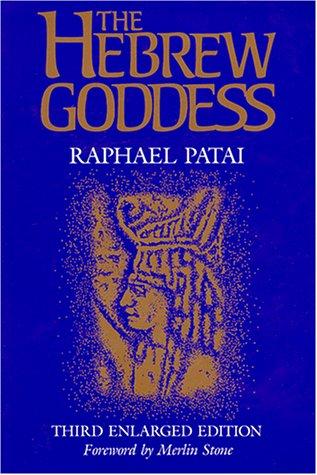
The Hebrew Goddess
non-fiction work by Raphael Patai

Judges 3
Book of Judges, chapter 3
Pugat
thumb|Puġat was called "she who carries water."
Makoto Niijima
Persona 5 character