Category
page 1Ancient Armenia

Sasanian Empire
last pre-Islamic Iranian empire (224–651 AD)

Urartu
Urartu was an Iron Age kingdom centered around the Armenian highlands between Lake Van, Lake Urmia, and Lake Sevan. The territory of the ancient kingdom of Urartu extended over the modern frontiers of Turkey, Iran, Iraq, Armenia, the southern regions of Georgia, and western regions of Azerbaijan. Its kings left behind cuneiform inscriptions in the Urartian language, a member of the Hurro-Urartian language family.
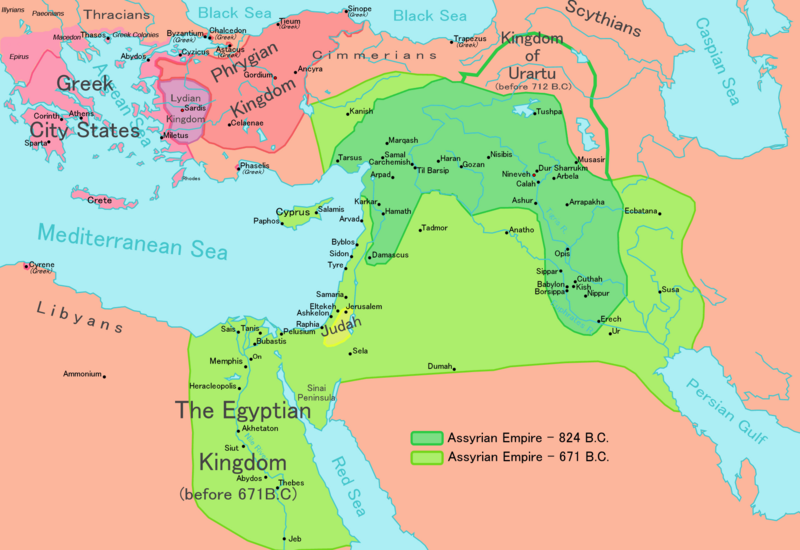
Neo-Assyrian Empire
historical state in Mesopotamia

Osroene
Osroene or Osrhoene (; ) was an ancient kingdom and region in Upper Mesopotamia. The Kingdom of Osroene, also known as the "Kingdom of Edessa" ( / "Kingdom of Urhay"), according to the name of its capital city (now Şanlıurfa, Turkey), existed from the 2nd century BC up to the 3rd century AD, and was ruled by the Nabataean Arab Abgarid dynasty. They were generally allied with the Parthians.
.jpg)
cataphract
thumb|Historical reenactment of a Sasanian-era cataphract, complete with a full set of [[scale armour for the horse. The rider is covered by extensive mail armour.]]

Nairi
Nairi (, also ''Na-'i-ru''; ) was the Akkadian name for a region inhabited by a particular group (possibly a confederation or league) of tribal principalities in the Armenian Highlands, approximately spanning the area between modern Diyarbakır and Lake Van and the region west of Lake Urmia. Nairi has sometimes been equated with Nihriya, known from Mesopotamian, Hittite, and Urartian sources. However, its co-occurrence with Nihriya within a single text may argue against this.
Satrapy of Armenia
period of Yervanduni kingdom
Sasanian Armenia
province of the Sasanian Empire

Mamikonian
Mamikonian or Mamikonean () was an Armenian aristocratic dynasty which dominated Armenia between the 4th and 8th centuries—through the late antique kingdom, Sasanian, Byzantine, and Arab dominations. They were the most notable noble house in early Christian Armenia after the ruling Arsacids and held the hereditary positions of (supreme commander of the army) and (royal tutor), allowing them to play the role of kingmaker for the later Armenian kings. They ruled over extensive territories, including the Armenian regions of Tayk, Taron, Sasun, and Bagrevand, among others. The Mamikonians had a re
Median Kingdom
ancient Iranian state (700–550 BC)

Gardman
thumb|300px|The Kingdom of Gardman-Parisos (yellow) in 1017 when it was acquired by the Kingdom of Lori (red).
Paikuli inscription
ancient bilingual inscription in Iraqi Kurdistan
Rshtuni
Rshtuni (, also spelled Rashduni, Rshdouni, Reshdouni, Rashdouni, Rachdouni, Rachdoni, Rshduni, and Rushdoony) was an old Armenian noble house which ruled the region of Rshtuniq who were purportedly descendants of Rusas I of Urartu.
Xerxes’s inscription
cuneiform inscription near Lake Van, present-day Turkey
Etiuni
Etiuni (other names Etiuḫi, Etiu, Etio) was the name of an early Iron Age tribal confederation in northern parts of Araxes River, roughly corresponding to the subsequent Ayrarat Province of the Kingdom of Armenia. Etiuni was frequently mentioned in the records of Urartian kings, who led numerous campaigns into Etiuni territory. It is very likely it was the "Etuna" or "Etina" which contributed to the fall of Urartu, according to Assyrian texts. Some scholars believe it had an Armenian-speaking population.
Bagavan
Bagavan (also spelled Bagawan; ) was an ancient locality in the central part of Armenia in the principality of Bagrevand. The site is located in the village of Taşteker to the west of modern Diyadin, Turkey. Situated on a tributary of the Euphrates at the foothills of Mount Npat, to the north of Lake Van, Bagavan held one of the major temples of pre-Christian Armenia. After the Christianization of Armenia, Bagavan became the site of a large church and monastery. Pillaged in 1877 by the Kurds, it was completely destroyed after 1915 during the Armenian genocide.
Ancient Armenia
history of Armenia from the 6th century BCE to the 5th century
Ashdishad
Ashtishat () is a locality and archaeological site in Muş Province of eastern Turkey. It is located near the village of Yücetepe on the Murat River west of Lake Van and north of the city of Muş.
Bznuni
thumb| Levon Bznuni, Iranian Armenian poet
Armenian tiara