Category
page 1Ancient Egyptian architecture
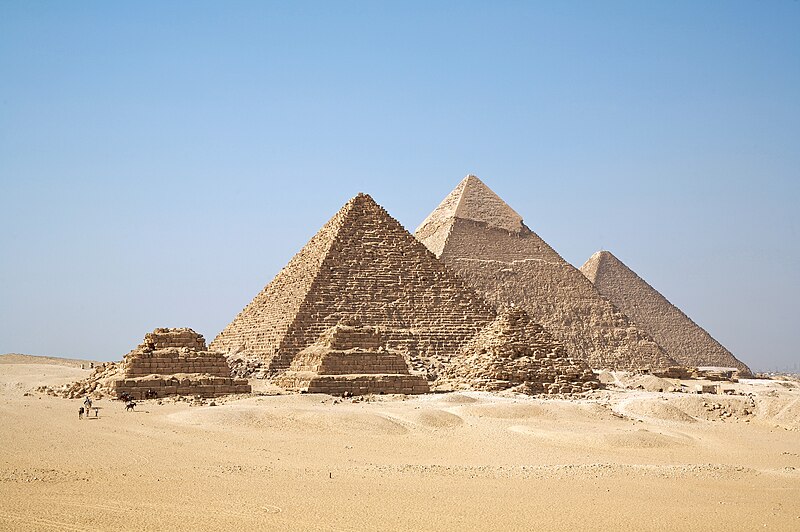
Egyptian pyramids
ancient masonry structures constructed by ancient Egyptians
.jpg)
obelisk
thumb|One of the two Luxor Obelisks, on the [[Place de la Concorde in Paris; a red granite monolithic column, high, including the base, which weighs over .]]
thumb|Lateran Obelisk in Piazza San Giovanni in Laterano, [[Rome. With its height of (with the base and the cross it reaches 45.70 m) it is the largest standing ancient monolithic obelisk in the world.]]

mastaba
right|thumb|Example of a mastaba, the Mastabat al-Fir'aun of [[Shepseskaf]]
A mastaba ( , or ), also mastabah or mastabat) is a type of ancient Egyptian tomb in the form of a flat-roofed, rectangular structure with inward sloping sides, constructed out of mudbricks or limestone. These edifices marked the burial sites of many eminent Egyptians during Egypt's Early Dynastic Period and Old Kingdom. Non-royal use of mastabas continued for over a thousand years.
ancient Egyptian architecture
aspect of architecture
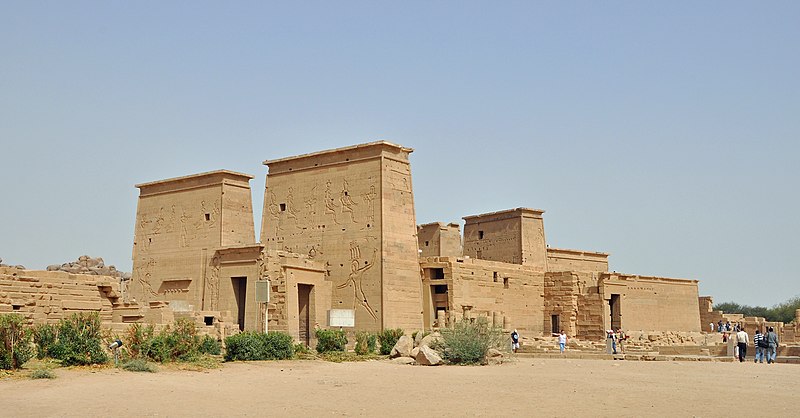
Egyptian temple
structures for official worship of the gods and commemoration of pharaohs in Ancient Egypt

hypostyle
thumb|Central columns of the Great Hypostyle Hall in the [[Temple of Karnak, Egypt]]
%20of%20the%20Temple%20of%20Hathor%20-%20Lehnert%20%26%20Landrock%2C%20Cairo.%20LCCN2003690040.jpg)
Mammisi
A mammisi (mamisi) is an ancient Egyptian small chapel attached to a larger temple (usually in front of the pylons), built from the Late Period, and associated with the nativity of a god. The word is derived from Coptic – the last phase of the ancient Egyptian language – meaning "birth place". Its usage is attributed to the French egyptologist Jean-François Champollion (1790–1832).

Serdab
thumb|The pharaoh Djoser's ka statue peers out through the hole in his serdab, ready to receive the soul of the deceased and any offerings presented to it.
A serdab (), which became a loanword in Arabic for 'cellar', is an ancient Egyptian tomb structure that served as a chamber for the ka statue of a deceased individual. Used during the Old Kingdom, the serdab was a sealed chamber with a small slit or hole to allow the soul of the deceased to move about freely. These holes also let in the smells of the offerings presented to the statue.
Urban planning in ancient Egypt
crinkle crankle wall
wavy brick wall
phallic architecture
archiitectural or sculptural structures that symbolically or realistically emanate the semblance with human penis
cavetto
thumb|Cavetto moulding
thumb| Illustrations of various examples of ancient Egyptian cornices, all of them having cavettos