Category
page 1Ancient Greek epic poets
%20-%20Homer%20and%20his%20Guide%20(1874).jpg)
Homer
Homer (; , ; possibly born ) was an ancient Greek poet who is widely credited as the author of the Iliad and the Odyssey, two epic poems that are foundational works of ancient Greek literature. Although his life and authorship remain obscure, Homer was highly revered in ancient Greek society and is considered one of the most influential authors in history.
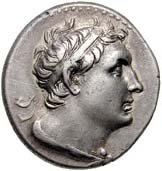
Apollonius of Rhodes
3rd century BC Greek epic poet

Nonnus of Panopolis
Nonnus of Panopolis (, Nónnos ho Panopolítēs, 5th century AD) was the most notable Greek epic poet of the Imperial Roman era. He was a native of Panopolis (Akhmim) in the Egyptian Thebaid and probably lived in the 5th century AD. He is known as the composer of the Dionysiaca, an epic tale of the god Dionysus, and of the Metabole, a paraphrase of the Gospel of John. The epic Dionysiaca describes the life of Dionysus, his expedition to India, and his triumphant return. It was written in Homeric Greek and in dactylic hexameter, and it consists of 48 books at 20,426 lines.
Quintus Smyrnaeus
4th-century Greek poet

Nicander
thumb|200px|Nicander, Theriaca, 10th century, Constantinople
Nicander of Colophon (; fl. 2nd century BC) was a Greek poet, physician, and grammarian.
Parthenius of Nicaea
ancient Greek poet

Antimachus
thumb|Herm of Antimachus from Colophon
Antimachus of Colophon (), or of Claros, was a Greek poet and grammarian, who flourished about 400 BC.
Oppian
Oppian (, ; ), also known as Oppian of Anazarbus, of Corycus, or of Cilicia, was a 2nd-century Greco-Roman poet during the reign of the emperors Marcus Aurelius and Commodus, who composed the Halieutica, a five-book didactic epic on fishing.
Julia Balbilla
Roman noble woman and poet
Rhianus
Rhianus (Greek: Ῥιανὸς ὁ Κρής) was a Greek poet and grammarian, a native of Crete, friend and contemporary of Eratosthenes (275–195 BC).

Moero
thumb|right|Lucien Lévy-Dhurmer's portrait of Moero for Les Kitharèdes by [[Renée Vivien]]
Moero (, fl. ) or Myro () was a woman poet of the Hellenistic period from the city of Byzantium. Little of her poetry survives: ten lines of her epic poem Mnemosyne are quoted by Athenaeus, and two of her epigrams are preserved in the Greek Anthology; two other poems are known only through mentions in other sources.
Alexander Aetolus
ancient Greek poet
Choerilus of Samos
5th century BC Greek epic poet
Asius of Samos
ancient Greek poet, son of Amphiptolemus
Euphorion of Chalcis
Classical Greek poet
Ptolemaeus Chennus
Classical Greek grammarian
Stesimbrotos of Thasos
5th-century BC Greek sophist and logographer

Oppian of Apamea
Pseudo-Oppian (, Oppianós; ), sometimes referred to as Oppian of Apamea or Oppian of Syria, was a Greco-Syrian poet during the reign of the emperor Caracalla. His work, a Greek didactic epic poem on hunting called the Cynegetica (), has been erroneously ascribed to Oppian of Anazarbus. The real name of Pseudo-Oppian is not known.
Pigres of Halicarnassus
ancient Greek poet
Nicaenetus of Samos
ancient Greek poet of 3rd century B.C.

Nestor of Laranda
ancient Greek poet
Peisander of Laranda
Roman poet

Aeschrion of Samos
ancient Greek iambic poet
Adrianus
ancient Greek poet
Choerilus of Iasus
4th century BC Greek poet

Aeschylus of Alexandria
ancient Greek poet
John of Gaza
grammarian and poet who wrote in Greek