Category
page 1Ancient Greek metalwork
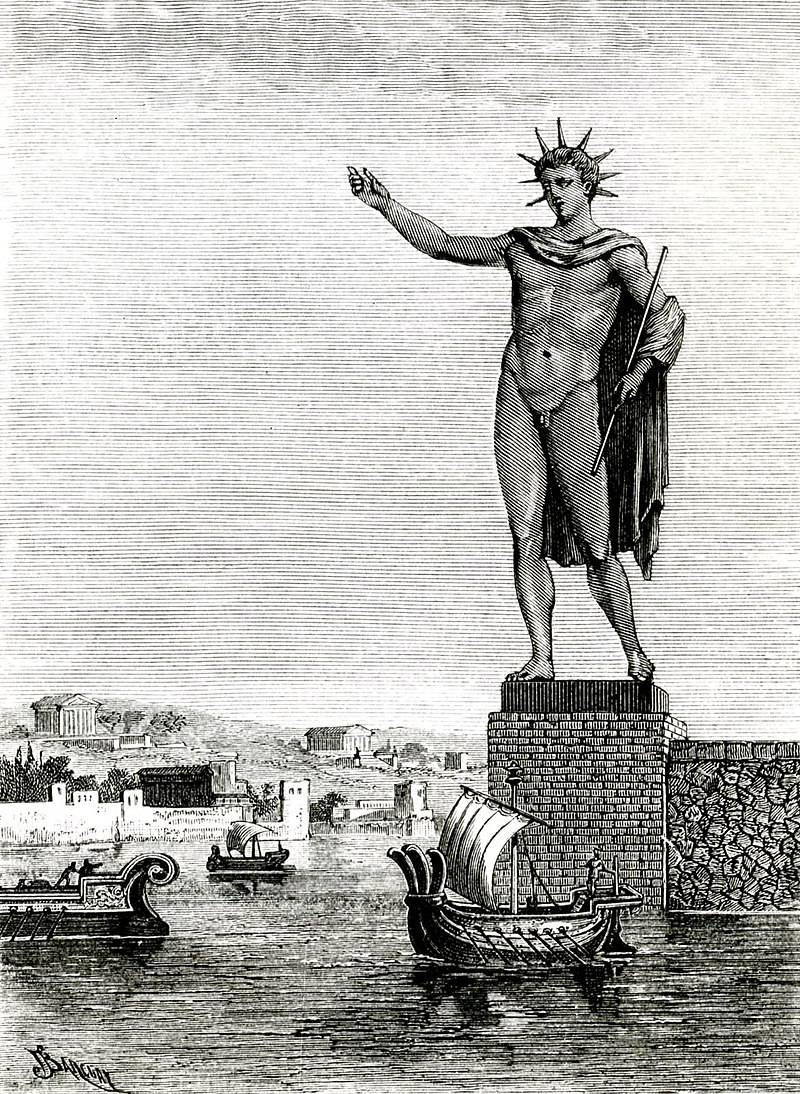
Colossus of Rhodes
statue of the Greek Titan Helios; one of the seven wonders of the ancient world
Mask of Agamemnon
gold funeral mask discovered at the ancient Greek site of Mycenae

orichalcum
Orichalcum (or aurichalcum) or orichalc is a metal mentioned in several ancient writings, including the story of Atlantis in the Critias of Plato. Within the dialogue, Critias (460–403 BC) says that orichalcum had been considered second only to gold in value and had been found and mined in many parts of Atlantis in ancient times, but that by Critias's own time, orichalcum was known only by name.

patera
thumb|Patera from Georgia (country)|Georgia, likely depicting [[Fortuna (2nd century AD, Georgian National Museum)]]
In the material culture of classical antiquity, a patera () or phiale ( ) is a shallow ceramic or metal libation bowl. It often has a bulbous indentation (omphalos, "belly button") in the center underside to facilitate holding it, in which case it is sometimes called a mesomphalic phiale. It typically has no handles, and no feet.
Boxer at Rest
Hellenistic Greek bronze sculpture of a sitting nude boxer at rest
Jockey of Artemision
Hellenistic bronze statue
Boy with Thorn
artistic type
Derveni krater
volute krater discovered in Greece
Croatian Apoxyomenos
sculpture
Vix grave
archaeological tomb at Vix in Côte-d'Or (France)
Panagyurishte Treasure
Thracian hoard
Arkalochori Axe
Minoan artifact
Boscoreale Treasure
set of Roman tableware
Hercules of the Forum Boarium
gilded bronze statues of Hercules at the Capitoline Museums, Rome, Italy
Seated Hermes
Lion of Venice
statue on St. Mark's Square, Venice, Italy
Corinthian bronze
highly valuable metal alloy in classical antiquity
Borovo Treasure
Thracian hoard
Sphyrelaton
thumb|Bronze winged feminine figure, 590–580 BC. Archaeological Museum of Olympia
A sphyrelaton ( for "hammer-elongated", plural: sphyrelata, σφυρήλατα) was a type of large archaic Greek bronze votive statues.
The Youth of Agde
statue in Agde, France
Grave Circle A, Mycenae
16th-century BC royal cemetery in southern Greece
Braganza Brooch
gold ornamental fibula
Hellenistic Prince
sculpture
Hepatizon
thumb | right | Bowl made of Corinthium Bronze
Hepatizon (Greek etymology: , English translation: "liver"), also known as black Corinthian bronze, was a highly valuable metal alloy in classical antiquity. It is thought to be an alloy of copper with the addition of a small proportion of gold and silver (perhaps as little as 8% of each), mixed and treated to produce a material with a dark purplish patina, similar to the colour of liver. It is referred to in various ancient texts, but few known examples of hepatizon exist today.
Phiale of Megara
ancient Greek silver phiale
Ksour Essef cuirass
ancient tunisian cuirass at the Bardo National Museum

Minoan Bull-leaper
copper statue from 1600 B.C. - 1450 B.C. Crete
Berlin Adorant
antique bronze statue, Altes Museum, Berlin, Germany
Nestor's Cup
gold goblet discovered in 1876 by Heinrich Schliemann
Kritonios Crown
Ancient crown