Category
page 1Ancient Near East temples

ziggurat
A ziggurat (; Cuneiform: 𒅆𒂍𒉪, Akkadian: ', D-stem of ' 'to protrude, to build high', cognate with other Semitic languages like Hebrew zaqar (זָקַר) 'protrude') is a type of massive structure built in ancient Mesopotamia and Iran. It has the form of a terraced compound of successively receding stories or levels. Notable ziggurats include the Great Ziggurat of Ur near Nasiriyah, the Ziggurat of Aqar Quf near Baghdad, the no longer extant Etemenanki in Babylon, Chogha Zanbil in Khūzestān and Sialk. The Sumerians believed that the gods lived in the temple at the top of the ziggurats, so only pr
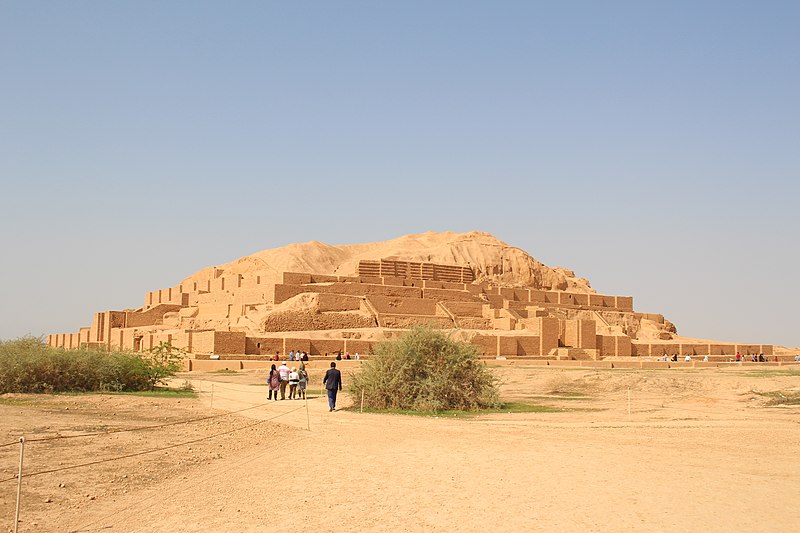
Chogha Zanbil
elamite complex in the Khuzestan province of Iran

Esagila
thumb|300px|Reconstruction of the peribolos at Babylon, including the temple of Esagila, from The excavations at Babylon (1914)
Tepe Sialk
archaeological site in Kashan, Iranian national heritage site
Eanna
E-anna ( , "House of Heaven"), also referred to as the Temple of Inanna, was a monumental ancient Sumerian temple complex in Uruk. Considered the "residence" of Inanna, it was among the most prominent and influential religious institutions of ancient Mesopotamia. Mentioned throughout the Epic of Gilgamesh and various other texts, the evolution of the gods to whom the temple was dedicated to over time is also the subject of scholarly study.
Barbar Temple
sacred architecture
É
Sumerian word or symbol for house or temple
E-ninnu
The E-ninnu 𒂍𒐐 (House of 50) was the E (temple) to the warrior god Ningirsu in the Sumerian city of Girsu in southern Mesopotamia. Girsu was the religious centre of a state that was named Lagash after its most populous city, which lay 25 km (16 mi) southeast of Girsu. Rulers of Lagash who contributed to the structure of the E-ninnu included Ur-Nanshe of Lagash in the late 26th century BC, his grandson Eannatum in the following century, Urukagina in the 24th century and Gudea, ruler of Lagash in the mid 22nd century BC.