Category
page 1Ancient Roman pottery
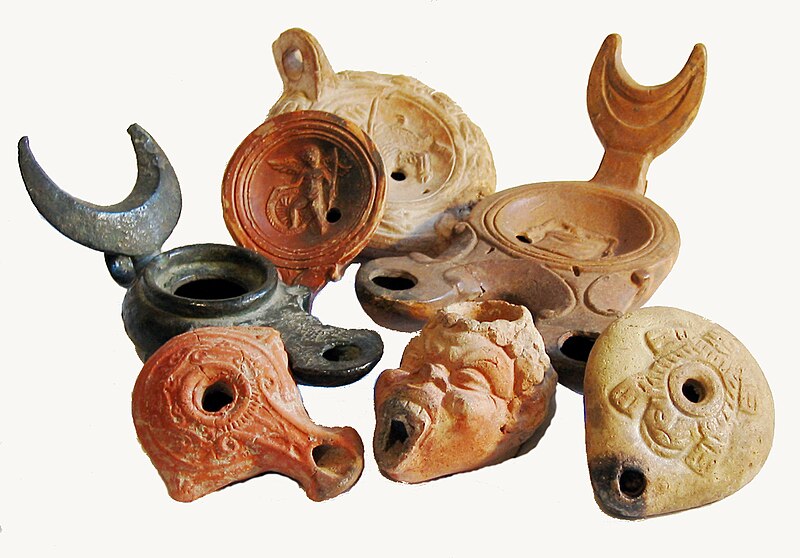
oil lamp
object used to produce light continuously for a period of time using an oil-based fuel source

antefix
thumb|upright=2|Reproduction antefixes with anthemion|anthemia, Athens
terra sigillata
fine red Ancient Roman pottery with glossy surface slips made in specific areas of the Roman Empire
Monte Testaccio
Artificial mountain made from broken Roman pottery
Duenos Inscription
kernos
Monk and Nun
style of roof tiling using arched tiles in both layers
Corpus vasorum antiquorum
Research project to document ancient ceramics
olla
squat, rounded pot or jar

ampulla
thumb|Eulogy ampulla representing St. Menas and [[St. Thecla (terracotta, 6th century, Louvre Museum)]]
.JPG)
barbotine
thumb|Cup, 6.5 cm. high, Aswan, Egypt, 1st-2nd century AD, decorated with type A piped or trailed barbotine patterns.
Barbotine is the French for ceramic slip, or a mixture of clay and water used for moulding or decorating pottery. In English the term is used for three different techniques of decorating pottery, though in all cases mainly for historical works. For clarity, these types are numbered here as A-C (which are not standard terms).
thumb|Gallo-Roman cup with type B barbotine or sprigging|sprigged decoration
Ancient Roman pottery
pottery produced within the Roman Republic and Roman Empire
imbrex and tegula
overlapping roof tiles used in ancient Greek and Roman architecture as a waterproof and durable roof covering
mortarium
thumb|Mortarium with simple pouring spout, made in the vicinity of Verulamium in Britain, 1st century AD.
glirarium
thumb|right|A glirarium exhibited at the National Archaeological Museum in Chiusi.
A glirarium is a terracotta container used for keeping edible dormice. These animals were considered a delicacy in the Etruscan period and later in the Roman Empire.
titulus pictus
amphorae inscriptions
Campana reliefs
Ancient Roman terracotta reliefs
La Graufesenque
archaeological site
Nolan amphora
type of Greek and Roman amphora
Horrea Galbae
warehouse in ancient Rome located between the southern end of the Aventine Hill and the waste dump of Monte Testaccio