Category
page 1Ancient Roman titles

Roman consul
political office in ancient Rome

patricii
name given to members of the old-established upper class in ancient Rome

Roman emperor
ruler of the Roman Empire during the imperial period

centurion
thumb|Helmet of Centurion Numerius Popnius
A centurion (; , . ; , or ) was a professional non-commissioned officer in the Roman army who commanded a group of soldiers called a centuria or "century".

Caesar
imperial title of the Roman Empire
praetor
Praetor ( , ), also pretor, was the title granted by the government of ancient Rome to a man acting in one of two official capacities: (i) the commander of an army, and (ii) as an elected magistratus (magistrate), assigned to discharge various duties. The functions of the magistracy, the praetura (praetorship), are described by the adjective itself: the praetoria potestas (praetorian power), the praetorium imperium (praetorian authority), and the praetorium ius (praetorian law), the legal precedents established by the praetores (praetors). Praetorium, as a substantive, denoted the location fro

Roman dictator
emergency magistrate of the Roman Republic, whose action are not subject to a veto

sibyl
The sibyls were prophetesses or oracles in Ancient Greece.
.jpg)
quaestor
A quaestor ( , ; ; "investigator") was a public official in ancient Rome. There were various types of quaestors, with the title used to describe greatly different offices at different times.
Roman censor
Roman magistrate responsible for the census and monitoring public morality

Augustus
imperial rank, honorific and title
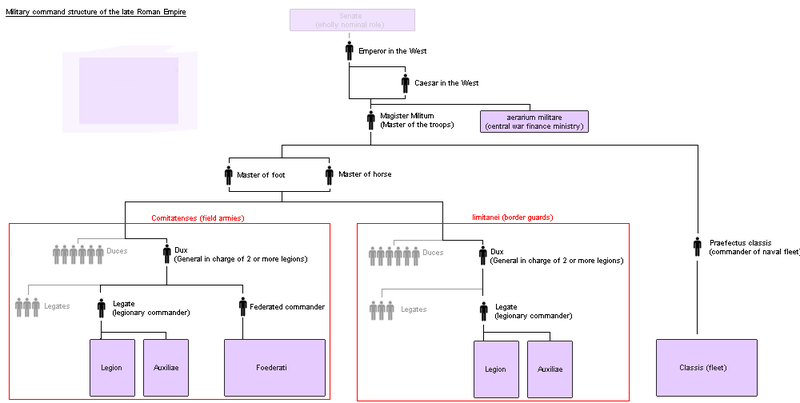
magister militum
Imperial Roman military office
aedile
An (English: ) was a magistrate in the Roman Republic who had responsibilities for the upkeep of the city, such as its buildings, roads, and markets; the availability of grain at reasonable prices; and the holding of games. It also had some judicial functions, being able to issue fines and corporal punishments with an additional right to prosecute crimes before the assemblies, but by the middle republic was mostly an office used for distributing largesse to win the officeholder popular acclaim.
legatus
general in the Roman army

Basileus
Basileus () is a Greek term and title that has signified various types of monarchs throughout history. In the English-speaking world, it is perhaps most widely understood to mean , referring to either a or an . The title was used by sovereigns and other persons of authority in ancient Greece (especially during the Hellenistic period), the Byzantine emperors, and the kings of modern Greece. The name Basileios (Basil), deriving from the term basileus, is a common given name in the Eastern Orthodox Church and Syriac Orthodox Church for the Maphrian.

lictor
thumb|200px|upright|Bronze statuette of a Roman lictor carrying a fasces, 20 BC to 20 AD
Dux
Dux (; : duces) is Latin for "leader" (from the noun dux, ducis, "leader, general") and later for duke and its variant forms (doge, duce, etc.). During the Roman Republic and for the first centuries of the Roman Empire, dux could refer to anyone who commanded troops, both Roman generals and foreign leaders, but was not a formal military rank.
tribune
Tribune () was the title of various elected officials in ancient Rome. The two most important were the tribunes of the plebs and the military tribunes. For most of Roman history, a college of ten tribunes of the plebs acted as a check on the authority of the senate and the annual magistrates, holding the power of ius intercessionis to intervene on behalf of the plebeians, and veto unfavourable legislation. There were also military tribunes, who commanded portions of the Roman army, subordinate to higher magistrates, such as the consuls and praetors, promagistrates, and their legates. Various o
%202.jpg)
proconsul
thumb|Scipio Africanus, one of Rome's greatest commanders, was a proconsul during the [[Second Punic War. He was one of the few proconsuls who did not first serve as consul.]]
A proconsul was an official of ancient Rome who acted on behalf of a consul. A proconsul was typically a former consul. The term is also used in recent history for officials with delegated authority. In the Roman Republic, military command, or imperium, could be exercised constitutionally only by a consul. Only two consuls served at a time, each elected to a one-year term. They could not normally serve two terms in a row
%20-%20n.%204123%20-%20Roma%20-%20Vaticano%20-%20Cesare%20Augusto%20-%20Statua%20in%20%20marmo.jpg)
imperator
The title of imperator ( ) was originally the rough equivalent of commander under the Roman Republic. Later, it became a part of the titulature of the Roman emperors as their praenomen. The Roman emperors generally based their authority on multiple titles and positions, rather than preferring any single title. Nevertheless, imperator was used relatively consistently as an element of a Roman ruler's title throughout the Principate and the later Roman Empire. It was abbreviated to "IMP" in inscriptions. The word is an agentive form of the verb , meaning "to order, to command". The English word e
tribune of the plebs
ancient Roman title
decemviri
The decemviri or decemvirs (Latin for "ten men") refer to official ten-man commissions established by the Roman Republic.
magister equitum
commander of the Roman cavalry acting as lieutenant to a dictator
Praetorian prefect
important position in ancient Rome
princeps
Princeps (plural: Principes) is a Latin word meaning "first in time or order; the first, foremost, chief, the most eminent, distinguished, or noble; the first person". As a title, Princeps originated in the Roman Republic wherein the leading member of the Senate was designated princeps senatus. It is primarily associated with the Roman emperors as an unofficial title first adopted by Augustus () in 27 BC. Its use in this context continued until the regime of Diocletian (r. 284–305) at the end of the third century. He preferred the title of dominus, meaning "lord" or "master". As a result, the
novus homo
political designation in Ancient Rome
interrex
The interrex (plural interreges) was an extraordinary magistrate during the Roman Kingdom and Republic. Initially, the interrex was appointed after the death of the king of Rome until the election of his successor, hence its name—a ruler "between kings" (). The position was retained during the Republic when both consuls were unable to assume their duties, especially holding elections. Interreges ruled for only five days, which often led several of them to be appointed in succession, the record being 15 interreges in 326 BC. They were exclusively chosen from among patrician senators, and during
Magister officiorum
senior administrative officials in the Roman Empire
procurator
title of various officials of the Roman Empire
pater familias
legal and factual head of ancient Roman household, owner of all goods and slaves, solely male
Praefectus urbi
magistrate of Rome
Princeps senatus
senate opinion leader in ancient Rome

promagistrate
In ancient Rome, a promagistrate () was a person who was granted the power via prorogation to act in place of an ordinary magistrate in the field. This was normally pro consule or pro praetore, that is, in place of a consul or praetor, respectively. This was an expedient development, starting in 327 BC and becoming regular by 241 BC, that was meant to allow consuls and praetors to continue their activities in the field without disruption.
Vigintisexviri
The vigintisexviri ( vigintisexvir; ) were a college (collegium) of minor magistrates (magistratus minores) in the Roman Republic. The college consisted of six boards:
decurion
leader of ten legionaries
Pater Patriae
Latin honorific meaning "Father of the Country"

comes
Comes (plural comites), translated as count, was a Roman title, generally linked to a comitatus or comital office.

signifer
thumb|right|Gravestone for the signifer Oclatius.
thumb|right|Relief in the Arch of Constantine depicting several signiferes
A signifer () was a standard bearer of the Roman legions. He carried a signum (standard) for a cohort or century. Each century had a signifer so there were 60 in a legion. Within each cohort, the first century's signifer would be the senior one. The -fer in signifer comes from ferre, the Latin for 'to bear' or 'to carry'.

aquilifer
thumb|upright|A modern reconstruction of an aquila
An aquilifer (, "eagle-bearer") was one of the signiferi in a Roman legion who carried the eagle standard of the legion. The name derives from the type of standard, aquila, meaning "eagle" (which was the universal type used since 106 BC), and ferre, the Latin word for bringing or carrying. Before that time, the wolf, boar, bull and horse were also used. The eagle standard was the most important possession of the legion, and its loss was a terrible disgrace.
House of the Vestals
archaeological site in Rome, Italy
primus pilus
Roman military rank
vicarius
Within the administrative structure of the Roman Empire, an imperial vicar (from Latin: vicarius, meaning deputy) or exarch (from Ancient Greek: ἔξαρχος / exarchos) was a high ranking state official who served as a regional governor, and the office also continued to exist in the early Byzantine Empire. Since the time of emperor Diocletian (284-305), imperial vicars were appointed as civilian governors of newly established imperial dioceses, each of them encompassing several provinces. In the eastern parts of Roman Empire, dominated by the Greek language and common use of Greek terminology, imp
.jpg)
pontiff
thumb | right | Statue of Augustus as Pontifex Maximus
In Roman antiquity, a pontiff () was a member of the most illustrious of the colleges of priests of the Roman religion, the College of Pontiffs. The term pontiff was later applied to any high or chief priest and, in Roman Catholic ecclesiastical usage, to bishops, especially the pope, who is sometimes referred to as the Roman pontiff or the supreme pontiff.

optio
thumb|Roman optio in a re-enactment at Cilurnum|Chesters Fort in May 2000

Vexillarius
thumb|A Historical reenactment|reenactor, equipped as a vexillifer, with a vexillum standard
Praefectus
Praefectus, often with a further qualification, was the formal title of many, fairly low to high-ranking, military or civil officials in the Roman Empire, whose authority was not embodied in their person (as it was with elected Magistrates) but conferred by delegation from a higher authority. They did have some authority in their prefecture, such as controlling prisons and in civil administration.

Evocatus
thumb|Statue of Jupiter Dolichenus from [[Carnuntum, erected by Atilius Primus, an evocatus of the Legio XIV Gemina. The dative form ēvocātō is visible at left.]]
An evocatus (: evocati) was a soldier in the Ancient Roman army who had served out his time and obtained an honorable discharge (honesta missio) but had voluntarily enlisted again at the invitation of the consul or other commander.
duumviri
The duumviri (Latin for 'two men'), originally duoviri and also known in English as the duumvirs, were any of various joint magistrates of ancient Rome. Such pairs of Roman magistrates were appointed at various periods of Roman history both in Rome itself and in the colonies and municipia.
Consularis
Consularis is a Latin adjective indicating something pertaining to the position or rank of consul. In Ancient Rome it was also used as a noun (plural consulares) to designate those senators who had held the office of consul or attained consular rank as a special honour. In Late Antiquity, the title became also a gubernatorial rank for provincial governors.

Imaginifer
thumb
The imaginifer was one of the signiferi in a legion of the Roman Empire who carried the imago (the image) of the emperor.

Praeses
thumb|right|300px|Map of the Roman Empire 400 CE.
Praeses (Latin praesides) is a Latin word meaning "placed before" or "at the head". In antiquity, notably under the Roman Dominate, it was used to refer to Roman governors; it continues to see some use for various modern positions.
vir illustris
noble title in the later Roman empire
Praefectus annonae
overseer of the distribution of grain in ancient Rome
quaestor sacri palatii
senior legal authority in the late Roman Empire and early Byzantium
auriga
young men with gladiator status, whose duty was to drive a biga in Ancient Rome

Draconarius
thumb|right|300px|Reenactment of Draconarius at the Roman Festival 2013, Augusta Raurica
The draconarius was a type of signifer who bore a cavalry standard known as a draco in the Roman army.

nobilissimus
thumb|Coin of Licinius II , the inscription "LICINIUS IUNior NOBilissimus CAESar" translates as 'Licinius Junior Most Noble Caesar'
' (Latin for "most noble"), in Byzantine Greek (Greek: ), was one of the highest imperial titles in the late Roman and Byzantine empires. The feminine form of the title was '.
Cubicularius
Cubicularius, Hellenized as koubikoularios (), was a title used for the eunuch chamberlains of the imperial palace in the later Roman Empire and in the Byzantine Empire. The feminine version, used for the ladies-in-waiting of the empresses, was koubikoularia (κουβικουλαρία).
Dominus
title in ancient Rome
legatus Augusti pro praetore
position in the Roman Empire