Category
page 1Ancient Roman triumphators

Julius Caesar
Gaius Julius Caesar was a Roman general, statesman, and author who was the dictator of the Roman Republic almost continuously from 49 BC until his assassination in 44 BC. A member of the First Triumvirate, he led the Roman armies through the Gallic Wars and defeated his political rival Pompey in Caesar's civil war. He consolidated power and proclaimed himself dictator for life in 44 BC, which contributed to the political conditions that led to the collapse of the Roman Republic and the emergence of the Roman Empire. For his role in these events, he is regarded as one of the most influential historical figures.

Tiberius
Tiberius Julius Caesar Augustus ( ; 16 November 42 BC – 16 March AD 37) was Roman emperor from AD 14 until 37. He succeeded his stepfather Augustus, the first Roman emperor. Tiberius was born in Rome in 42 BC to politician Tiberius Claudius Nero and his wife, Livia Drusilla. In 38 BC, Livia divorced Nero and married Augustus. Following the untimely deaths of Augustus's two grandsons and adopted heirs, Gaius and Lucius Caesar, Tiberius was designated Augustus's successor. Prior to this, Tiberius had proved himself an able diplomat and one of the most successful Roman generals. His conquests of

Pompey
Gnaeus Pompeius Magnus (; 29 September 106 BC – 28 September 48 BC), known in English as Pompey ( ) or Pompey the Great, was a Roman general and statesman who was prominent in the last decades of the Roman Republic. As a young man, he was a partisan and protégé of the dictator Sulla, after whose death he achieved much military and political success himself.

Sulla
Lucius Cornelius Sulla Felix (, ; 138–78 BC), commonly known as Sulla, was a Roman general and statesman of the late Roman Republic. Coming to fame for his military exploits, he was the first general during the late republic to march on Rome and win a civil war. After purging his opponents, he assumed the dictatorship, sought to strengthen the republican system by means of reforms to the constitution, and resigned his plenary powers after their enactment.

Scipio Africanus
Roman general and politician (236/235–183 BC)

Gaius Marius
Roman general, statesman and military reformer (157-86 BC)

Germanicus
Germanicus Julius Caesar (24 May 15 BC – 10 October AD 19) was a Roman general and politician most famously known for his campaigns against Arminius in Germania. The son of Nero Claudius Drusus and Antonia the Younger, Germanicus was born into an influential branch of the patrician gens Claudia. The agnomen Germanicus was added to his full name in 9 BC when it was posthumously awarded to his father in honor of his victories in Germania. In AD 4 he was adopted by his paternal uncle Tiberius, himself the stepson and heir of Germanicus' great-uncle Augustus; ten years later, Tiberius succeeded Au
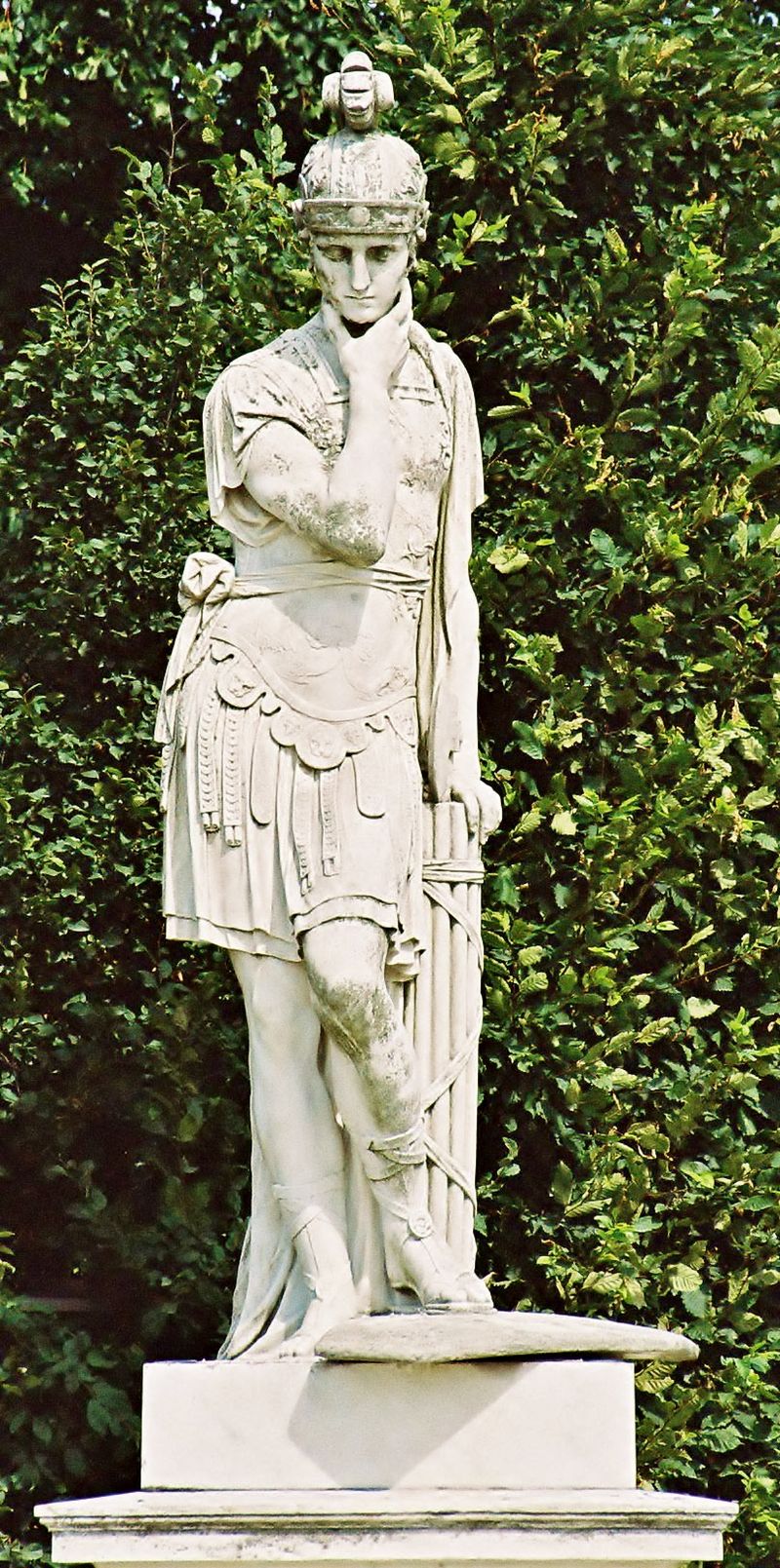
Quintus Fabius Maximus Verrucosus
Roman statesman and general (c. 280 – 203 BC)

Scipio Aemilianus
Roman politician and general (185–129 BC)
Lucius Aemilius Paullus Macedonicus
Roman general and statesman (c. 229 – 160 BC)

Lucullus
Lucius Licinius Lucullus (; 118–57/56 BC) was a Roman general and statesman, closely connected with Lucius Cornelius Sulla. In culmination of over 20 years of almost continuous military and government service, he conquered the eastern kingdoms in the course of the Third Mithridatic War, exhibiting extraordinary generalship in diverse situations, most famously during the Siege of Cyzicus in 73–72 BC, and at the Battle of Tigranocerta in Armenian Arzanene in 69 BC. His command style received unusually favourable attention from ancient military experts, and his campaigns appear to have been studi

Marcus Furius Camillus
politician and soldier (446–365 BCE)
Titus Quinctius Flamininus
Roman censor 189 BC

Lucius Aemilius Paullus
Roman general and senator (died 216 BC)

Quintus Caecilius Metellus Pius
Ancient Roman consul, general and statesman. A leader of the Optimates
Lucius Mummius Achaicus
Roman censor in 142 BC
Lucius Domitius Ahenobarbus
paternal grandfather of emperor Nero
Lucius Cornelius Scipio Asiaticus
Roman consul
Quintus Lutatius Catulus
Roman politician and general (149–87 BC)
Gnaeus Pompeius Strabo
ancient Roman consul, father of Pompey
Marcus Antonius
Roman orator and grandfather of Mark Antony the triumvir
Spurius Cassius Vecellinus
Roman consul, magister equitum and legislator (died 485 BC)
Tiberius Sempronius Gracchus
Roman consul 177 BC
Gaius Duilius
admiral involved in the First Punic War
Publius Ventidius
officer under Mark Antony
Publius Cornelius Scipio Nasica Corculum
2nd century BC Roman politician and general
Gaius Sosius
1st-century BC Roman general and politician
Marcus Caecilius Metellus
Roman general
Marcus Fulvius Nobilior
Roman consul in 189 BC
Aulus Atilius Caiatinus
Roman consul 258 BC
Manius Valerius Maximus Messalla
Roman consul in 263 BC
Quintus Minucius Rufus
politician
Manius Aquillius
politician and officer
Lucius Julius Libo
Roman consul 267 BC
Titus Didius
consul 98 BC
Spurius Carvilius Maximus Ruga
politician (0300-0211)
Marcus Fulvius Flaccus
Roman consul 264 BC

Lucius Valerius Poplicola Potitus
5th-century BC Roman senator and consul

Gaius Aurelius Cotta
Roman politician, consul ca. 252 BCE
Publius Mucius Scaevola
Roman consul 175 BC
Quintus Minucius Thermus
Roman consul in 193 BCE
Numerius Fabius Pictor
Roman senator
Marcus Horatius Turrinus Barbatus
5th-century BC Roman senator and consul
Lucius Licinius Murena
praetor 88 BC