Category
page 1Angiosperms

Angiosperms
clade of seed plants that produce flowers

Amborella trichopoda
Amborella is a monotypic genus of understory shrubs or small trees endemic to the main island, Grande Terre, of New Caledonia in the southwest Pacific Ocean. The genus is the only member of the family Amborellaceae and the order Amborellales and contains a single species, Amborella trichopoda. Amborella is of great interest to plant systematists because molecular phylogenetic analyses consistently place it as the sister group to all other flowering plants; as a result, it is critical for understanding angiosperm evolution. It is understood to be the most basal extant flowering plant, and is on
Ceratophyllaceae
Ceratophyllaceae is a cosmopolitan family of flowering plants including one living genus commonly found in ponds, marshes, and quiet streams in tropical and in temperate regions. It is the only extant family in the order Ceratophyllales. Species are commonly called coontails or hornworts, although hornwort is also used for unrelated plants of the division Anthocerotophyta.
basal angiosperms
group of plants

Mesangiospermae
thumb|Flower of Liriodendron tulipifera, a Mesangiosperm
Mesangiospermae is a clade that contains the majority of flowering plants (angiosperms). Mesangiosperms are therefore known as the core angiosperms, in contrast to the three orders of earlier-diverging species known as the basal angiosperms: Nymphaeales (including water lilies), Austrobaileyales (including star anise), and Amborellales. Mesangiospermae includes about 350,000 species, while there are about 175 extant species of basal angiosperms.
Ceratophyllales
REDIRECT Ceratophyllaceae

Monotagma plurispicatum
species of plant
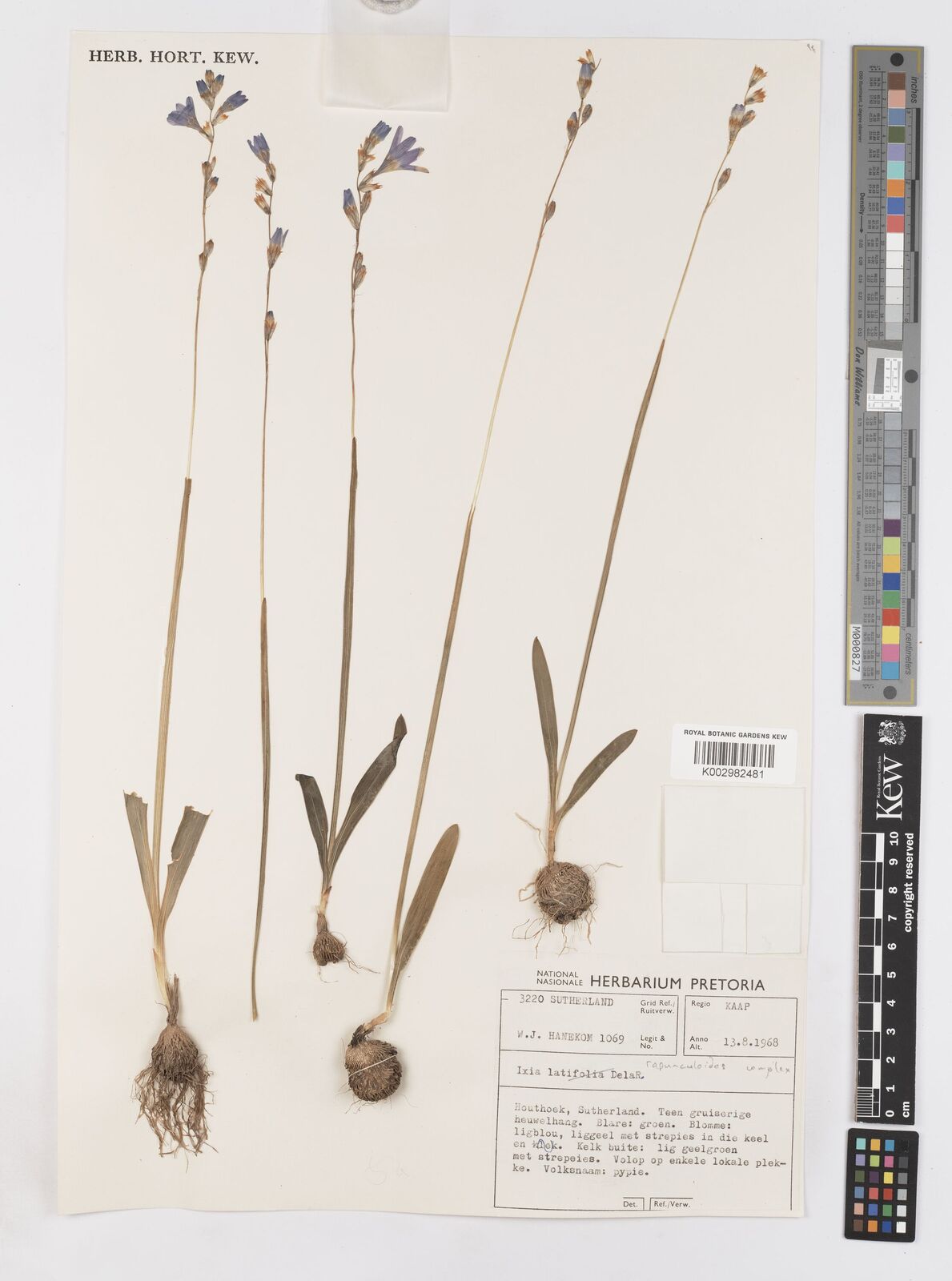
Ixia rapunculoides
species of plant