Category
page 1Anguidae

Anguidae
Anguidae refers to a large and diverse family of lizards native to the Northern Hemisphere. It contains 9 genera and 89 extant species. Common characteristics of this group include a reduced supratemporal arch, striations on the medial faces of tooth crowns, osteoderms, and a lateral fold in the skin of most taxa. The group is divided into two living subfamilies, the legless Anguinae, which contains slow worms and glass lizards, among others, found across the Northern Hemisphere, and Gerrhonotinae, which contains the alligator lizards, native to North and Central America. The family Diplogloss

Sheltopusik
The sheltopusik, also spelled scheltopusik, sheltopusick, scheltopusick, sheltopusic, or scheltopusic (Pseudopus apodus), and also commonly known as '''Pallas's glass lizard, the European legless lizard, or the European glass lizard''', is a species of large glass lizard found from Southern Europe to Central Asia.
alligator lizard
subfamily of reptiles

Pseudopus
Pseudopus is a genus of anguid lizards that are native to Eurasia. One extant species remains, the sheltopusik, with four fossil species. They are the most robust members of subfamily Anguinae, with the largest species †P. pannonicus growing up to 2 metres in length. The oldest fossils of the group date to the Early Miocene, but there are possible Oligocene records.
Anguinae
Anguinae is a subfamily of legless lizards in the family Anguidae, commonly called glass lizards, glass snakes or slow worms. The first two names come from the fact their tails easily break or snap off. Members of Anguinae are native to North America, Europe, Asia, and North Africa.
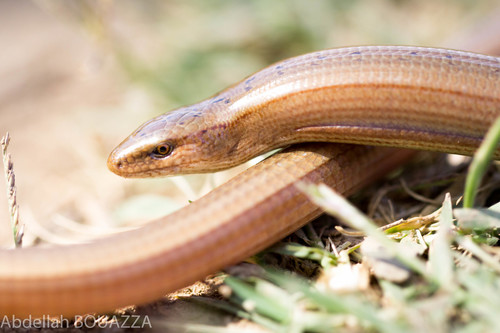
Hyalosaurus koellikeri
species of reptile