Category
page 1Animal locomotion

leg
A leg is a weight-bearing and locomotive anatomical structure, usually having a columnar shape. During locomotion, legs function as "extensible struts". The combination of movements at all joints can be modeled as a single, linear element capable of changing length and rotating about an omnidirectional "hip" joint.
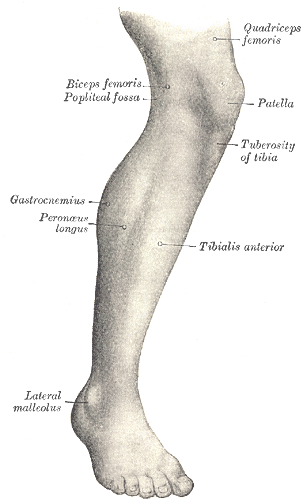
human leg
lower extremity or limb of the human body (foot, lower leg, thigh, and hip)
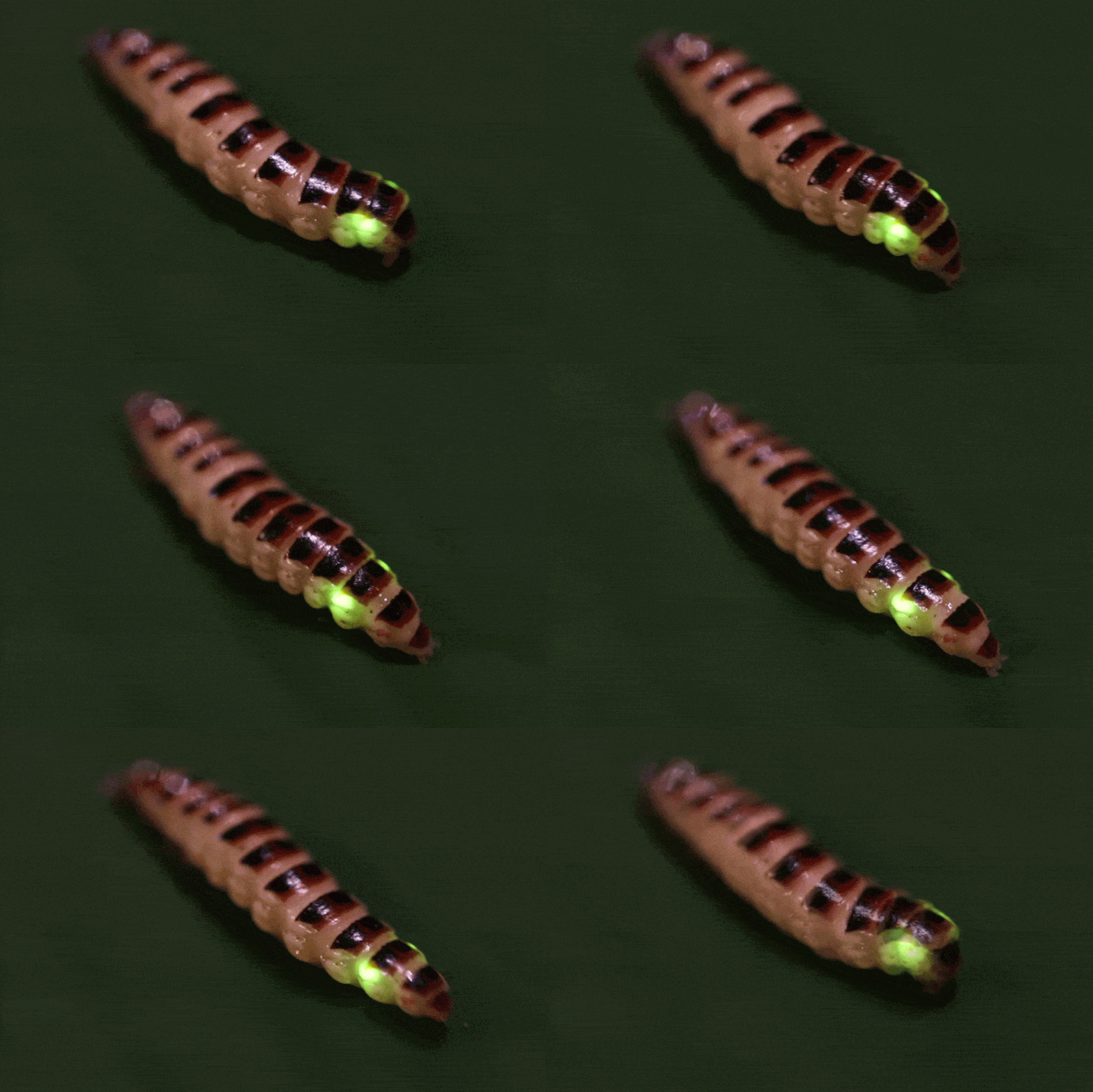
animal locomotion
self-propulsion by an animal
sessility
property of organisms that do not possess a means of self-locomotion and are normally immobile

phoresis
thumb|Pseudogarypus synchrotron Henderickx et al. 2012 specimen in Baltic amber.thumb|Male Bombus hypnorum with phoretic mites. [[Botevgrad, Bulgaria.]]
thumb|Pseudoscorpion hitching a ride on a fly
thumb|A pseudoscorpion on the leg of a crane fly

fossorial
thumb|230px|Cape ground squirrel
arthropod leg
locomotory appendage of arthropods
rotating locomotion in living systems
phenomenon and topic of discourse in evolutionary biology and biomechanics
aquatic locomotion
biologically propelled motion through a liquid medium; in contrast of passive swimming (floating); involves the expenditure of energy to travel to a desired location

Movement of Animals
work by Aristotle
fish locomotion
ways that fish move
metachronal rhythm
movements produced by the sequential action (as opposed to synchronized) of structures
cursorial
thumb|275px|Horses can be considered cursorial grazers.
A cursorial organism is one that is adapted specifically to run. An animal can be considered cursorial if it has the ability to run fast (e.g. cheetah) or if it can keep a constant speed for a long distance (high endurance). "Cursorial" is often used to categorize a certain locomotor mode, which is helpful for biologists who examine behaviors of different animals and the way they move in their environment. Cursorial adaptations can be identified by morphological characteristics (e.g. loss of lateral digits as in ungulate species), physiol