Category
page 1Anonymity networks

public-key cryptography
cryptosystem that uses both public and private keys

darknet
thumb|Surface web in relation to deep web and dark web
Tails
Linux distribution for anonymity and privacy
onion routing
technique for anonymous communication

Hyphanet
Hyphanet (until mid-2023: Freenet) is a peer-to-peer platform for censorship-resistant, anonymous communication. It uses a decentralized distributed data store to keep and deliver information, and has a suite of free software for publishing and communicating on the Web without fear of censorship. Both Freenet and some of its associated tools were originally designed by Ian Clarke, who defined Freenet's goal as providing freedom of speech on the Internet with strong anonymity protection.

YaCy
YaCy (pronounced “ya see”) is a free distributed search engine built on the principles of peer-to-peer (P2P) networks, created by Michael Christen in 2003. The engine is written in Java and distributed on several hundred "YaCy-peer" computers, .
overlay network
computer network which is built on top of another network
Ultrasurf
UltraSurf is a closed-source freeware Internet censorship circumvention product created by UltraReach Internet Corporation. The software bypasses Internet censorship and firewalls using an HTTP proxy server, and employs encryption protocols for privacy.
anoNet
anoNet is a decentralized friend-to-friend network built using VPNs and software BGP routers. anoNet works by making it difficult to learn the identities of others on the network allowing them to anonymously host IPv4 and IPv6 services. One of the primary goals of anoNet is to protect its participants' rights of speech and expression.
EncroChat
EncroChat was a Europe-based communications network and service provider that offered modified smartphones allowing encrypted communication among subscribers. It was used primarily by organised crime members to plan criminal activities.
ZeroNet
ZeroNet is a decentralized web-like network of peer-to-peer users, created by Tamas Kocsis in 2015. The programming for the network was based in Budapest, Hungary. It is built in Python and fully open source. Instead of having an IP address, sites are identified by a public key (specifically a bitcoin address). The private key allows the owner of a site to sign and publish changes, which propagate through the network. Sites can be accessed through an ordinary web browser when using the ZeroNet application, which acts as a local webhost for such pages. In addition to using bitcoin cryptography,
Operation Trojan Shield
international police sting operation between 2018 and 2021
friend-to-friend
A friend-to-friend (F2F) computer network is a type of peer-to-peer network in which users only make direct connections with people they know. Passwords or digital signatures can be used for authentication.

GNUnet
thumb|Christian Grothoff, maintainer of GNUnet, in [[Berlin on August 1, 2013, at the "#youbroketheinternet. We'll make ourselves a GNU one." event]]
GNUnet is a software framework for decentralized, peer-to-peer networking and an official GNU package. The framework offers link encryption, peer discovery, resource allocation, communication over many transports (such as TCP, UDP, HTTP, HTTPS, WLAN and Bluetooth) and various basic peer-to-peer algorithms for routing, multicast and network size estimation.
Freegate
Freegate is a software application developed by Dynamic Internet Technology (DIT) that enables internet users to view websites blocked by their governments. The program takes advantage of a range of proxy servers called Dynaweb. This allows users to bypass Internet firewalls that block web sites by using DIT's Peer-to-peer (P2P)-like proxy network system. FreeGate's anti-censorship capability is further enhanced by a new, unique encryption and compression algorithm in the versions of 6.33 and above. Dynamic Internet Technology estimates Freegate had 200,000 users in 2004. The maintainer and CE
Mix network
routing protocol
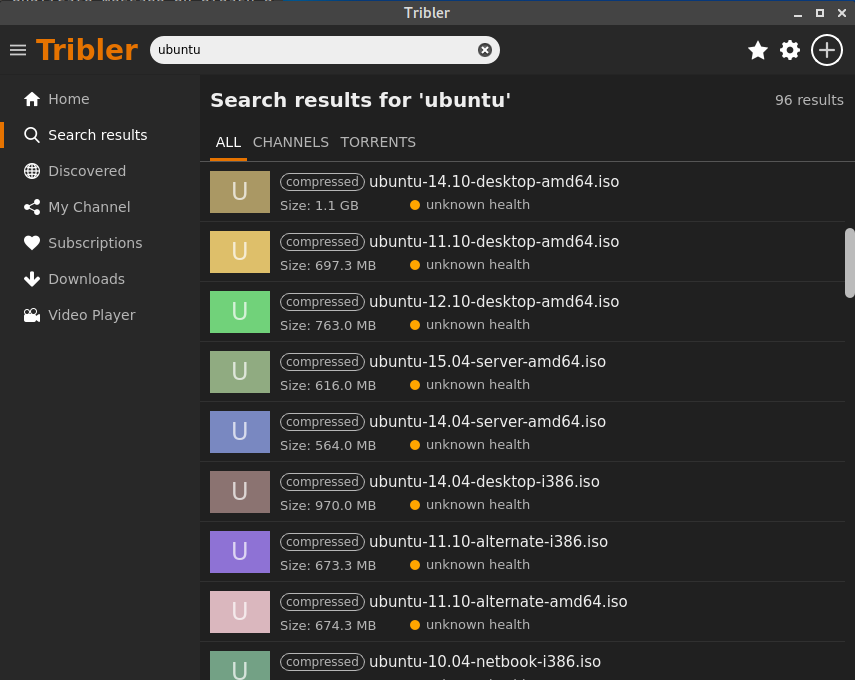
Tribler
Tribler is an open source decentralized BitTorrent client which allows anonymous peer-to-peer by default. Tribler is based on the BitTorrent protocol and uses an overlay network for content searching.
Due to this overlay network, Tribler does not require an external website or indexing service to discover content. The user interface of Tribler is very basic and focused on ease of use instead of diversity of features. Tribler is available for Linux, Windows, and OS X.
anonymous P2P
distributed peer-to-peer application in which participants are anonymous or pseudonymous
Netsukuku
Netsukuku is an experimental peer-to-peer routing system, developed by the FreakNet MediaLab in 2005, created to build up a distributed network, anonymous and censorship-free, fully independent but not necessarily separated from the Internet, without the support of any server, Internet service provider and no central authority.
Java Anon Proxy
anonymity network
xB Browser
web browser designed to run on both the Tor and XeroBank anonymity networks
Lantern
Internet censorship circumvention software

WebTorrent
WebTorrent is a peer-to-peer (P2P) streaming torrent client written in JavaScript that enables BitTorrent functionality directly within web browsers. Created by Feross Aboukhadijeh, the developer behind YouTube Instant, WebTorrent implements the BitTorrent protocol using WebRTC for peer-to-peer data transfer, allowing users to download and stream torrents without requiring traditional torrent client software.
data haven
refuge for uninterrupted or unregulated data
Mixminion
Mixminion is the standard implementation of the Type III anonymous remailer protocol. Mixminion can send and receive anonymous e-mail.
Twister
blog software
Turtle F2F
tool for exchanging contents in an anonymous and secure way over a friend-to-friend (F2F) network