Category
page 1Anti-communism in Germany

West Germany
Federal Republic of Germany in the period between its formation on 23 May 1949 and German reunification on 3 October 1990

Nazi Party
former far-right political party in Germany active between 1920 and 1945

Sturmabteilung
The '''''' (; or loosely 'stormtroopers'), or SA, was the original paramilitary organisation under Adolf Hitler and the Nazi Party of Germany. It played a significant role in Hitler's rise to power in the 1920s and early 1930s. Its primary purposes were providing protection for Nazi rallies and assemblies, disrupting the meetings of opposing parties, fighting against the paramilitary units of the opposing parties, especially the Roter Frontkämpferbund of the Communist Party of Germany (KPD) and the Reichsbanner Schwarz-Rot-Gold of the Social Democratic Party of Germany (SPD), and intimidating

Anti-Comintern Pact
pact between Nazi Germany and Japan prior to World War II

Ich bin ein Berliner
speech given by John F. Kennedy in West Berlin in June 1963
East German uprising of 1953
uprising against the German Democratic Republic
%20-%20Bannalist%20and%20Pandour%2C%20'Freikorps%20Trenck'.%20-%20RCIN%20403392%20-%20Royal%20Collection.jpg)
Free Corps
thumb|Two soldiers of an Habsburg monarchy|Austrian Freikorps ([[David Morier, 1748)]]
'''' (, "Free Corps" or "Volunteer Corps") were irregular German and other European paramilitary volunteer units that existed from the 18th to the early 20th centuries. They effectively served as mercenaries or private military companies, regardless of their own nationality. In German-speaking countries, the first so-called ("free regiments", Freie Regimenter) were formed in the 18th century from native volunteers, enemy renegades, and deserters. These sometimes exotically equipped units served as infantry a
Hallstein Doctrine
one-Germany policy during the Cold War
Tear down this wall!
speech delivered by President Ronald Reagan of the USA in West Berlin in June 1987
Commissar Order
order issued by the German High Command (OKW) on 6 June 1941
Gesetz gegen die gemeingefährlichen Bestrebungen der Sozialdemokratie
law of German Empire
All-German Bloc/League of Expellees and Deprived of Rights
political party
Three Arrows
socialist political symbol

Strafgesetzbuch section 86a
German law which restricts the use of insignias of banned organizations

Blutmai
Blutmai (, ) was an outbreak of political violence that occurred in Berlin from 1 to 3 May 1929.

The Soviet Paradise
1942 film by Friedrich Albat
Ebert–Groener pact
1918 German government / military cooperation agreement
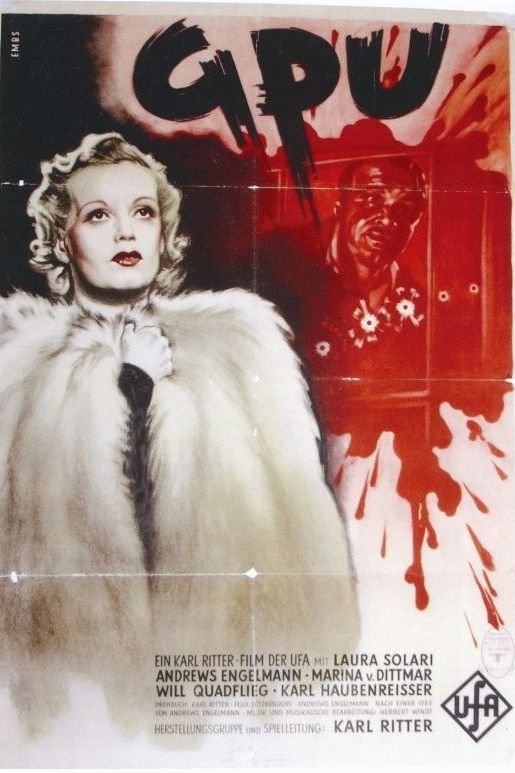
The Red Terror
1942 film by Karl Ritter
red-baiting
Red-baiting, also known as reductio ad Stalinum () and red-tagging (in the Philippines), is an intention to discredit the validity of a political opponent and the opponent's logical argument by accusing, denouncing, attacking, or persecuting the target individual or group as anarchist, communist, Marxist, socialist, Stalinist, or fellow travelers towards these ideologies. In the phrase, red refers to the color that traditionally symbolized left-wing politics worldwide since the 19th century, while baiting refers to persecution, torment, or harassment, as in baiting.
Köpenick's week of bloodshed
1933 violence in Germany
Feme murders
series of politically-motivated murders committed during the Weimar-period Germany
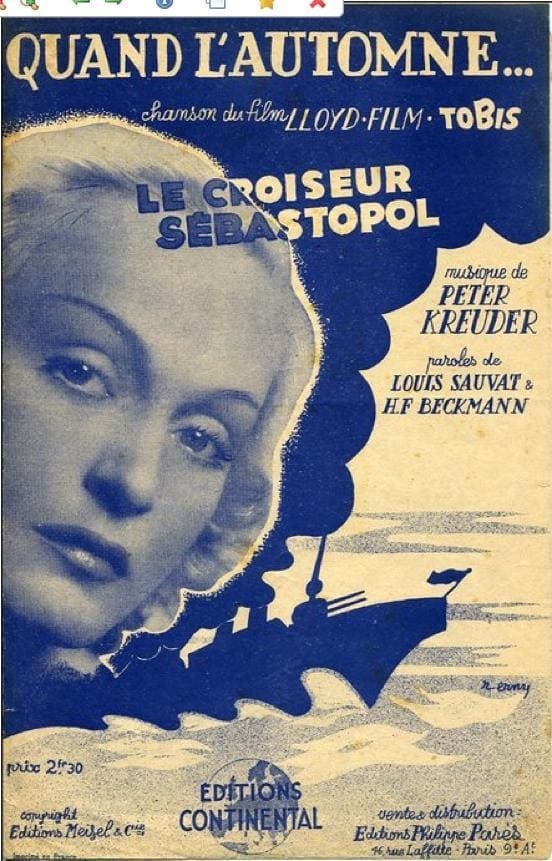
White Slaves
1937 film by Karl Anton

Guidelines for the Conduct of the Troops in Russia
Cologne Communist Trial
Trial conducted by the Prussian government against eleven members of the Communist League who were suspected of having participated in the 1848 uprising
Liberal democratic basic order
unchangeable, constitutional core structure of the community according to the constitution of the Federal Republic of Germany
Boxheim Documents
1931 plans for a Nazi coup