Category
page 1Apollo program

Wernher von Braun
German and later American aerospace engineer and space architect (1912–1977)

Apollo program
The Apollo program, also known as Project Apollo, was the United States human spaceflight program led by NASA, which landed the first humans on the Moon in 1969. Apollo was conceived in 1960 in the Dwight D. Eisenhower presidency during Project Mercury and executed after Project Gemini. Apollo was later dedicated to President John F. Kennedy's national goal, "before this decade is out, of landing a man on the Moon and returning him safely to the Earth" in his address to the U.S. Congress on May 25, 1961.

The Blue Marble
photograph of the Earth, cropped and rotated from one taken by the crew of the Apollo 17 spacecraft

Margaret Hamilton
American NASA scientist and mathematician

Earthrise
thumb|300px|Earthrise, taken on December 24, 1968, by Apollo 8 astronaut [[William Anders]]
Earthrise is a photograph of Earth that was taken from lunar orbit by astronaut William Anders on December 24, 1968, during the Apollo 8 mission. Nature photographer Galen Rowell described it as "the most influential environmental photograph ever taken".
moon rock
piece or sample of soil from the Moon
Saturn I
American launch vehicle
Saturn IB
American launch vehicle
Kennedy Space Center Launch Complex 39
rocket launch site at Kennedy Space Center in Florida, USA
Vehicle Assembly Building
building used by NASA to assemble rockets at the Kennedy Space Center
USS Hornet
1943 Essex-class aircraft carrier
Apollo
impact crater on the Moon
trans-lunar injection
propulsive maneuver used to arrive at the Moon
We choose to go to the Moon
September 1962 speech by John F. Kennedy
Cape Canaveral Space Launch Complex 37
space launch complex in Brevard County, Florida

S-IVB
The S-IVB (pronounced "S-four-B") was the third stage on the Saturn V and second stage on the Saturn IB launch vehicles. Built by the Douglas Aircraft Company, it had one J-2 rocket engine. For lunar missions it was fired twice: first for Earth orbit insertion after second stage cutoff, and then for translunar injection (TLI).
Statio Tranquillitatis
Apollo 11 landing site
lunar orbit rendezvous
spaceflight maneuver

J002E3
thumb|200px|S-IVB stage of Apollo 17. The one used for Apollo 12 is of identical type.
IBM Information Management System
is an information system of the company IBM
Cape Canaveral Launch Complex 34
former rocket launch site in Brevard County, Florida
Moon Tree
tree grown from one of the 500 seeds taken into orbit around the Moon by Stuart Roosa during the Apollo 14 mission in 1971
free-return trajectory
trajectory of a spacecraft to a secondary body which allows the vehicle to return to the primary body without propulsion

S-IC
The S-IC (pronounced S-one-C) was the first stage of the American Saturn V rocket. The S-IC stage was manufactured by the Boeing Company. Like the first stages of most rockets, more than 90% of the mass at launch was propellant, in this case RP-1 rocket fuel and liquid oxygen (LOX) oxidizer. It was tall and in diameter. The stage provided of thrust at sea level to get the rocket through the first of ascent. The stage had five F-1 engines in a quincunx arrangement. The center engine was fixed in position, while the four outer engines could be hydraulically gimballed to control the rocket.
Frances Northcutt
NASA Trajectory Engineer Houston
pogo oscillation
type of vibration in a rocket engine

Taurus–Littrow
thumb|350px|A labeled aerial photo of the Taurus–Littrow valley (north is at the bottom)
Kennedy Space Center Launch Complex 39B
launch pad at Kennedy Space Center Launch Complex 39
Michoud Assembly Facility
NASA rocket manufacturing complex in Michoud, New Orleans
list of Apollo missions
Wikimedia list article

S-II
The S-II (pronounced "S-two") was the second stage of the Saturn V rocket. It was built by North American Aviation. Using liquid hydrogen (LH2) and liquid oxygen (LOX) it had five J-2 engines in a quincunx pattern. The second stage accelerated the Saturn V through the upper atmosphere with of thrust.
Barbara Johnson
American engineer
Kennedy Space Center Launch Complex 39A
launch pad at Kennedy Space Center Launch Complex 39
Abe Silverstein
American aerospace engineer
canceled Apollo mission
aspect of United States Moon landing program
Manned Venus flyby
proposed crewed Venus flyby
Apollo Applications Program
American human spaceflight program
Charles Stark Draper Laboratory
American research and development organization, headquartered in Cambridge, Massachusetts
Christopher C. Kraft Jr. Mission Control Center
spacecraft control center at Johnson Space Center, Houston, Texas
Direct ascent
preposed Method Of Moon Landing
Lunar Receiving Laboratory
laboratory at the Johnson Space Ceneter
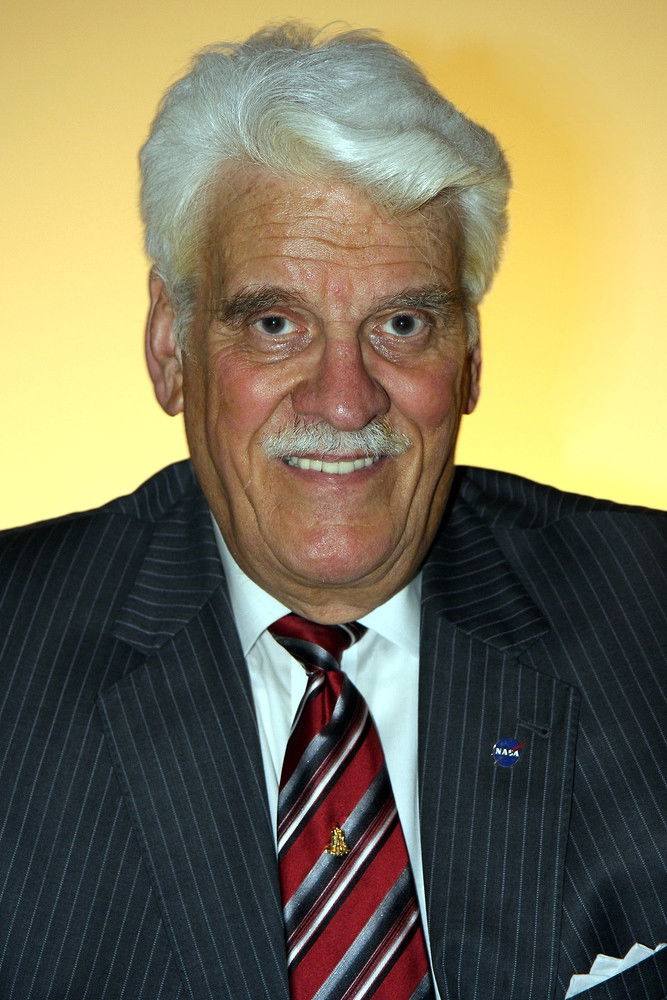
Jesco von Puttkamer
German-American aerospace engineer; senior NASA manager (1933-2012)
Earth orbit rendezvous
method for conducting round trip human flights to the Moon
S-IV
The S-IV was the second stage of the Saturn I rocket used by NASA for early flights in the Apollo program.
Quindar tones
tones used by NASA during human spaceflight communication
boilerplate
spacecraft; nonfunctional craft or payload
Third-party evidence for Apollo Moon landings
independent confirmations of Apollo Moon landings
boost-glide
thumb|500px|Phases of a skip reentry
Boost-glide, or skip-glide, is a class of atmospheric entry trajectories that follow a non-ballistic trajectory by employing aerodynamic lift in the high upper atmosphere. The term is mostly used to refer to a number of designs that used lift to extend the range of an otherwise shorter-ranged rocket.
Saturn-Shuttle
The Saturn-Shuttle was a preliminary concept of launching the Space Shuttle orbiter using a modified version of the first stage of the Saturn V rocket. It was studied and considered in 1971–1972.
Cosmic ray visual phenomena
Saturn C-3
Third rocket in the Saturn C series studied from 1959 to 1962
Crawlerway
The Crawlerway is a double pathway at the Kennedy Space Center in Florida. It runs between the Vehicle Assembly Building and the two launch pads at Launch Complex 39. It has a length of to Pad 39A and Pad 39B, respectively. A bed of stones lies beneath a layer of asphalt and a surface made of Alabama river rocks.
Saturn INT-20
Proposed heavy-lift rocket
Marion Power Shovel Company
an American company (1884-1997), which created excavators, drilling rigs for the construction and mining industries, supplied excavators for the construction of the Panama Canal, for NASA
Iona Allen
co-creator of NASA space suits (1937-2003)
Saturn IB/V Instrument Unit
instrumentation platform on Saturn V