Category
page 1Aquila (constellation)

Aquila
constellation on the celestial equator

Altair
Altair is the brightest star in the equatorial constellation of Aquila and the twelfth-brightest star in the night sky. It has the Bayer designation Alpha Aquilae, which is Latinised from α Aquilae and abbreviated Alpha Aql or α Aql. Altair is an A-type main-sequence star with an apparent visual magnitude of 0.77 and is one of the vertices of the Summer Triangle asterism; the other two vertices are marked by Deneb and Vega. It is located at a distance of from the Sun. Altair is currently in the G-cloud—a nearby interstellar cloud formed from an accumulation of gas and dust.
Q255174
planetary nebula in the constellation Aquila
Q1147845
galaxy
Q1147221
open cluster in Aquila
Q1139571
young planetary nebula in the constellation Aquila
NGC 6781
planetary nebula
Q1147449
open cluster in Aquila
Q1147458
open cluster
NGC 6760
globular cluster
Q1148165
Asterism in the constellation Aquila
Q634938
asterism in the constellation Aquila
Beta Aquilae
star in the constellation Aquila
Q1147369
planetary nebula
list of stars in Aquila
Wikimedia list article
Gamma Aquilae
star in the constellation Aquila
PSR B1913+16
pulsar in the constellation Aquila
Q966685
astronomical object
Eta Aquilae
star in the constellation Aquila
Zeta Aquilae
double star in the equatorial constellation of Aquila
Lambda Aquilae
star in the constellation Aquila
Delta Aquilae
star in the constellation Aquila
SS 433
Binary star system, first known microquasar
CoRoT-2 b
CoRoT-2b (formerly known as CoRoT-Exo-2b) is the second extrasolar planet to be detected by the French-led CoRoT mission, and orbits the star CoRoT-2 at a distance of 700 light years from Earth towards the constellation Aquila. Its discovery was announced on 20 December 2007. After its discovery via the transit method, its mass was confirmed via the radial velocity method.
V606 Aquilae
star in the constellation Aquila
GRS 1915+105
binary system in the constellation Aquila
Epsilon Aquilae
binary star in the constellation of Aquila

CoRoT-3 b
Theta Aquilae
binary star in the constellation Aquila
Xi Aquilae
star in the constellation Aquila
Iota Aquilae
star in the constellation Aquila
V603 Aquilae
star in the constellation Aquila
Smith's Cloud
high-velocity cloud
Nu Aquilae
star in the constellation Aquila
31 Aquilae
star in the constellation Aquila
Sigma Aquilae
Variable star in the constellation Aquila
W49B
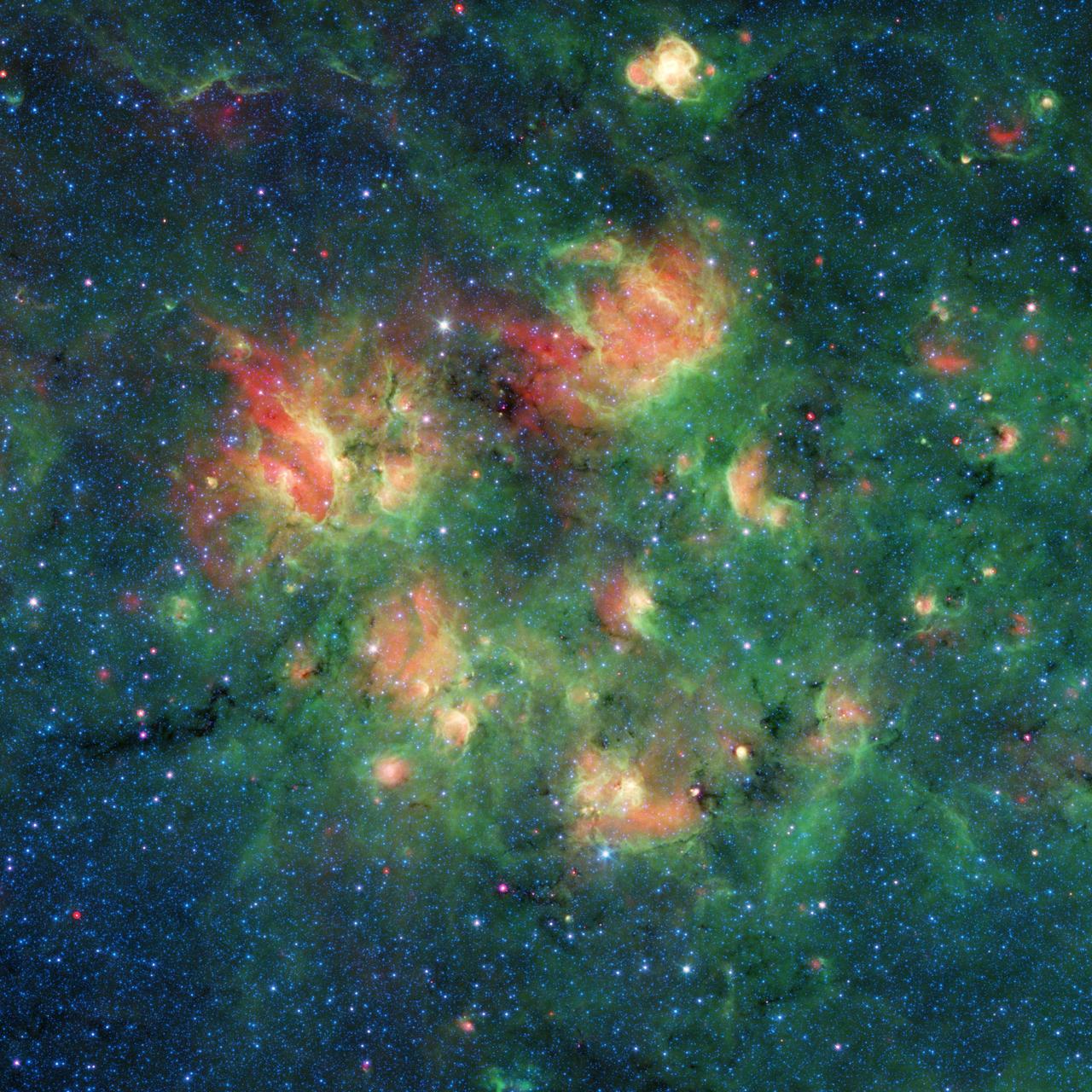
W49B (also known as SNR G043.3-00.2 or 3C 398) is a nebula in Westerhout 49 (W49). The nebula is a supernova remnant, probably from a type Ib or Ic supernova that occurred around 1,000 years ago. It may have produced a gamma-ray burst and is thought to have left a black hole remnant.
10 Aquilae
star in the constellation Aquila
12 Aquilae
star in the constellation Aquila
Phi Aquilae
star in the constellation Aquila
Wolf 1055
star
Kappa Aquilae
star in the constellation Aquila
SGR 1900+14
gamma-ray burst
15 Aquilae
star in the constellation Aquila
5 Aquilae
quadruple star system in the constellation of Aquila
E Nebula
pair of dark nebulae in the constellation Aquila that looks like the letter E of the Latin alphabet
Gliese 775
star in the constellation Aquila
Xi Aquilae b
extrasolar planet
Q3710779
galaxy
Chi Aquilae
star in the constellation Aquila

COROT-2
CoRoT-2 is a yellow dwarf main sequence star a little cooler than the Sun. This star is located approximately 700 light-years away in the constellation of Aquila. The apparent magnitude of this star is 12, which means it is not visible to the naked eye but can be seen with a medium-sized amateur telescope on a clear dark night.
Phoenicia
star in the constellation Aquila
IRC+10420
yellow hypergiant star
Q1344253
star in the constellation Aquila

R Aquilae
variable star in the constellation Aquila
V1291 Aquilae
star in the constellation Aquila
19 Aquilae
star in the constellation Aquila
Omicron Aquilae
star in the constellation Aquila
Tau Aquilae
star in the constellation Aquila
HD 183263
star in the constellation Aquila