Category
page 1Arachnid orders
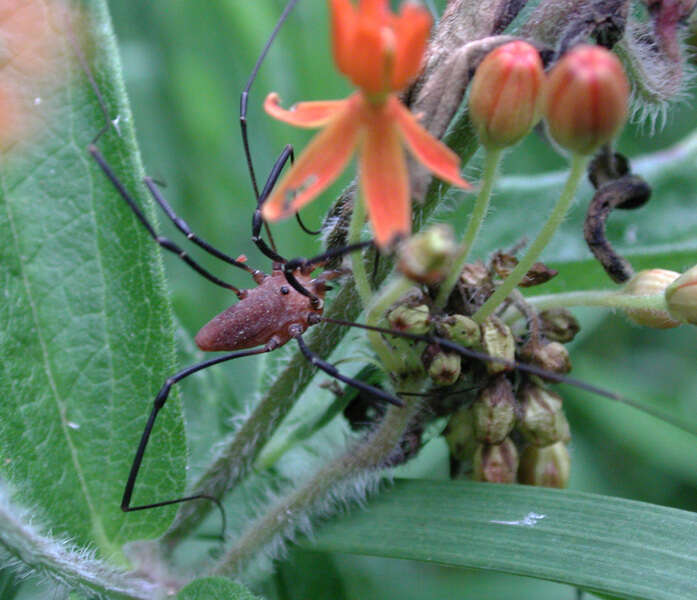
Opiliones
The Opiliones (formerly Phalangida) are an order of arachnids,
colloquially known as harvestmen, harvesters, daddy long legs, or granddaddy long legs. Over 6,650 species of harvestmen have been discovered worldwide, although the total number of extant species may exceed 10,000. The order Opiliones includes five suborders: Cyphophthalmi, Eupnoi, Dyspnoi, Laniatores, and Tetrophthalmi, which were named in 2014.

Solifugae
Solifugae is an order of arachnids known variously as solifuges, sun spiders, camel spiders, and wind scorpions. The order includes more than 1,000 described species in about 147 genera. Despite their common names, they differ from both order Araneae (spiders) and order Scorpiones (scorpions). Most species of solifuges live in dry climates and feed opportunistically on ground-dwelling arthropods and other small animals. The largest species grow to a length of , including legs. A number of urban legends exaggerate the size and speed of solifuges, and their potential danger to humans, which is n

Amblypygi
Amblypygi is an order of arachnids also known as whip-spiders or tailless whip-scorpions, not to be confused with whip-scorpions or vinegaroons that belong to the related order Uropygi. The name "amblypygid" means "blunt tail", a reference to a lack of the flagellum that is otherwise seen in whip-scorpions. Amblypygids possess no silk glands or venom. They rarely bite if threatened but can grab fingers with their pedipalps, resulting in thorn-like puncture-injuries.

Uropygi
Uropygi is an arachnid order comprising invertebrates commonly known as whip scorpions or vinegaroons (also spelled vinegarroons and vinegarones). They are often called uropygids. The name "whip scorpion" refers to their resemblance to true scorpions and possession of a whiplike tail, and "vinegaroon" refers to their ability when attacked to discharge an offensive, vinegar-smelling liquid, which contains acetic acid. The order may also be called Thelyphonida. Both names, Uropygi and Thelyphonida, may be used either in a narrow sense for the order of whip scorpions, or in a broad sense which in
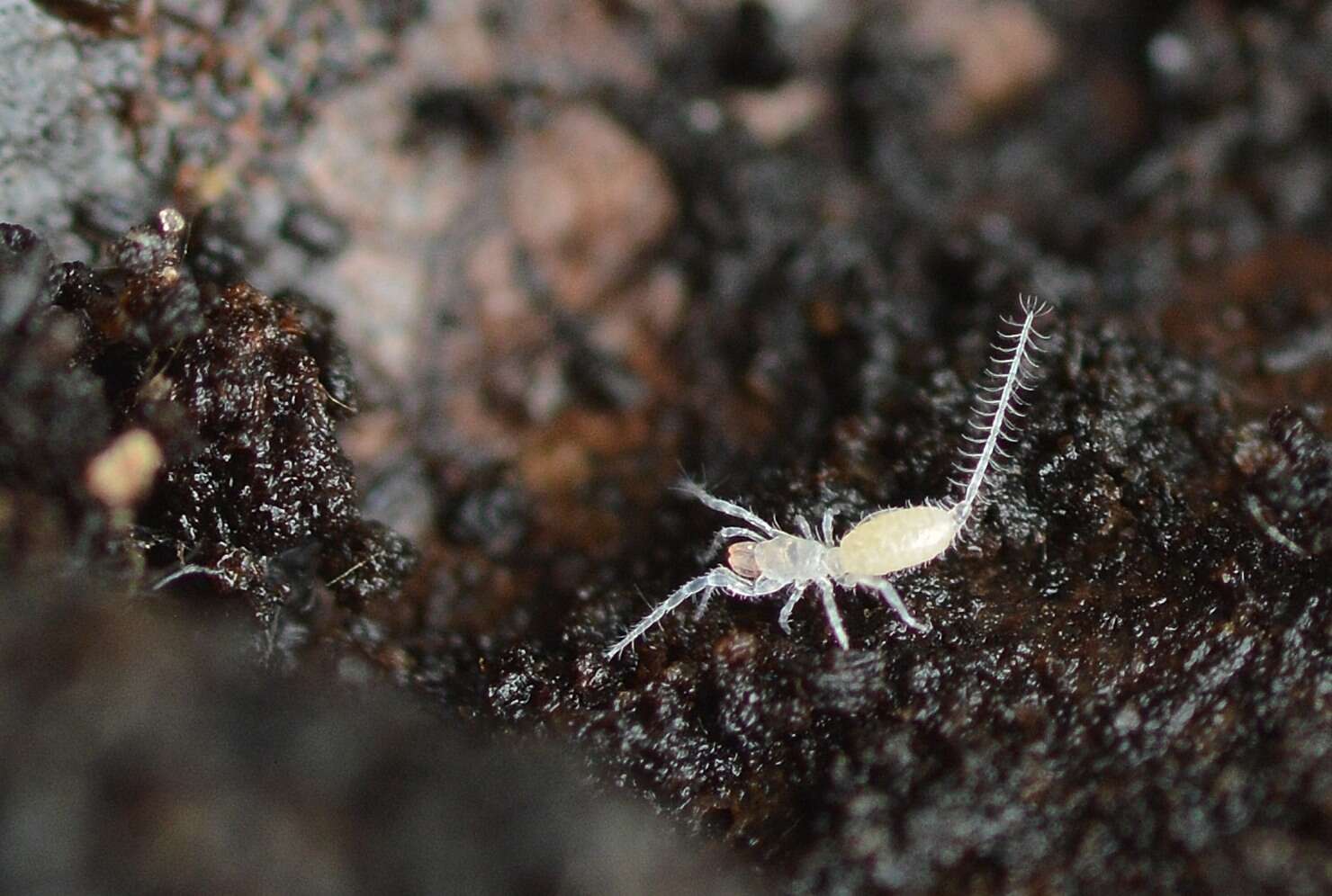
Palpigradi
Palpigradi is an order of very small arachnids commonly known as microwhip scorpion or palpigrades.

Schizomida
Schizomida, also known as sprickets or short-tailed whip-scorpions, is an order of arachnids, generally less than in length. The order is not yet widely studied. E. O. Wilson has identified schizomids as among the "groups of organisms that desperately need experts to work on them."
%20(cropped).jpg)
Ricinulei
Ricinulei is a small order of arachnids. Like most arachnids, they are predatory; eating small arthropods. They occur today in west-central Africa (Ricinoides) and the Americas (Cryptocellus and Pseudocellus) from Brazil to southern Texas, where they inhabit either leaf-litter or caves. As of 2022, 103 extant species of ricinuleids have been described worldwide, all in the single family Ricinoididae. Due to their obscurity they do not have a proper common-name, though in academic literature they are occasionally referred to as hooded tickspiders.

Mesostigmata
Mesostigmata is an order of mites belonging to the Parasitiformes. They are by far the largest group of Parasitiformes, with over 8,000 species in 130 families. Mesostigmata includes parasitic as well as free-living and predatory forms. They can be recognized by the single pair of spiracles positioned laterally on the body.

Trombidiformes
Trombidiformes is a large, diverse order of mites.
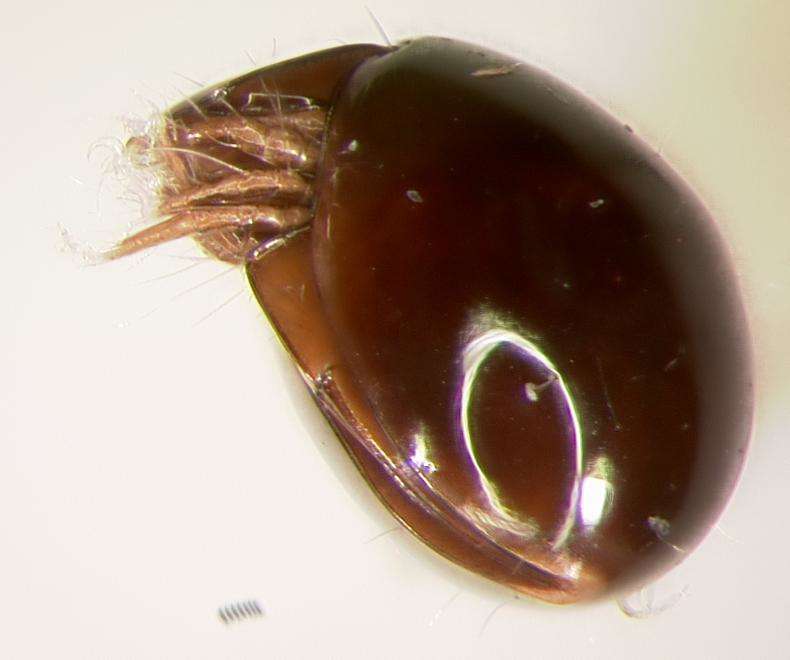
Sarcoptiformes
The Sarcoptiformes are an order of mites comprising over 15,000 described species in around 230 families. Previously it was divided into two suborders, Oribatida and Astigmatina, but Oribatida has been promoted to an order, and Astigmatina is now an unranked taxon.
Oribatida
Oribatida (formerly Cryptostigmata), also known as oribatid mites, moss mites or beetle mites, are an order of mites, in the "chewing Acariformes" clade Sarcoptiformes. They range in size from . There are currently 12,000 species that have been identified, but researchers estimate that there may be anywhere from 60,000 to 120,000 total species. Oribatid mites are by far the most prevalent of all arthropods in forest soils, and are essential for breaking down organic detritus and distributing fungi.
Parasitiformes
Parasitiformes are a superorder of Arachnids, constituting one of the two major groups of mites, alongside Acariformes. Parasitiformes has, at times, been classified at the rank of order or suborder.
Holothyrida
The Holothyrida are a small order of mites in the superorder Parasitiformes. No fossils are known. With body lengths of more than they are relatively large mites, with a heavily sclerotized body. It is divided into three families, Allothyridae, Holothyridae, and Neothyridae. In a 1998 experimental study, members of the family Allothyridae were found to ignore living animals but readily fed on the body fluids of dead arthropods, making them scavengers.
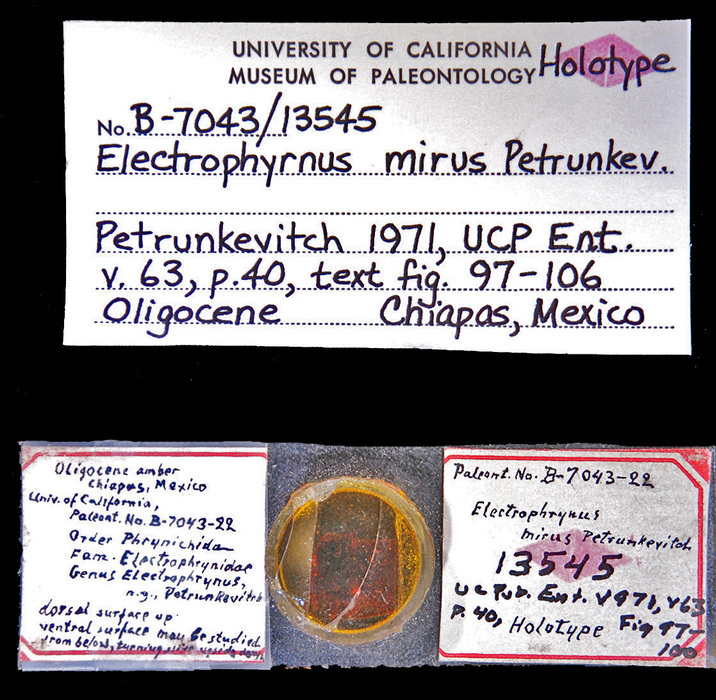
Phrynidae
Phrynidae is a family of amblypygid arachnida arthropods also known as whip spiders and tailless whip scorpions. Phrynidae species are found in tropical and subtropical regions in North and South America. Some species are subterranean; all are nocturnal. At least some species of Phrynidae hold territories that they defend from other individuals.

Trigonotarbida
The order Trigonotarbida is a group of extinct arachnids whose fossil record extends from the late Silurian to the early Permian (Pridoli to Sakmarian). These animals are known from several localities in Europe and North America, as well as a single record from Argentina. Trigonotarbids can be envisaged as spider-like arachnids, but without silk-producing spinnerets. They ranged in size from a few millimetres to a few centimetres in body length and had segmented abdomens (opisthosoma), with the dorsal exoskeleton (tergites) across the backs of the animals' abdomens, which were characteristical
Phalangiotarbida
Phalangiotarbida is an extinct arachnid order first recorded from the Early Devonian of Germany and most widespread in the Upper Carboniferous coal measures of Europe and North America. The last species are known from the early Permian Rotliegend of Germany.
Opilioacarida
REDIRECT Opilioacaridae