Category
page 1Araneomorphae families

Theridiidae
Theridiidae, also known as the tangle-web spiders, cobweb spiders and comb-footed spiders, is a large family of araneomorph spiders first described by Carl Jakob Sundevall in 1833. This diverse, globally distributed family includes around 3,000 species in 128 genera, and is the most common arthropod group found in human dwellings throughout the world.

Thomisidae
The Thomisidae are a family of spiders, including about 170 genera and over 2,100 species. The common name crab spider is often linked to species in this family, but may also be used for spiders from other families. Many members of this family are also known as flower spiders or flower crab spiders.
%20female%20in%20web%20funnel.jpg)
Agelenidae
The Agelenidae are a large family of spiders in the suborder Araneomorphae. Well-known examples include the common "grass spiders" of the genus Agelenopsis. The most widely accepted common name for members of the family is funnel weaver.

Pholcidae
The Pholcidae are a family of araneomorph spiders. The family contains more than 2,000 individual species of pholcids, including those commonly known as cellar spider, daddy long-legs spider, carpenter spider, daddy long-legger, vibrating spider, gyrating spider, long daddy, and angel spider. The family, first described by Carl Ludwig Koch in 1850, is divided into 94 genera.

Linyphiidae
Linyphiidae, spiders commonly known as sheet weavers (from the shape of their webs), or money spiders (in the United Kingdom, Ireland, Australia, New Zealand, and Portugal) is a family of very small spiders comprising around 5,000 described species in around 650 genera worldwide. This makes Linyphiidae the second largest family of spiders after the Salticidae.

Dictynidae
Dictynidae is a family of cribellate, hackled band-producing spiders first described by Octavius Pickard-Cambridge in 1871. Most build irregular webs on or near the ground, creating a tangle of silken fibers among several branches or stems of one plant.

Uloboridae
Uloboridae is a family of non-venomous spiders, known as cribellate orb weavers or hackled orb weavers. Their lack of venom glands is a secondarily evolved trait. Instead, they wrap their prey thoroughly in silk, cover it in regurgitated digestive enzymes, and then ingest the liquified body.

Philodromidae
Philodromidae, also known as philodromid crab spiders and running crab spiders, is a family of araneomorph spiders first described by Tord Tamerlan Teodor Thorell in 1870 (then known as subfamily Philodrominae within Thomisidae). It contains over 500 species in about thirty genera.

Amaurobiidae
Amaurobiidae is a family of three-clawed cribellate or ecribellate spiders found in crevices and hollows or under stones where they build retreats, and are often collected in pitfall traps. Unlidded burrows are sometimes quite obvious in crusty, loamy soil. They are difficult to distinguish from related spiders in other families, especially Agelenidae and Desidae. Their intra- and interfamilial relationships have been contentious.

Sicariidae
Sicariidae is a family of six-eyed venomous spiders known for their potentially necrotic bites. The family consists of three genera and about 180 species. Well known spiders in this family include the brown recluse spider and the six-eyed sand spider.

Deinopidae
Deinopidae, also known as net-casting spiders, are a family of circumtropical cribellate spiders first described by Carl Ludwig Koch in 1850. They are of stick-like elongated spiders that catch prey by stretching a web across their front legs before propelling themselves forward. These unusual webs will stretch two or three times their relaxed size, entangling any prey that touch them.

Miturgidae
Miturgidae is a family of araneomorph spiders that includes about 200 species in 33 genera worldwide.

Titanoecid spider
Titanoecidae is a family of araneomorph spiders first described by Pekka T. Lehtinen in 1967. It is fairly widespread in the New World and Eurasia with five genera and more than 50 species worldwide.
Anapidae
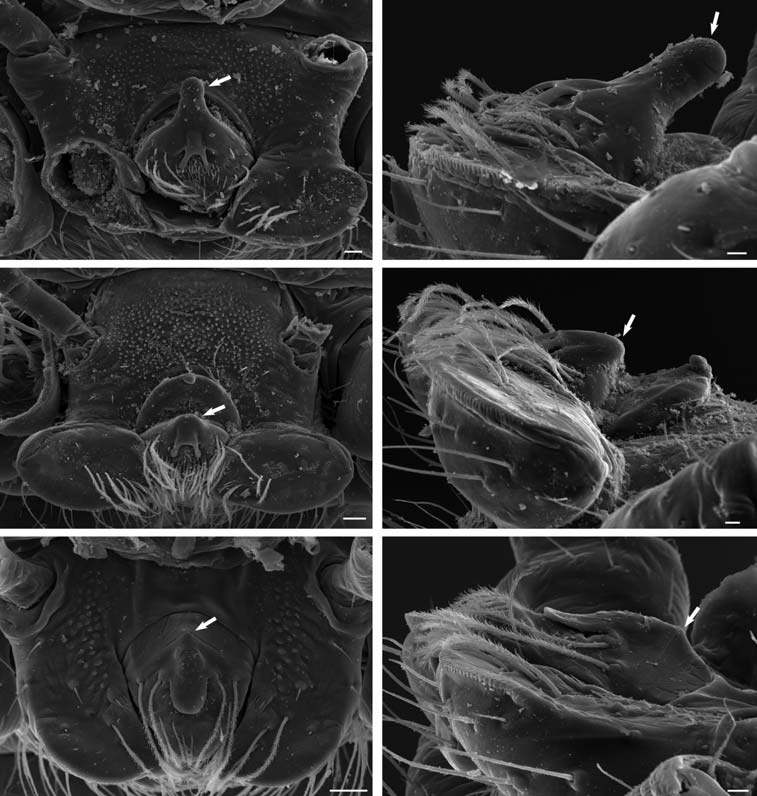
Anapidae is a family of rather small spiders with 233 described extant species in 59 genera. It includes the former family Micropholcommatidae as the subfamily Micropholcommatinae, and the former family Holarchaeidae. Most species are less than long.

Dysderidae
The Dysderidae, also known as woodlouse hunters, sowbug-eating spiders, and cell spiders, are a family of araneomorph spiders first described by Carl Ludwig Koch in 1837. They are found primarily in Eurasia, extending into North Africa with very few species occurring in South America. Dysdera crocata is introduced into many regions of the world.

Zoropsidae
Zoropsidae, also known as false wolf spiders for their physical similarity to wolf spiders, is a family of cribellate araneomorph spiders first described by Philipp Bertkau in 1882. They can be distinguished from wolf spiders by their two rows of eyes that are more equal in size than those of Lycosidae.

Oonopidae
Oonopidae, also known as goblin spiders, is a family of spiders consisting of almost 2,000 described species in 115 genera worldwide, with total species diversity estimated at 2000 to 2500 species. The type genus of the family is Oonops Keyserling, 1835.

Liocranidae
Liocranidae is a family of araneomorph spiders first described by Eugène Simon in 1897. They are one of several groups called "sac spiders".

Anyphaenidae
Anyphaenidae is a family of araneomorph spiders, sometimes called anyphaenid sac spiders or ghost spiders. They are distinguished from the sac spiders of the family Clubionidae and other spiders by having the abdominal spiracle placed one third to one half of the way anterior to the spinnerets toward the epigastric furrow on the underside of the abdomen. In most spiders the spiracle is just anterior to the spinnerets.

Archaeidæ
Archaeidae, also known as assassin spiders and pelican spiders, is a spider family with about ninety described species in five genera. It contains small spiders, ranging from long, that prey exclusively on other spiders. They are unusual in that they have "necks", ranging from long and slender to short and thick. The name "pelican spider" refers to these elongated jaws and necks used to catch their prey. Living species of Archaeidae occur in South Africa, Madagascar and Australia, with the sister family Mecysmaucheniidae occurring in southern South America and New Zealand.
Cybaeidae
Cybaeidae is a family of spiders first described by Nathan Banks in 1892. There are small to large sized entelegyne spiders, which are ecribellate. The diving bell spider or water spider Argyroneta aquatica was previously included in this family, but is now in the family Dictynidae. The distribution of this species resembles closely a typical Holarctic biogeography, with all of their species being found in the northern hemisphere. Where they have a tendency to live beneath rocks or woody debris in shaded and cool forest habitats, but they can also be found in caves, ant nests, and moss on tree
Selenopidae
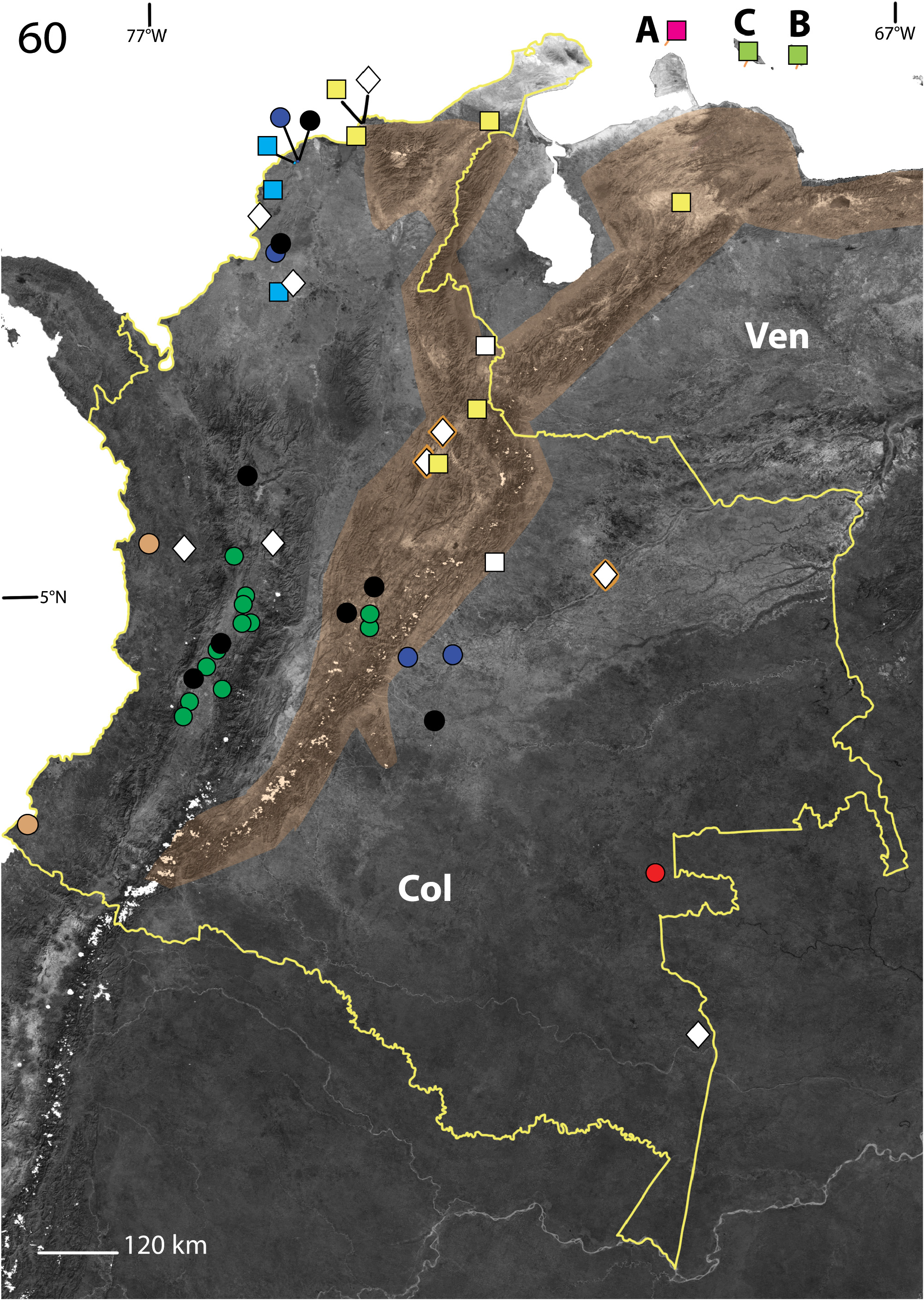
Selenopidae, also called wall crab spiders, wall spiders and flatties, is a family of nocturnal, free-ranging, araneomorph spiders first described by Eugène Simon in 1897. It contains over 281 species in nine genera, of which Selenops is the most well-known.
Plectreuridae
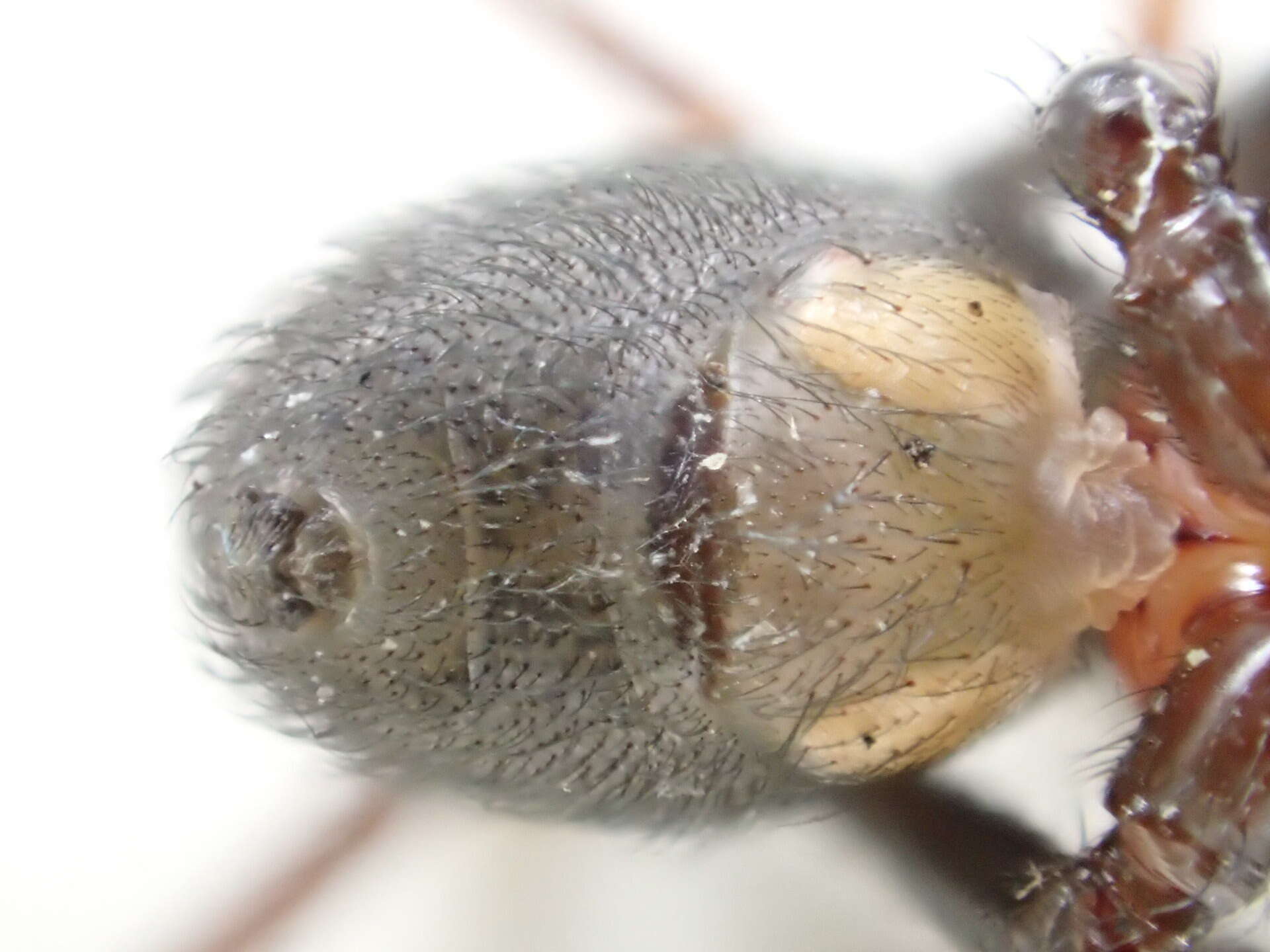
Plectreuridae, also called plectreurid spiders, is a small spider family confined to the Southwestern United States, Mexico, and the Caribbean. Only two living genera are known—the nominate genus Plectreurys and Kibramoa.
Oecobiidae
Oecobiidae, also called disc web spiders, is a family of araneomorph spiders, including about 130 described species. They are small to moderate sized spiders, about long combined head and body length, depending on the species. Larger ones tend to be desert-dwelling. The legs are unusually evenly placed around the prosoma; most other spiders have some legs directed clearly forward and the rest clearly backward, or all forward. The first two pairs of legs of many Oecobiids point forward then curve backwards. This gives a scurrying, wheel-like impression that is characteristic of many Oecobiidae,
Trochanteriidae
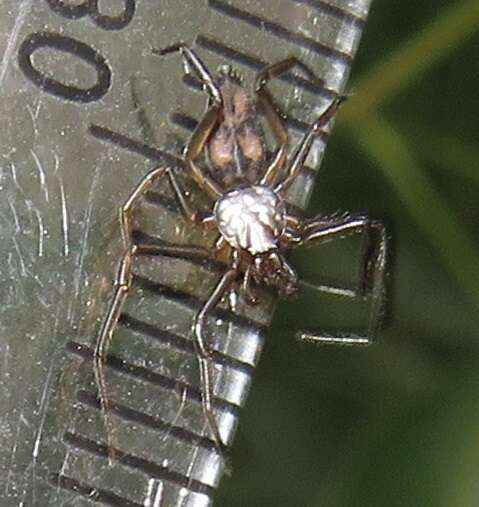
Trochanteriidae is a family of spiders first described by Ferdinand Karsch in 1879 containing about 52 species in 6 genera. The family can be found in Oceania, South America, Africa and Asia.
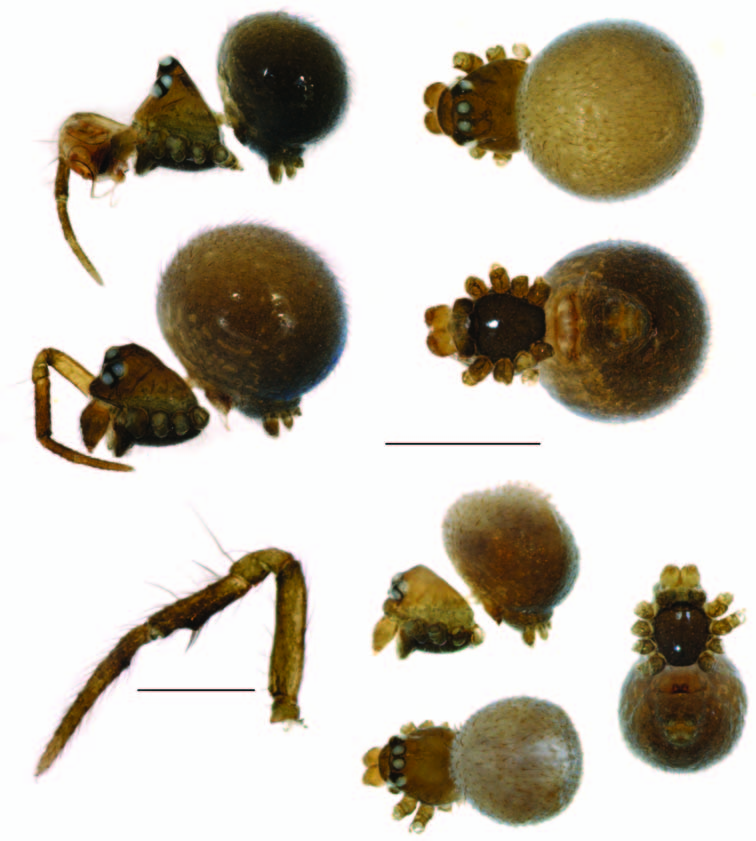
Symphytognathidae
Symphytognathidae is a family of spiders with 90 described species in eight genera. Most species inhabit the New World tropics and Oceania.
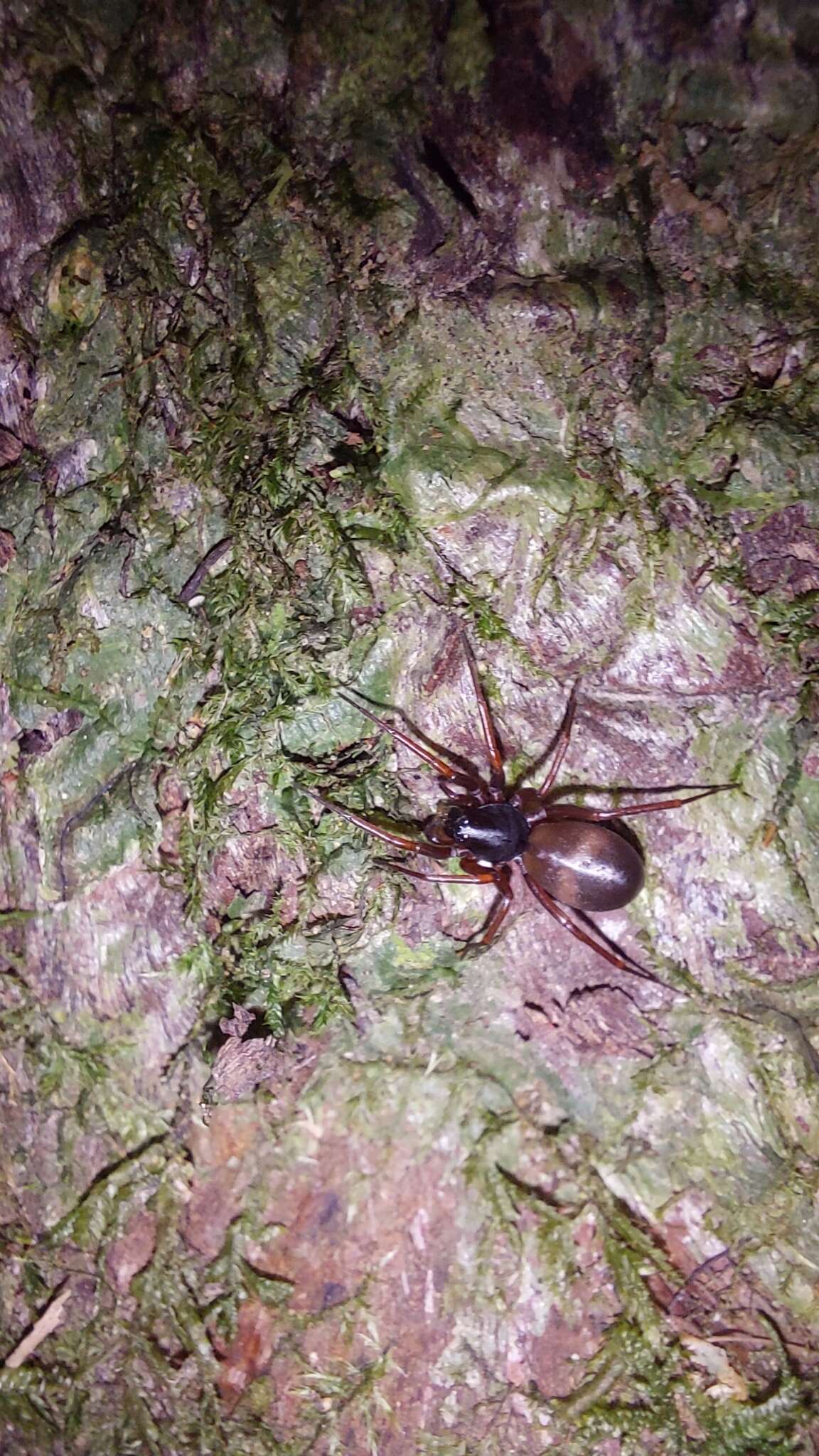
Lamponidae
Lamponidae is a family of spiders first described by Eugène Simon in 1893. It contains about 200 described species in 23 genera, most of which are endemic to Australia, with the genus Centrocalia endemic to New Caledonia, and two Lampona species (L. cylindrata, L. murina) also occurring in New Zealand where they are commonly known as 'white-tailed spiders'. Lampona papua is endemic to New Guinea, where two otherwise Australian species (Centrothele mutica, Lamponova wau) also occur.
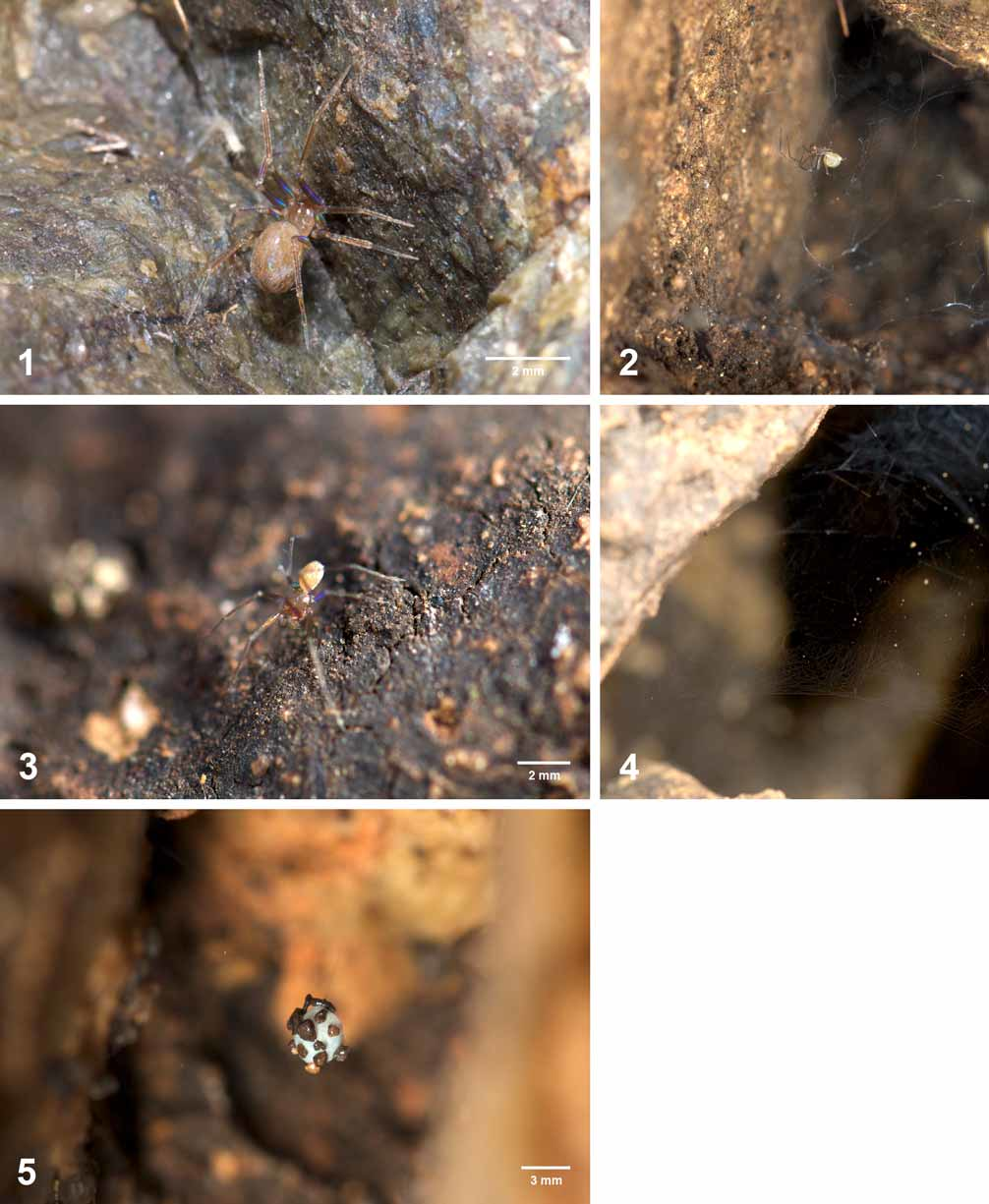
Leptonetidae
Leptonetidae is a family of small spiders adapted to live in dark and moist places such as caves. The family is relatively primitive having diverged around the Middle Jurassic period. They were first described by Eugène Simon in 1890.
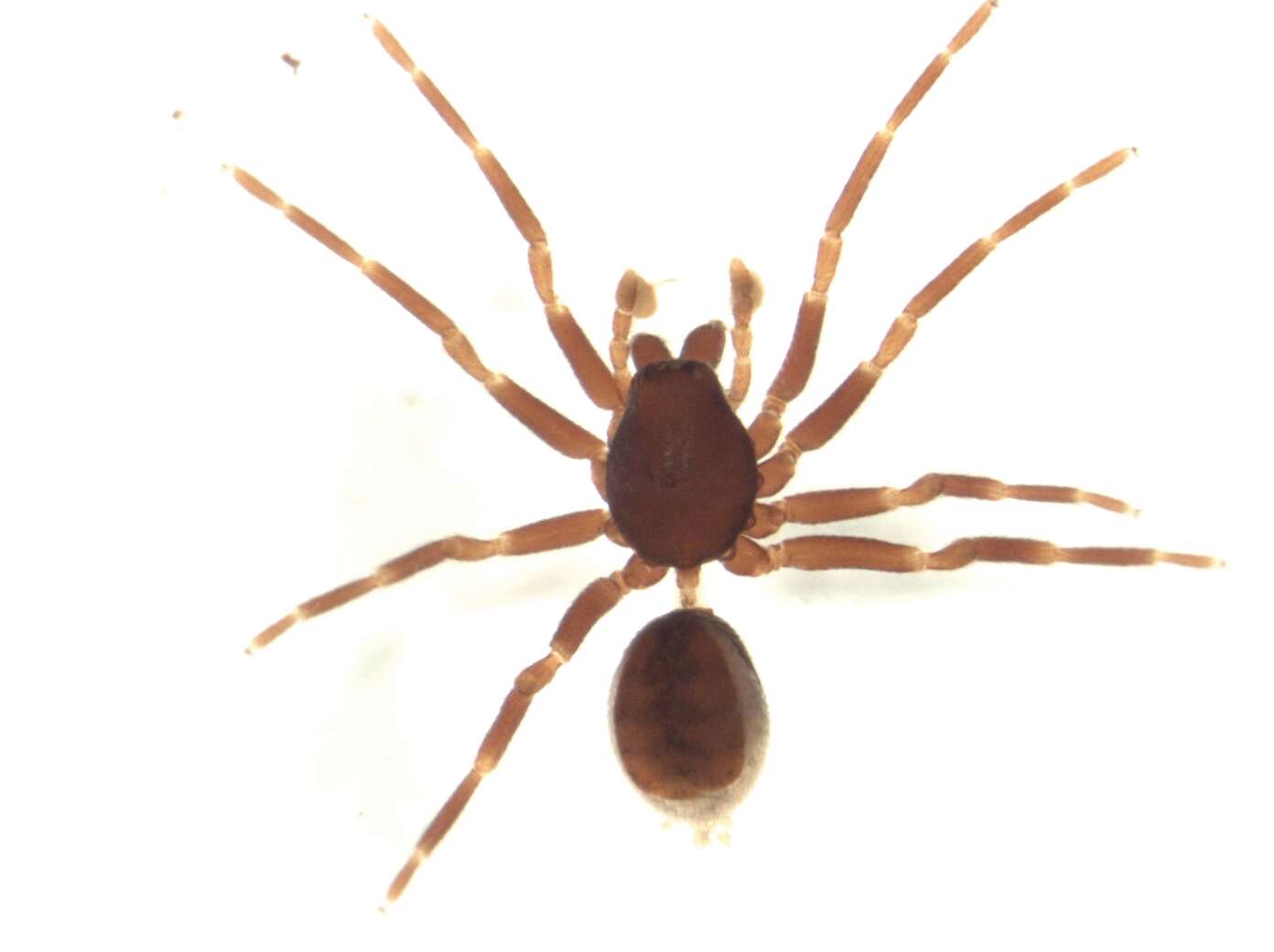
Orsolobidae
Orsolobidae is a six-eyed spider family with about 200 described species in thirty genera. It was first described by J. A. L. Cooke in 1965, and was raised to family status from "Dysderidae" in 1985.
Ochyroceratidae
Ochyroceratidae is a six-eyed spider family, with almost 200 described species in nine genera.

Corinnidae
Corinnidae is a family of araneomorph spiders, sometimes called corinnid sac spiders. The family, like other "clubionoid" families, has a confusing taxonomic history. Once it was a part of the large catch-all taxon Clubionidae, now very much smaller.

Austrochilidae
Austrochilidae is a small spider family with nine species in two genera. Austrochilus and Thaida are endemic to the Andean forest of central and southern Chile and adjacent Argentina.

Palpimanidae
Palpimanidae, also known as palp-footed spiders, is a family of araneomorph spiders first described by Tamerlan Thorell in 1890. They are widely distributed throughout the tropical and subtropical regions of the world, the Mediterranean and one in Uzbekistan, but not Australia. They are not common and there is a high degree of endemism.
Mysmenidae
Mysmenidae is a spider family with about 180 described species in seventeen genera. The family is one of the least well known of the orb-weaving spiders because of their small size () and cryptic behaviour. These spiders are found in humid habitats such as among leaf litter and in caves.
Telemidae
Telemidae, also known as long-legged cave spiders, is a family of small haplogyne spiders with about 100 described species in sixteen genera. Most are cave-dwelling spiders with six eyes, though some do not have any eyes at all.
Malkaridae
Malkaridae is a small family of araneomorph spiders first described by Valerie Todd Davies in 1980. In 2017, the family Pararchaeidae was brought into synonymy with Malkaridae.
Gallieniellidae
Gallieniellidae is a family of spiders first described by J. Millot in 1947. It was originally thought to be endemic to Madagascar until species were also found in southern Kenya, northeastern Argentina, and Australia. Drassodella was transferred from the family Gnaphosidae in 1990. They are suspected to be specialized in ant-preying.

Synaphridae
Synaphridae is a family of spiders with thirteen described species in three genera. It was first described as a subfamily of Anapidae, but it has since been raised to family status.
Gradungulidae
Gradungulidae, also known as large-clawed spiders, is a spider family endemic to Australia and New Zealand. They are medium to large-sized haplogyne spiders with three claws and two pairs of book-lungs similar to Mygalomorphae.
Caponiidae
Caponiidae is a family of ecribellate haplogyne spiders that are unusual in a number of ways. They differ from other spiders in lacking book lungs and having the posterior median spinnerets anteriorly displaced to form a transverse row with the anterior lateral spinnerets. Most species have only two eyes, which is also unusual among spiders. A few species of Caponiidae variously have four, six or eight eyes. In some species the number of eyes will increase when the spiderling changes its skin as it grows towards adulthood.

Nicodamidae
Nicodamidae is a family of araneomorph spiders with twenty-seven species in seven genera. They are small to medium-sized spiders found near the ground of eucalypt forest in small sheet webs. The species of this family are only present in Australia and Papua New Guinea. In most cases the cephalothorax and legs are uniformly red and the abdomen black, for which these species are sometimes called the "red and black spiders".

Desidae
Desidae is a family of spiders, some of which are known as intertidal spiders. The family is named for the genus Desis, members of which inhabit the intertidal zone. The family has been reevaluated in recent years and now includes inland genera and species as well, such as Badumna and Phryganoporus. The vast majority of genera currently included in Desidae are native to Australia, New Zealand, or New Caledonia, although some are found in other parts of the world.
Stenochilidae
Stenochilidae is a family of southeast Asian araneomorph spiders that produce ecribellate silk. First described by Tamerlan Thorell in 1873, it now contains thirteen described species in two genera.

Tetrablemmidae
Tetrablemmidae, sometimes called armored spiders, is a family of tropical araneomorph spiders first described by Octavius Pickard-Cambridge in 1873. It contains around 150 described species in 27 genera from southeast Asia, with a few that occur in Africa and Central and South America.

Stiphidiidae
Stiphidiidae, also called sheetweb spiders, is a family of araneomorph spiders first described in 1917. Most species are medium size (Stiphidion facetum is about long) and speckled brown with long legs. All members of this family occur in New Zealand and Australia except for Asmea. They build a horizontal sheet-like web under rocks, hence the name "sheetweb spiders".

Pimoidae
Pimoidae is a small family of araneomorph spiders first described by Jörg Wunderlich in 1986. As re-circumscribed in 2021, it is monophyletic, and contained around 90 species in two genera. It is closely related to the Linyphiidae, and is sometimes treated as synonymous with that family.

Cycloctenidae
Cycloctenidae is a family of spiders first described by Eugène Simon in 1898.

Mecysmaucheniidae
Mecysmaucheniidae is a family of araneomorph spiders first described by Eugène Simon in 1895. Most genera occur in South America (Chile and Argentina), with two genera endemic to New Zealand.

Psechridae
Psechridae is a family of araneomorph spiders with about 60 species in two genera. These are among the biggest cribellate spiders with body lengths up to and funnel webs more than in diameter.
Cithaeronidae
Cithaeronidae is a small family of araneomorph spiders first described by Simon in 1893 Female Cithaeron are about long, males about .
Phyxelididae
Phyxelididae is a family of araneomorph spiders first described by Pekka T. Lehtinen in 1967 as a subfamily of Amaurobiidae, and later elevated to family status as a sister group of Titanoecidae.

Trechaleidae
Trechaleidae (tre-kah-LEE-ih-dee) is a family of araneomorph spiders first described by Eugène Simon in 1890. It includes about 140 described species in 18 genera, mostly in the New World tropics.
Cyatholipidae
Cyatholipidae is a family of spiders first described by Eugène Simon in 1894. Most live in moist montane forest, though several species, including Scharffia rossi, live in dry savannah regions. They occur in Africa, including Madagascar, New Zealand and Australia, and one species (Pokennips dentipes) in Jamaica. Most members of this family hang beneath sheet webs. Fossil species occur in the Eocene aged Bitterfield and Baltic Ambers, suggesting a wider geographic distribution in the past.

Synotaxidae
Synotaxidae is a family of spiders with forty described species in five genera. It was first described by Eugène Simon in 1895.

Phrurolithidae
Phrurolithidae is a family of araneomorph spiders, known as guardstone spiders. The family was first described by Nathan Banks in 1892. First included in the Corinnidae as the subfamily Phrurolithinae, later phylogenetic studies justified a separate family.
Drymusidae
Drymusidae is a family of araneomorph spiders first described by Eugène Simon in 1893, and elevated to family status by Pekka T. Lehtinen in 1986.
Huttoniidae
REDIRECT Huttonia
Periegopidae
REDIRECT Periegops
Udubidae
Udubidae is a family of araneomorph spiders, most of whose members were formerly placed in the family Zorocratidae, which is no longer accepted.
Trachelidae
Trachelidae is a family of araneomorph spiders (more recently evolved spiders with inward-pointing chelicerae) first described by Eugène Simon in 1897 as a subfamily called "Tracheleae" ("Trachelinae" in modern terminology).