Category
page 1Archaea taxonomic orders
Methanosarcinales
Methanosarcinales is an order of Archaea in the class Methanomicrobia, phylum Methanobacteriota. The order Methanosarcinales contains both methanogenic and methanotrophic lineages, although the latter have so far no pure culture representatives. Methanotrophic lineages of the order Methanosarcinales were initially abbreviated as ANME (anaerobic methanotrophs) to distinguich from aerobic methanotrophic bacteria. Currently, those lineages receive their own names such as Ca. Methanoperedens, Ca. Methanocomedens (ANME-2a), Ca.Methanomarinus (ANME-2b), Ca. Methanogaster (ANME-2c), Ca. Methanovorans
Thermoplasmatales
Thermoplasmatales is an order of archaeans in the class Thermoplasmata. All are acidophiles, growing optimally at pH below 2. Picrophilus is currently the most acidophilic of all known organisms, being capable of growing at a pH of -0.06. Many of these organisms do not contain a cell wall, although this is not true in the case of Picrophilus. Most members of the Thermotoplasmata are thermophilic.

Methanobacteriales
Methanobacteriales is an order of archaeans in the class Methanobacteria. Species within this order differ from other methanogens in that they can use fewer catabolic substrates and have distinct morphological characteristics, lipid compositions, and RNA sequences. Their cell walls are composed of pseudomurein. Most species are Gram-positive with rod-shaped bodies and some can form long filaments. Most of them use formate to reduce carbon dioxide, but those of the genus Methanosphaera use hydrogen to reduce methanol to methane.
Desulfurococcales
The Desulfurococcales is an order of the Thermoprotei, part of the kingdom Archaea. The order encompasses some genera which are all thermophilic, autotrophs which utilise chemical energy, typically by reducing sulfur compounds using hydrogen. Desulfurococcales cells are either regular or irregular coccus in shape, with forms of either discs or dishes. These cells can be single, in pairs, in short chains, or in aciniform formation.
Halobacteriales
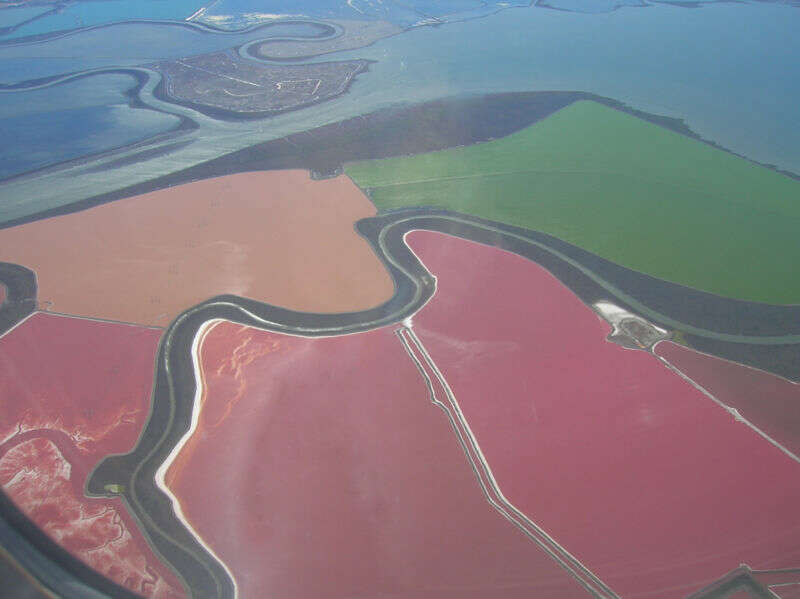
Halobacteriales, from Ancient Greek ἅλς (háls), meaning "salt", and "bacterium", are an order of the Halobacteria, found in water saturated or nearly saturated with salt. They are also called halophiles, though this name is also used for other organisms which live in somewhat less concentrated salt water. They are common in most environments where large amounts of salt, moisture, and organic material are available. Large blooms appear reddish, from the pigment bacteriorhodopsin. This pigment is used to absorb light, which provides energy to create ATP. Halobacteria also possess a second pigmen
Methanomicrobiales
Methanomicrobiales is an order of archaeans in the phylum Methanobacteriota. Methanomicrobiales are strictly carbon dioxide reducing methanogens, using hydrogen or formate as the reducing agent.
As seen from the phylogenetic tree based on 'The All-Species Living Tree' Project the family Methanomicrobiaceae is highly polyphyletic within the Methanomicrobiales.
Sulfolobales
Sulfolobales is an order of archaeans in the class Thermoprotei.
Thermococcales
The Thermococcales are an order of microbes within the class Thermococci. The species within the Thermococcales are used in laboratories as model organisms. All these species are strict anaerobes and can ferment sugars as sources of carbon, but they also need elemental sulfur.
Acidilobales
Acidilobales are an order of archaea in the class Thermoprotei.
Methanococcales
Methanococcales is an order of archaeans in the class Methanococci.
Methanopyrales
REDIRECT Methanopyrus
Methanocellales
REDIRECT Methanocella
Nitrosopumilales
The Nitrosopumilales are an order of the Archaea class Nitrososphaeria.