Category
page 1ARM operating systems

Android
operating system created by Google for use on mobile devices

macOS
macOS (previously OS X and originally Mac OS X) is a proprietary Unix operating system, derived from OPENSTEP for Mach and FreeBSD, which has been marketed and developed by Apple since 2001. It is the current operating system for Apple's line of Mac computers. Within the market of desktop and laptop computers, it is currently the second most widely used desktop OS, after Microsoft Windows and ahead of all Linux distributions, including ChromeOS and SteamOS. , the most recent release of macOS is macOS 26 Tahoe, the 22nd major version of macOS.
.svg)
iOS
iOS (formerly iPhone OS) is a mobile operating system created and developed by Apple for its iPhone line of smartphones. It was unveiled in January 2007 alongside the first-generation iPhone, and was released in June 2007. Major versions of iOS are released annually; the current stable version, iOS 26, was released to the public on September 15, 2025.

Windows 10
personal computer operating system by Microsoft that was released in 2015

Windows 11
personal computer operating system by Microsoft released in 2021
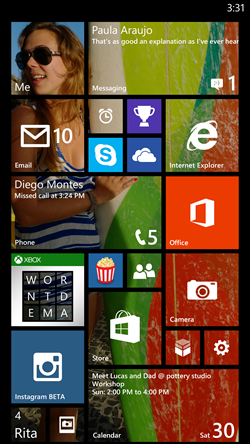
Windows Phone
operating system for mobile devices created by Microsoft

FreeBSD
FreeBSD is a free and open-source Unix-like operating system descended from the Berkeley Software Distribution (BSD). The first version was released in 1993 developed from 386BSD, one of the first fully functional and free Unix clones on affordable home-class hardware, and has since continuously been the most commonly used BSD-derived operating system.

Symbian
Symbian is a discontinued mobile operating system (OS) and computing platform designed for smartphones. It was originally developed as a proprietary software OS for personal digital assistants in 1998 by the Symbian Ltd. consortium. Symbian OS is a descendant of Psion's EPOC, and was mostly used on ARM processors, although an x86 port exists. A modified version of Symbian for x86 was used on the Fujitsu LOOX F-07C where it was dual booted with Windows 7. Symbian was used primarily by Nokia, and in select models of Samsung, Motorola, and Sony Ericsson. It was also prevalent in Japan by brands i

OpenBSD
OpenBSD is a security-focused, free software, Unix-like operating system based on the Berkeley Software Distribution (BSD). Theo de Raadt created OpenBSD in 1995 by forking NetBSD 1.0. The OpenBSD project emphasizes portability, standardization, correctness, proactive security, and integrated cryptography.

ChromeOS
ChromeOS (sometimes styled as chromeOS and formerly styled as Chrome OS) is a proprietary operating system designed and developed by Google. It is derived from the open-source operating system (which itself is derived from Gentoo Linux), and uses the Google Chrome web browser as its principal user interface.

MINIX
MINIX is a Unix-like operating system based on a microkernel architecture, first released in 1987 and written by American-Dutch computer scientist Andrew S. Tanenbaum. It was designed as a clone of the Unix operating system and one that could run on affordable, Intel 8086-based home computers; MINIX was targeted for use in classrooms by computer science students at universities.

Kali Linux
Debian-derived Linux distribution

Windows Mobile
discontinued family of mobile operating systems by Microsoft

NetBSD
NetBSD is a free and open-source Unix-like operating system based on the Berkeley Software Distribution (BSD). It was the first open-source BSD descendant officially released after 386BSD was forked. It continues to be actively developed and is available for many platforms, including servers, desktops, handheld devices, and embedded systems.
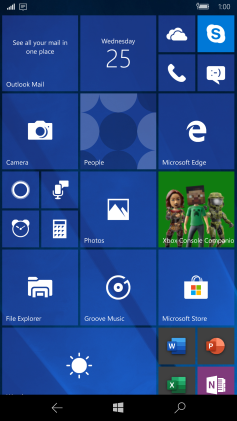
Windows 10 Mobile
mobile operating system developed by Microsoft
Firefox OS
Linux-based mobile operating system by Mozilla

HarmonyOS
HarmonyOS (HMOS) () is a distributed operating system developed by Huawei for smartphones, tablets, smart TVs, smart watches, personal computers and other smart devices. It has a microkernel design with a single framework: the operating system selects suitable kernels from the abstraction layer in the case of devices that use diverse resources. The latest stable version is HarmonyOS 6; it was released on 25 November 2025.

Windows Embedded Compact
operating system subfamily by Microsoft

MeeGo
MeeGo is a discontinued Linux distribution hosted by the Linux Foundation, using source code from the operating systems Moblin (produced by Intel) and Maemo (produced by Nokia). MeeGo was primarily targeted at mobile devices and information appliances in the consumer electronics market. It was designed to act as an operating system for hardware platforms such as netbooks, entry-level desktops, nettops, tablet computers, mobile computing and communications devices, in-vehicle infotainment devices, SmartTV / ConnectedTV, IPTV-boxes, smart phones, and other embedded systems.
Palm OS
mobile operating system
Bada
mobile operating system
Windows RT
discontinued mobile operating system developed by Microsoft

Maemo
Maemo is a Linux-based software platform originally developed by Nokia, now developed by the community, for smartphones and Internet tablets. The platform comprises both the Maemo operating system and SDK. Maemo played a key role in Nokia's strategy as an attempt to compete with Apple and Android; the only retail devices that shipped with Maemo were the Nokia Internet tablet line released in 2005 and the Nokia N900 smartphone in 2009.

Tizen
Tizen () is a Linux-based operating system primarily developed by Samsung Electronics and supported by the Linux Foundation.
BlackBerry OS
operating system

webOS
webOS, also known as LG webOS, is a Linux kernel-based multitasking operating system for smart devices, such as smart TVs, that has also been used as a mobile operating system. Initially developed by Palm, Inc. (which was acquired by Hewlett-Packard), HP made the platform open source, at which point it became Open webOS.
QNX
QNX ( or ) is a commercial Unix-like real-time operating system, aimed primarily at the embedded systems market.
Plan 9
distributed operating system designed by Bell Labs as an UNIX's intended successor
macOS Big Sur
17th major version of the macOS operating system
ChromiumOS
ChromiumOS (formerly styled as Chromium OS) is a free and open-source Linux distribution designed for running web applications and browsing the World Wide Web. It is the open-source version of ChromeOS, a Linux distribution made by Google.
Sailfish OS
mobile phone Linux distribution
.jpg)
VxWorks
VxWorks is a real-time operating system (or RTOS) developed as proprietary software by Wind River Systems, a subsidiary of Aptiv. First released in 1987, VxWorks is designed for use in embedded systems requiring real-time, deterministic performance and in many cases, safety and security certification for industries such as aerospace, defense, medical devices, industrial equipment, robotics, energy, transportation, network infrastructure, automotive, and consumer electronics.

KaiOS
thumb|Nokia 8110 4G "banana phone"
KaiOS is a mobile Linux distribution for keypad-based mobile phones. It is designed and optimised for affordable and low-power feature phones, while retaining access to Internet services through web apps, based on the Gecko engine. KaiOS was originally forked from the former Firefox OS open-source project, and is developed by KaiOS Technologies (Hong Kong) Limited; a company based in Hong Kong, whose largest shareholder is Chinese electronics conglomerate TCL Corporation.''''
Fire OS
Android-based mobile operating system produced by Amazon

GrapheneOS
GrapheneOS is a free and open-source, privacy- and security-focused, Android-based operating system for Google Pixel and future Motorola devices. GrapheneOS is built on the Android Open Source Project. It focuses on researching and improving the privacy and security of Android. GrapheneOS is developed by the GrapheneOS Foundation, a Canadian nonprofit corporation.
Void Linux
Linux distribution
Inferno
distributed operating system based on ideas and technology from Plan 9
Windows Phone 8.1
third generation of Microsoft's Windows Phone mobile operating system
RISC OS
computer operating system
macOS Sonoma
20th major version of the macOS operating system
macOS Ventura
19th major version of the macOS operating system
BlackBerry 10
discontinued proprietary mobile operating system by BlackBerry
macOS Tahoe
22nd major version of the macOS operating system
FreeRTOS
FreeRTOS is a real-time operating system kernel for embedded devices that has been ported to 40 microcontroller platforms. It is distributed under the MIT License.
macOS Monterey
18th major version of the macOS operating system
ColorOS
ColorOS is a user interface created by Oppo based on the Android Open Source Project. Initially, Realme phones used ColorOS until it was replaced by Realme UI in 2020. Realme UI uses some of ColorOS's apps. Starting from the OnePlus 9 series, OnePlus will preinstall ColorOS on all smartphones that are sold in mainland China instead of HydrogenOS (Chinese version of OxygenOS).
Windows IoT
embedded operating system by Microsoft
macOS Sequoia
21st major version of the macOS operating system

Contiki
Contiki is an operating system for networked, memory-constrained systems with a focus on low-power wireless Internet of Things (IoT) devices. Contiki is used for systems for street lighting, sound monitoring for smart cities, radiation monitoring and alarms. It is open-source software released under the BSD-3-Clause license.

μClinux
thumb|300px|uClibc is a wrapper around the [[system calls of the Linux kernel and/or μClinux.]]

Android Go
variant of the Android operating system for low-end devices
LynxOS
The LynxOS RTOS is a Unix-like real-time operating system from Lynx Software Technologies (formerly "LynuxWorks"). Sometimes known as the Lynx Operating System, LynxOS features full POSIX conformance and, more recently, Linux compatibility. LynxOS is mostly used in real-time embedded systems, in applications for avionics, aerospace, the military, industrial process control and telecommunications.
Midori
operating system
eCos
The Embedded Configurable Operating System (eCos) is a free and open-source real-time operating system intended for embedded systems and applications which need only one process with multiple threads. It is designed to be customizable to precise application requirements of run-time performance and hardware needs. It is implemented in the programming languages C and C++ and has compatibility layers and application programming interfaces for Portable Operating System Interface (POSIX) and The Real-time Operating system Nucleus (TRON) variant μITRON. eCos is supported by popular SSL/TLS libraries
EPOC
operating system
CalyxOS
BlackBerry Tablet OS
operating system
Newton OS
operating system for apple newton PDA
GeeXboX
GeeXboX (stylized as GEExBox) is a free Linux distribution providing a media center software suite for personal computers. GeeXboX 2.0 and later uses XBMC for media playback and is implemented as Live USB and Live CD options. As such, the system does not need to be permanently installed to a hard drive, as most modern operating systems would. Instead, the computer can be booted with the GeeXboX CD when media playback is desired. It is based on the Debian distribution of Linux.
RTEMS
Real-Time Executive for Multiprocessor Systems (RTEMS), formerly Real-Time Executive for Missile Systems, and then Real-Time Executive for Military Systems, is a real-time operating system (RTOS) designed for embedded systems. It is free and open-source software.